family
Family unites us; but it's also a challenge. All about fighting to stay together, and loving every moment of it.
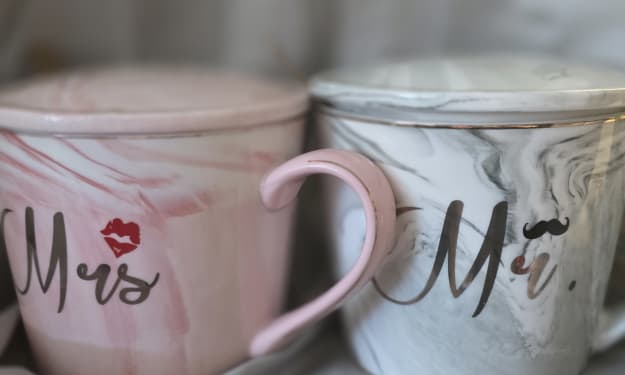
A Successful Marriage With a Narcissist Without Losing You
A successful marriage with a narcissist is often misunderstood, oversimplified, or portrayed as impossible. Many people stay in such marriages for a variety of reasons, including commitment, ideals, shared history, children, faith, or personal choice. The actual struggle is not just staying married but also maintaining your individuality, emotional health, and dignity while navigating a complex relational dynamic.
By Bloom Boldly8 days ago in Humans
One Ordinary Day
Morning The day began like most others. The alarm rang once, then again. I turned it off without opening my eyes and lay still for a moment, listening to the familiar sounds of the house waking up. A spoon against a cup. Water running in the sink. The low hum of the ceiling fan. Nothing felt different, and that was the problem. At breakfast, my mother slid a plate toward me without looking up. Toast, slightly burned on one edge. Tea poured too full. We had followed the same routine for years, moving around each other with practiced ease. “You’ll be late again,” she said, not unkindly. “Probably,” I replied. It wasn’t an argument. It never was. Just an observation passed between two people who knew each other too well to explain anything. I ate quietly. She scrolled through her phone. The clock ticked loudly on the wall. If someone had walked in, they might have thought this was a peaceful morning. I didn’t know then that I would remember it so clearly. Afternoon The bus ride to work was uneventful. The same faces, the same stops, the same advertisements peeling off the walls. I stood holding the metal bar, swaying slightly with every turn. Across from me, a man argued softly on the phone. A student slept against the window. Someone laughed at a message on their screen. Life continued in its usual rhythm. At work, emails piled up. Meetings dragged on. Someone complained about the printer. Someone else asked what we were ordering for lunch. I answered automatically, my body present while my mind drifted somewhere just out of reach. During lunch, I sat alone, scrolling without reading. I felt tired without knowing why. Nothing bad happened. No news arrived. No calls interrupted the day. Still, a quiet heaviness followed me, like a shadow that didn’t belong to anything specific. Evening When I returned home, the sky was already dimming. My mother was in the kitchen again, chopping vegetables slowly. The television played in the background, more noise than entertainment. “How was work?” she asked. “Same,” I said. She nodded, as if she had expected no other answer. We ate dinner together. Rice slightly overcooked. Curry tasted better the next day, as it always did. We talked about small things—the rising prices, a neighbor’s new car, a distant relative’s wedding. At one point, she looked at me for a little too long. “You don’t talk much anymore,” she said. I shrugged. “Nothing new to say.” She didn’t press. She never did. After dinner, I helped clear the table. Our hands brushed briefly while passing a plate. She smiled, just a little, and turned away. I didn’t know then that this was our last ordinary dinner together. Night Later, I sat in my room, lights dim, phone face down on the bed. I stared at the wall, thinking about nothing and everything at once. The house felt quieter than usual. From the other room, I heard my mother coughing lightly. She had been doing that more often lately. I had noticed. I just hadn’t said anything. I almost got up to check on her. Almost. Instead, I told myself she was fine. She always was. Ordinary days had trained me to believe they would repeat forever. I went to sleep without saying goodnight. After The call came the next morning. Everything after that blurred together—hospitals, voices speaking gently, words like sudden and unexpected. People told me I was strong. They told me she didn’t suffer. They told me these things to make sense of what couldn’t be fixed. But what stayed with me wasn’t the day she left. It was the day before. The burned toast. The bus ride. The overcooked rice. The question she asked and didn’t repeat. I replayed that ordinary day again and again, searching for something I could have changed. A longer conversation. A better answer. A simple goodnight. Nothing dramatic had happened. And yet, everything had. Reflection Now, when days feel uneventful, I pay attention. I notice the way people pause before speaking. The way routines quietly hold our lives together. The way ordinary moments carry more weight than we realize. Some days don’t announce themselves as important. They don’t warn you. They don’t feel special. They don’t look like endings. They just pass—softly, politely—until they become memories you would give anything to relive once more. That day was ordinary. And it changed everything.
By Talha khan8 days ago in Humans
The Clean Up
The holidays are done and reality has returned, along with those pounds you lost during the entire year and now have to lose all over again. Don’t cringe. We all do it. It’s the holidays, when all the things you have gone without all year, come seeping out of every corner of everyone’s kitchens.
By Alexandra Grant9 days ago in Humans
Why Some Wounds Never Fully Heal
My mother died on a Tuesday in March, three weeks after her diagnosis. Cancer moved through her body with terrifying speed, leaving no time for goodbyes, no space for preparation, no chance to say all the things I'd always assumed I'd have time to say. She was here, and then she wasn't. Everyone told me the same thing: "Time heals all wounds." They meant well. But they were wrong. Fifteen years later, I still reach for the phone to call her when something good happens. Fifteen years later, I still feel the absence like a phantom limb—a presence that's missing but somehow still aches. Fifteen years later, I'm still waiting for the day when thinking about her doesn't hurt. I've finally accepted that day isn't coming. And somehow, that acceptance has brought more peace than all the years of waiting for the pain to end. The Myth of Complete Healing We're sold a particular narrative about grief, about trauma, about loss: if you do the work, if you process it correctly, if you're strong enough, you'll heal completely. The wound will close. The pain will end. You'll be whole again. But some wounds are too deep for that kind of closure. Some losses are too profound to ever fully recover from. And pretending otherwise doesn't help—it just makes us feel like failures when we're still hurting years later. I spent the first five years after my mother's death trying to heal "correctly." I went to therapy. I joined support groups. I read books about grief. I talked about my feelings. I did everything I was supposed to do. And yet, the wound remained open. I'd have months where I felt okay, where I'd think, "Finally, I'm healing." Then something small—a song, a scent, Mother's Day—would rip everything open again, and I'd be back at square one, sobbing in parking lots and grocery stores, feeling like I'd failed at grief. "Why can't I get past this?" I asked my therapist during one particularly difficult session. "It's been five years. Shouldn't I be better by now?" She leaned forward, her eyes kind. "What if this isn't about getting past it? What if it's about learning to carry it?" The Wounds That Change Us Some experiences fundamentally alter who we are. They create a before and after in our lives so profound that we can never return to the person we were. Before my mother died, I believed the world was basically safe. I believed people I loved would be around for a long time. I believed I had control over my life in ways that made me feel secure. After she died, all those beliefs shattered. I learned that safety is an illusion. That people you need can vanish without warning. That control is a story we tell ourselves to feel less terrified of existence. These weren't lessons I could unlearn. This wasn't damage I could repair. My mother's death didn't just hurt me—it changed me at a cellular level. The wound wasn't something on me; it became part of me. I spent years trying to get back to who I was before. I'd look at old photos and barely recognize the carefree woman smiling back at me. Where had she gone? Could I ever find her again? The answer, I eventually realized, was no. And that wasn't a failure. It was just the truth.
By Ameer Moavia9 days ago in Humans
The Weight of Being "Too Much": How I Learned My Sensitivity Was Never the Problem
I was seven years old the first time someone told me I was too sensitive. I'd come home from school crying because my best friend said she didn't want to play with me anymore. My father looked up from his newspaper, irritation flickering across his face. "You're being too sensitive," he said, turning the page. "Kids say things. You need to toughen up." So I tried. I swallowed my hurt. I forced a smile. I pretended it didn't matter. That moment became a blueprint for the next three decades of my life. By the time I was thirty-seven, married with two kids and a successful career, I'd perfected the art of not feeling too much. I'd learned to laugh off insults, minimize my pain, and apologize for my emotions before anyone else could criticize them. But the cost of all that toughening up? I'd become a stranger to myself. The Education of Emotional Suppression The messages came from everywhere, each one teaching me that my natural way of being was somehow wrong. When I cried during a sad movie: "It's just a movie. Why are you so emotional?" When a friend's thoughtless comment hurt my feelings: "You're overreacting. I was just joking." When I needed time to process conflict: "You're being too dramatic. Just get over it." When I was moved to tears by beauty—a sunset, a piece of music, an act of kindness: "You cry at everything. What's wrong with you?" Each time, the same lesson: Your feelings are excessive. Your responses are inappropriate. You are too much. I learned to preface every emotional expression with an apology. "I know I'm being ridiculous, but..." "I'm probably overreacting, but..." "Sorry, I'm just too sensitive..." I became an expert at minimizing my own experience, at gaslight myself before anyone else could do it for me. The Slow Erosion of Self What happens when you spend decades being told your emotions are wrong? You start to believe it. I stopped trusting my own reactions. When something hurt me, my first thought wasn't "that was hurtful," but "I'm being too sensitive." When I felt uncomfortable in a situation, I'd override my instincts and force myself to stay, convinced my discomfort was a character flaw rather than valuable information. I became everyone's emotional support system while denying myself the same care. Friends would call me for hours when they were upset, and I'd listen with endless patience and compassion. But when I was hurting? I'd minimize it, laugh it off, handle it alone. In my marriage, I'd absorb my husband's bad moods without comment, adjust my behavior to keep the peace, and swallow my hurt when he was dismissive or short with me. "You're too sensitive" became his go-to response whenever I expressed that something bothered me. Eventually, I stopped expressing it at all. I taught my children to share their feelings, while simultaneously teaching them through my example that their mother's feelings didn't matter. I'd hide in the bathroom to cry, ashamed that I couldn't be stronger.
By Ameer Moavia9 days ago in Humans
Dating Contra: A Modern Perspective on Conflicting Dating Beliefs
Dating today feels like standing at a crossroads, doesn’t it? On one side, there are traditional rules passed down for generations. On the other, there’s a growing wave of people who want freedom, flexibility, and emotional honesty. This is where dating contra enters the picture—a concept that challenges conventional dating norms and asks a simple but powerful question: Why should love follow fixed rules?
By Sophia Wilson9 days ago in Humans
Who Is Maduro’s Wife? Power, Politics, Sanctions, and the U.S. Capture Claims Explained
When breaking news from Venezuela began rippling across the world, one unexpected phrase shot to the top of search trends: “Maduro’s wife.” Not “Venezuela president,” not “U.S. strike,” but a deeply personal question tied to power, secrecy, and uncertainty.
By Bevy Osuos9 days ago in Humans
To Know Others Is to Know Ourselves
Life's a crazy ride, right? It is like we are all just dancing around, trying to figure things out. And honestly, it is the people in our lives that really make it worth living. We are all connected, even if we can't always see it. Those short moments we share with others? That is when life feels real. We are always trying to understand each other, to feel connected. What even is a relationship, if not a plunge into the unknown with someone else, kind of like holding a mirror up to yourself?
By Baptiste Monnet9 days ago in Humans
Dating Red Flags in Women that Feel Normal At First
Modern dating—especially for Gen Z in the US—moves fast. Apps, social media, and shared online spaces foster emotional connection prior to testing real-world compatibility. In this setting, several dating red flags in women may not look poisonous at first glance. They frequently feel natural, exciting, or even flattering in the early phases. Over time, however, these actions can silently erode trust, emotional safety, and the potential for a long-term relationship.
By Relationship Guide9 days ago in Humans