fact or fiction
Is it a fact or is it merely fiction? Fact or Fiction explores relationship myths and truths to get your head out of the clouds and back into romantic reality.
The Psychology of Happiness
Introduction: Happiness is a fundamental human desire that transcends culture, age, and socioeconomic status. People spend their lives in pursuit of happiness, seeking joy, contentment, and fulfilment. But what exactly is happiness, and how can we understand it from a psychological perspective? In this article, we will delve into the fascinating field of positive psychology to explore the psychology of happiness and uncover the factors that contribute to our well-being.
By Juliana Adarsh3 years ago in Humans
HEALTH
HEALTH Health is the condition of a person's physical, mental, and emotional well-being. It encompasses a range of factors, including diet, exercise, sleep, stress levels, and access to healthcare. Maintaining good health is essential for longevity, quality of life, and overall happiness. It involves taking proactive steps to prevent illness, such as getting regular check-ups, practicing good hygiene, and getting vaccinated. When health problems do arise, it is important to seek medical attention promptly in order to prevent further complications and ensure the best possible outcome. “Health is not valued until sickness comes.”
By Fuzail Ali3 years ago in Humans
5 Psychological Facts that Will Blow Your Mind
The field of psychology has long been exploring the mysteries of the mind and behavior, and many amazing discoveries have been made! Some are even more fascinating than others. Did you know that using punctuation in your text messages can make you appear insincere? If you're ready for a thrilling ride, then prepare yourself – these 5 astonishing psychological facts could explain some of the things you and others do!
By Fredrick Sibwoga Kombo3 years ago in Humans
The Simple Question That Stumped Everyone
It's quite fitting that Marilyn vos Savant's last name in French means "learned" Learning came easy to her considering she had an IQof 228! Vos Savant was born in St Louis, Missouri on August 11, 1946 to immigrants from Germany and Italy. Her parents never told her she was exceptional. She once said in an interview: "No one really paid much attention to me, actually. As I said, mostly because I was a girl and I accepted that." But the world would pay attention in 1985 when she topped the Guinness Book of World Records list as the smartest person in the world. She was nearly 40 when she shot into the spotlight. Parade Magazine wrote a profile on her, and readers had so many questions for her that the magazine offered her a Sunday column, "Ask Marilyn" - which exists to this day. In this column, she ignited one of the fiercest debates in probability of the 21st century! In 1990, a reader asked her the following question: Suppose you're on a game show, and you're given the choice of three doors. Behind one door is a car, behind the others, goats. You picka door, say #1, and the host, who knows what's behind the doors, opens another door, say # 3, which has a goat. He says to you, "Do you want to pick door #2?" Is it to your advantage to switch your choice of doors? This is known as the Monty Hall problem, named after the former host of the game show Let's Make a Deal. Is it behind door number 1, door number 2, or door number 3? So, would it be in your interest to switch from door number 1 to door number 2? 'll give you a few seconds to think about it. Most people assume that both doors are equally likely to have the prize. So they don't see the benefit of switching. However, Vos Savant replied: "Yes; you should switch. The first door has a 1/ 3 chance of winning, but the second door has a 2/ 3 chance." She got so much heat for this response and couldn't have imagined the backlash that would follow. She received thousands of angry letters and said 90% of them told her she was wrong. Scott Smith who has a PhD from the University of Florida wrote: There is enough mathematical illiteracy in this country, and we don't need the world's highest IQ propagating more. Shame! Here's a letter from Professor Robert Sachs of George Mason University: You blew it! As a professional mathematician, I'm very concerned with the general public's lack of mathematical skills. Please help by confessing your error and in the future being more careful." Don Edwards of Oregon put it this way: Maybe women look at math problems differently than men. But actually, these people who sent her some not-so- nice letters were utterly wrong. Switching your door DOES increase your probability of winning. When you first choose door #1, there's a 1/ 3 chance that the prize is behind that one. The two other doors together have a 2/ 3 chance of winning. Then the host helps you out by opening up the door they KNOW is a loser. This improves your odds that the prize is behind door 2. Because door 2 must have the rest of the chances. It went from having a 1 in 3 chance to a 2 in 3 shot at the prize since the host filtered out the bad door, door number 3 for you. Or put another way: Switching doubles your odds of winning. So yah I'Il choose door number 2 and thank you for the extra 33. 3%. The outcry against vos Savant was so extreme that she felt compelled to devote several other columns to explaining her logic. She noted that the benefits of switching can be proven if you were to play through the six games that exhaust all possibilities. This is contingent on the host always opening a door with a goat. Mapping out all the possibilities shows there's a higher chance of winning if you switch than if you stay. It's easier to understand the problem if there are many more doors. Say you chose 1 door out of 100. The host then eliminates 98 doors that they know don't have a prize behind them. That leaves two doors - the one you chose and the only other one remaining. Do you switch now? Absolutely. When you first picked, you only had a 1/ 100 chance of getting the right door. The odds of it being behind the other doors was 99/ 100. The host then filters out the options for you by eliminating 98 bad doors that they know don't have the prize. This is tO your advantage because it leaves the remaining door with the rest of the odds, a 99/ 100 chance of having the car. Some eventually admitted they were in the wrong. A team at the Massachusetts Institute of Technology worked on the problem, and afterward, Seth Kalson of MIT admitted: You are indeed correct. "My colleagues at work had a ball with this problem, and I dare say that most of them, including me at first, thought you were wrong!" To which she responded:"Thanks, M.I.T. needed that!" And that math professor I mentioned earlier who sent that not so friendly letter? Professor Sachs later conceded, writing: "After removing my foot from my mouth I'm now eating humble pie. I vowed as penance to answer all the people who wrote to castigate me. It's been an intense professional embarrassment." Our biggest misconception is assuming that two choices mean a 50-50 chance of something happening. This makes sense if we don't have any other information. If I picked two people and asked who would win a tennis match and you don't know anything about them, you have a 50-50 shot of getting it right. But if I said Player Ajust took up the sport yesterday while Player B has won Wimbledon, this would likely change your choice. Information matters. Just like when the game show host KNEW which door had a goat. They weren't opening up a door randomly. The general idea is the more you know, the more informed decisions you can make. Vos Savant once said: "People that we think are very smart are not necessarily very smart." She explained they're more likely to be educated or experienced rather than intelligent. What does she think is holding people back from their intellectual potential? She's been critical of compulsory schooling because she says students learn passively; they sit there and are told what to believe instead of learning to think independently. She went so far as to say: "I would rather not see compulsory schooling." As for herself, she never graduated from university, dropping out of Washington University in St. Louis after two years to start a career in investment before following her real passion, writing which led to her famous answer to the problem that stumped the world. There's another way to learn that doesn't involve sitting in a classroom. Brilliant is an online interactive learning platform that helps you brush up on your math, science, and computer science skills.
By Ferrack Walfert3 years ago in Humans
Human body
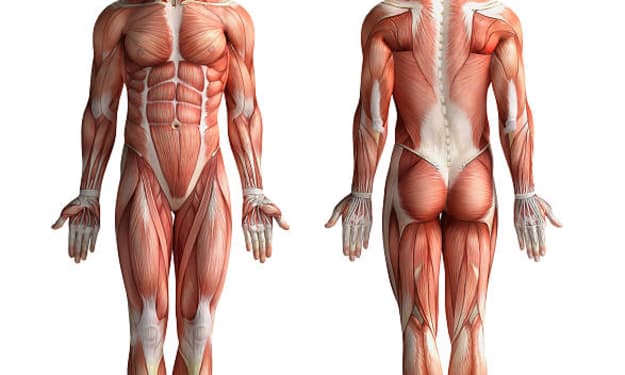
The human body is a complex system composed of various interconnected systems that work together to maintain the functioning and well-being of an individual. These systems include the skeletal system, muscular system, cardiovascular system, respiratory system, digestive system, nervous system, endocrine system, immune system, urinary system, and reproductive system. In this article, we will explore each of these systems and their functions.
By Hamza Mustafa3 years ago in Humans
The Sleepless Struggle
Part 1: The Shadows of Sleep In the quaint town of Willowbrook, nestled amidst rolling hills and whispering trees, lived a young woman named Emily. Behind her sparkling blue eyes and warm smile, she harbored a secret torment that plagued her nights – insomnia.
By Owais Abbas3 years ago in Humans
"Beyond the Books: 10 Surprising Facts About History's Most Famous Icons"
"We all know the famous names: George Washington, Napoleon Bonaparte, and Marie Curie. But did you know that these historical figures had some surprising quirks and hidden talents? From pranking friends to writing secret code, the lives of these famous figures were full of unexpected twists and turns. In this article, we'll explore 10 fascinating lesser-known facts about some of history's most famous figures. Get ready to be surprised!"
By David Andrews3 years ago in Humans
Faith and Miracles: The Journey of Jesus Christ
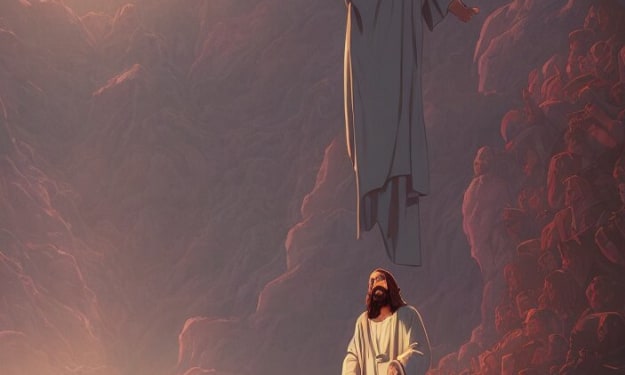
Once upon a time, in a humble village nestled amidst rolling hills, there lived a wise and compassionate man named Jesus. He possessed an aura of love and kindness that seemed to touch the hearts of all who encountered him. His presence brought a sense of peace and hope to those in need.
By prabin mahato3 years ago in Humans
The Power of Diversity: How Racial and Ethnic Differences Can Enrich Our Society
Racial and ethnic diversity is a reality of our world today. According to the United Nations, there are more than 7.8 billion people on the planet, belonging to different races, ethnicities, cultures, languages, religions, and backgrounds. The United States is one of the most diverse countries in the world, with people of many different races and ethnicities living together. As of 2020, White Americans are the racial majority, with non-Hispanic whites representing 57.8% of the population. Hispanic and Latino Americans are the largest ethnic minority, comprising 18.7% of the population, while Black or African Americans are the second largest racial minority, making up 12.1%. Other racial and ethnic groups include Asian Americans (5.9%), Native Americans (0.9%), Pacific Islanders (0.2%), and people of two or more races (3.4%).1
By Lawrence Mireku Adu3 years ago in Humans