fact or fiction
Is it a fact or is it merely fiction? Fact or Fiction explores relationship myths and truths to get your head out of the clouds and back into romantic reality.
Retro Tech 100
Retro Tech 100 The Sound Era: 10 Devices That Changed How We Heard the World. Before streaming became invisible, music was something you touched. It had texture, temperature, and ritual. You flipped switches, pressed clunky buttons, wound tape with a pencil, and carried sound like a secret. Every beat took effort; every song, a bit of patience.
By Sayed Zewayed5 months ago in Humans
Experts Everywhere, But Where Is the Wisdom?
We are living in a time where experts seem to be everywhere. You can find them on television shows, YouTube videos, podcasts, and social media platforms. Every day, people are sharing opinions, facts, and advice about how to live, what to buy, and what to believe. Some speak with great confidence, others show off their degrees or years of study — and all of them sound very sure of what they are saying.
By Bilal khan 5 months ago in Humans
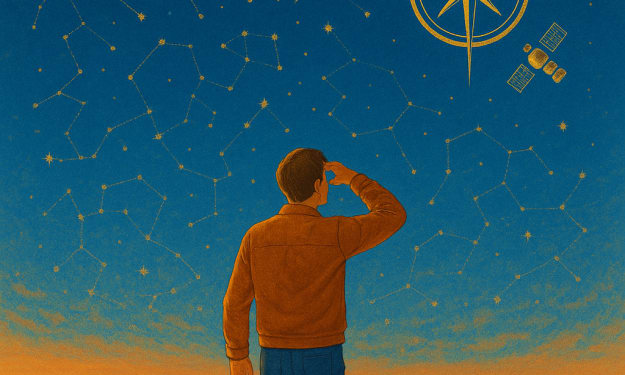
How Navigation Changed More Than Just Travel. AI-Generated.
1. The Day We Stopped Being Lost There was a time when getting lost was a daily part of human life — a farmer missing a familiar trail, a sailor misreading the stars, a traveler relying on strangers for direction. The invention of navigation systems didn’t just solve a logistical problem. It redefined what it means to know where you are.
By Ahmet Kıvanç Demirkıran5 months ago in Humans
One Daily Walk, a Whole New Mind
The Day I Finally Started Walking It began on a day when my thoughts were too loud to ignore. My head felt heavy, my chest tight. I wasn’t sad exactly — just stuck. I remember staring at my phone, scrolling endlessly, and feeling like I was watching my own life go by.
By Dadullah Danish5 months ago in Humans
The AI That Stole My Heart
I never believed in love at first swipe. At 32, I'd swiped left on more bad dates than I'd had bad hair days – which, trust me, is saying something. My life in Seattle was a cozy routine of freelance graphic design gigs, rainy coffee runs, and binge-watching rom-coms that made me roll my eyes more than swoon. Then, in January 2025, everything glitched.
By Mogomotsi Moremi5 months ago in Humans
The Bracelet
The bracelet was simple—silver links, nothing too ornate—but to Maya, it shimmered with the weight of a thousand memories. She had kept it buried in a velvet pouch for nearly a decade, tucked away in the farthest corner of her dresser, hidden from sight but never from thought.
By Saqib Ullah5 months ago in Humans
The Joy of Giving: How a Thoughtful Gift Can Brighten a Life
The Joy of Giving: How a Thoughtful Gift Changed Everything It was a chilly Saturday morning in late November, the kind where the air smells like winter is just around the corner. Ellie Jameson stood in the corner café, hands wrapped around a steaming cup of cocoa, watching snowflakes dance outside the window. The city buzzed with the early excitement of the holiday season, and gift bags and laughter were everywhere. But Ellie wasn’t thinking about shopping lists or sales. She was thinking about Mrs. Hargrove. Mrs. Hargrove had lived next door to Ellie for most of her childhood. A retired piano teacher with a gentle smile and silver hair always pinned in a neat bun, she had become a quiet presence in Ellie’s life. When Ellie was little, Mrs. Hargrove taught her to play “Twinkle, Twinkle, Little Star” on an old upright piano that creaked more than it played. As Ellie grew, so did their bond. They baked cookies in December, shared stories over lemonade in the summer, and exchanged birthday cards without fail. But things had changed lately. After a fall last year, Mrs. Hargrove had stopped going out as much. She no longer played the piano, and her warm laughter wasn’t heard through the walls like it used to be. It worried Ellie, who now lived alone and worked from home. The silence next door had started to feel heavier than usual. As Ellie sipped her cocoa, she had an idea. Not a big, expensive one—but something meaningful. Something that might remind Mrs. Hargrove of the joy she once shared so freely. The next few days were filled with careful planning. Ellie visited a vintage music shop tucked away in a quiet part of town. There, she found it: a delicate music box with painted flowers and a small ballerina that spun when the lid was lifted. But the real magic was the tune it played—Clair de Lune, one of Mrs. Hargrove’s favorite pieces. Ellie remembered her playing it countless times during long summer evenings. She wrapped the box in soft blue paper and tied it with a silver ribbon. No card, no message—just the gift. She wanted the music to do the talking. On a frosty Wednesday morning, Ellie knocked gently on Mrs. Hargrove’s door. After a few moments, the door creaked open. Mrs. Hargrove looked surprised, wrapped in a cozy shawl, her eyes slightly dimmer than Ellie remembered—but still kind. “I brought you something,” Ellie said, offering the small box with a hopeful smile. Mrs. Hargrove took it with slightly trembling hands and invited Ellie in. They sat together at the kitchen table, just like they used to. Ellie watched as the ribbon was untied, the paper unfolded with care. And when the lid of the box was opened, and the soft melody began to play, something beautiful happened. Tears welled up in Mrs. Hargrove’s eyes—but her smile returned. Not just a polite smile, but one that reached all the way back to those warm, musical evenings. “Oh, Ellie,” she whispered, placing a hand over her heart. “I haven’t heard this in years.” They sat in silence, listening. Then, slowly, Mrs. Hargrove stood and, for the first time in months, walked to the piano. It still sat there, dusty but dignified. She ran her fingers gently along the keys before pressing a few tentative notes. The sound was a little off-key, but it didn’t matter. Ellie’s eyes lit up. “I might be a bit rusty,” Mrs. Hargrove chuckled. “Play anyway,” Ellie said. And she did. It was imperfect, but perfect. Notes filled the room like sunlight after a long winter. That morning turned into an afternoon of stories, music, and even some cookies—just like old times. Ellie walked home with a full heart. In the weeks that followed, the music returned to their small corner of the world. Mrs. Hargrove began playing again, often with the window open just a little so the notes could travel. Neighbors stopped to listen. Ellie visited more often, and together they even planned a small recital for the holidays, inviting kids from the neighborhood. All because of one simple, thoughtful gift. --- The Power of a Thoughtful Gift Sometimes, the best gifts aren’t the biggest or most expensive. They’re the ones that carry meaning—the ones that remind someone they’re seen, remembered, and valued. Ellie’s gift didn’t just bring back music to Mrs. Hargrove’s life—it restored connection, warmth, and joy. In a world full of noise and rush, giving with heart can be the quietest, yet most powerful, act of all.
By Muhammad Saad 5 months ago in Humans
15 Things To Do When Facing Uncertainty
Hey, how are you doing today? Are you having a good day or a “not so great day?” Do you feel valued right now? In a world where everything is falling apart around us, it’s hard to feel valued. There are too many layoffs and new staff being hired that need training.
By Elizabeth Woods5 months ago in Humans
The Bright Side of the Mind
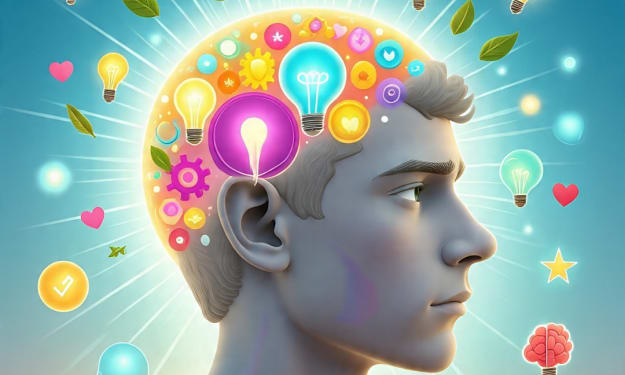
The Bright Side of the Mind Surprising Psychological Facts That Can Boost Your Happiness, Confidence, and Well-Being Emma sat by her window one crisp autumn morning, sipping tea and flipping through a self-help book she’d borrowed from the library. She wasn’t unhappy—just curious. Like many people, she wondered: What actually makes us feel good? Not just fleeting happiness, but the deep, satisfying kind that lingers. Her search led her down a rabbit hole of psychology articles, TED Talks, and studies. What she discovered wasn’t just insightful—it was empowering. The facts weren’t complex theories or clinical advice; they were simple truths backed by science that could make a real difference. She began testing them out in her own life. One of the first things Emma learned was this: Gratitude rewires the brain. Studies from the University of California found that people who wrote down three things they were grateful for every day were not only happier, but physically healthier. Emma started a small journal. At first, it felt awkward. But within weeks, she noticed a shift. She wasn’t ignoring her problems—she was just giving equal attention to the good. Her morning tea tasted better. Her cat’s soft purring felt warmer. Her challenges didn’t disappear, but she faced them with more resilience. Then she came across another gem: Smiling—genuinely or not—can boost mood. It sounded silly, but psychologists at the University of Kansas had proven it. When Emma forced herself to smile during tough tasks, she noticed she felt slightly better—and her posture even straightened. It was as if her body was tricking her mind into feeling stronger. It worked during meetings, chores, even traffic. Her favorite discovery, though, was this: Helping others helps you just as much. It turns out that acts of kindness trigger a release of dopamine—the brain’s natural reward chemical. It’s called the “helper’s high.” Emma started small: holding the door, sending kind messages, complimenting strangers. The effects were almost immediate. People smiled more around her. Her mood lifted. Her social anxiety shrank. She didn’t need grand gestures—just genuine connection. Emma also learned that we become what we think about. Psychologists call it “neuroplasticity”—the brain's ability to reshape itself based on our thoughts and behaviors. Negative thinking strengthens negative pathways. But practicing optimism, mindfulness, and self-compassion actually strengthens the parts of the brain linked to emotional regulation and joy. Emma wasn’t always positive, but she became more aware. When she caught herself spiraling, she paused and replaced the thought. What if this goes right? she’d ask herself. And often, it did. Of course, no journey is perfect. Some days, Emma forgot to be grateful or kind. Some days, she didn’t feel like smiling. But the beauty of these psychological facts was that they didn’t require perfection—just repetition. Bit by bit, she was shaping a new version of herself. One evening, her friend Marcus came over, worn down by work stress and burnout. “You’ve been different lately,” he said, noticing her calm presence. “Happier. How?” Emma smiled. Not the forced kind, but the real kind. “Honestly? I started listening to my brain.” She shared some of what she’d learned—not as advice, but as a story. Her story. Marcus nodded slowly. “I could try that,” he said. And in that moment, another ripple of kindness began. --- Key Takeaways from Emma’s Story (Based on Real Psychological Research): Gratitude practice improves happiness and physical health. Smiling, even when it feels unnatural, can improve mood and reduce stress. Helping others activates the brain’s reward systems, improving emotional well-being. Positive thinking strengthens the brain’s emotional resilience through neuroplasticity. Small, consistent actions are more powerful than dramatic changes. --- In a world filled with noise and pressure, sometimes the most powerful truths are the simplest. Emma didn’t need a life coach or a miracle. She needed only to look inward, understand how her mind worked, and start making tiny shifts in her daily life. And just like that, happiness became less of a mystery—and more of a choice.
By Muhammad Saad 5 months ago in Humans
Studies Show That Predators Target Women Based on One Thing
The myth we’ve been told our whole lives If you’ve ever been told “don’t wear that dress,” “cover up,” or “you’re asking for trouble,” you already know the script society hands women. For decades, the idea has been drilled into us: what you wear determines your risk.
By Awais Qarni 5 months ago in Humans