celebrities
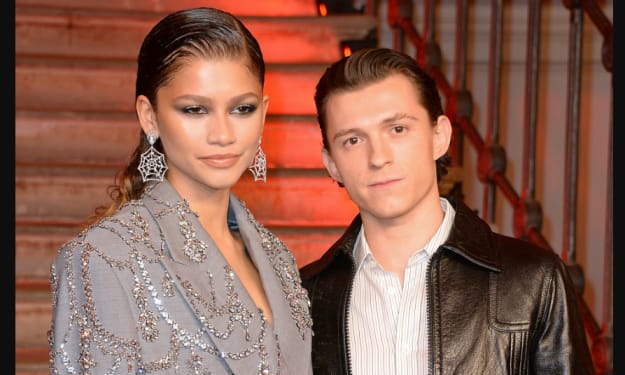
It can be hard to keep up with celebrity relationship low-down, but we certainly try.
Rob Reiner and the Stories That Shaped His Remarkable Career
Some names carry a weight that reaches beyond their immediate work. Rob Reiner is one of those names. Over decades, he has touched audiences through films that made people laugh, cry, and reflect on life. His influence is felt not only in entertainment but in the quiet ways stories shape culture. Behind the familiar name lies a journey of persistence, creativity, and personal struggle. From early exposure in a famous family to his own achievements, Rob Reiner’s story is about more than just movies. It is about how passion and vision can leave a lasting mark. This article explores his life, career, and the impact of his work, capturing the human side behind the films and the man himself.
By Muqadas khan7 days ago in Humans
School Closures in the United States: Why They Happen and What People Want to Know
School Closures in the United States: Why They Happen and What People Want to Know School closures in the United States continue to raise questions among parents, students, and educators. Many people search online asking why schools are closing, whether closures are temporary or permanent, how long they last, and whether students will return to classrooms. This report explains the main reasons behind school closures in America and addresses the most common questions people ask.
By America today 8 days ago in Humans
Why Some Wounds Never Fully Heal
My mother died on a Tuesday in March, three weeks after her diagnosis. Cancer moved through her body with terrifying speed, leaving no time for goodbyes, no space for preparation, no chance to say all the things I'd always assumed I'd have time to say. She was here, and then she wasn't. Everyone told me the same thing: "Time heals all wounds." They meant well. But they were wrong. Fifteen years later, I still reach for the phone to call her when something good happens. Fifteen years later, I still feel the absence like a phantom limb—a presence that's missing but somehow still aches. Fifteen years later, I'm still waiting for the day when thinking about her doesn't hurt. I've finally accepted that day isn't coming. And somehow, that acceptance has brought more peace than all the years of waiting for the pain to end. The Myth of Complete Healing We're sold a particular narrative about grief, about trauma, about loss: if you do the work, if you process it correctly, if you're strong enough, you'll heal completely. The wound will close. The pain will end. You'll be whole again. But some wounds are too deep for that kind of closure. Some losses are too profound to ever fully recover from. And pretending otherwise doesn't help—it just makes us feel like failures when we're still hurting years later. I spent the first five years after my mother's death trying to heal "correctly." I went to therapy. I joined support groups. I read books about grief. I talked about my feelings. I did everything I was supposed to do. And yet, the wound remained open. I'd have months where I felt okay, where I'd think, "Finally, I'm healing." Then something small—a song, a scent, Mother's Day—would rip everything open again, and I'd be back at square one, sobbing in parking lots and grocery stores, feeling like I'd failed at grief. "Why can't I get past this?" I asked my therapist during one particularly difficult session. "It's been five years. Shouldn't I be better by now?" She leaned forward, her eyes kind. "What if this isn't about getting past it? What if it's about learning to carry it?" The Wounds That Change Us Some experiences fundamentally alter who we are. They create a before and after in our lives so profound that we can never return to the person we were. Before my mother died, I believed the world was basically safe. I believed people I loved would be around for a long time. I believed I had control over my life in ways that made me feel secure. After she died, all those beliefs shattered. I learned that safety is an illusion. That people you need can vanish without warning. That control is a story we tell ourselves to feel less terrified of existence. These weren't lessons I could unlearn. This wasn't damage I could repair. My mother's death didn't just hurt me—it changed me at a cellular level. The wound wasn't something on me; it became part of me. I spent years trying to get back to who I was before. I'd look at old photos and barely recognize the carefree woman smiling back at me. Where had she gone? Could I ever find her again? The answer, I eventually realized, was no. And that wasn't a failure. It was just the truth.
By Ameer Moavia12 days ago in Humans
The Weight of Being "Too Much": How I Learned My Sensitivity Was Never the Problem
I was seven years old the first time someone told me I was too sensitive. I'd come home from school crying because my best friend said she didn't want to play with me anymore. My father looked up from his newspaper, irritation flickering across his face. "You're being too sensitive," he said, turning the page. "Kids say things. You need to toughen up." So I tried. I swallowed my hurt. I forced a smile. I pretended it didn't matter. That moment became a blueprint for the next three decades of my life. By the time I was thirty-seven, married with two kids and a successful career, I'd perfected the art of not feeling too much. I'd learned to laugh off insults, minimize my pain, and apologize for my emotions before anyone else could criticize them. But the cost of all that toughening up? I'd become a stranger to myself. The Education of Emotional Suppression The messages came from everywhere, each one teaching me that my natural way of being was somehow wrong. When I cried during a sad movie: "It's just a movie. Why are you so emotional?" When a friend's thoughtless comment hurt my feelings: "You're overreacting. I was just joking." When I needed time to process conflict: "You're being too dramatic. Just get over it." When I was moved to tears by beauty—a sunset, a piece of music, an act of kindness: "You cry at everything. What's wrong with you?" Each time, the same lesson: Your feelings are excessive. Your responses are inappropriate. You are too much. I learned to preface every emotional expression with an apology. "I know I'm being ridiculous, but..." "I'm probably overreacting, but..." "Sorry, I'm just too sensitive..." I became an expert at minimizing my own experience, at gaslight myself before anyone else could do it for me. The Slow Erosion of Self What happens when you spend decades being told your emotions are wrong? You start to believe it. I stopped trusting my own reactions. When something hurt me, my first thought wasn't "that was hurtful," but "I'm being too sensitive." When I felt uncomfortable in a situation, I'd override my instincts and force myself to stay, convinced my discomfort was a character flaw rather than valuable information. I became everyone's emotional support system while denying myself the same care. Friends would call me for hours when they were upset, and I'd listen with endless patience and compassion. But when I was hurting? I'd minimize it, laugh it off, handle it alone. In my marriage, I'd absorb my husband's bad moods without comment, adjust my behavior to keep the peace, and swallow my hurt when he was dismissive or short with me. "You're too sensitive" became his go-to response whenever I expressed that something bothered me. Eventually, I stopped expressing it at all. I taught my children to share their feelings, while simultaneously teaching them through my example that their mother's feelings didn't matter. I'd hide in the bathroom to cry, ashamed that I couldn't be stronger.
By Ameer Moavia12 days ago in Humans
Who Is Maduro’s Wife? Power, Politics, Sanctions, and the U.S. Capture Claims Explained
When breaking news from Venezuela began rippling across the world, one unexpected phrase shot to the top of search trends: “Maduro’s wife.” Not “Venezuela president,” not “U.S. strike,” but a deeply personal question tied to power, secrecy, and uncertainty.
By Bevy Osuos12 days ago in Humans
The People Who Sit by the Window
Buildings blurred into one another, storefronts flickered past like unfinished thoughts, and the sunlight slipped through the windows at an angle that made everything feel temporary. Emma always sat by the window. Not because she loved the view, but because it gave her something to focus on when her thoughts became too loud.
By Yasir khan12 days ago in Humans
Ian Balding Dies Aged 87 — What Led to the Moment That Shook British Racing
The name Ian Balding has echoed through British racing for decades, but in the past few hours it has surged to the top of search trends for a very different reason. News of his death at the age of 87 has sent a wave of emotion through the racing world, reigniting memories of legendary victories, quiet brilliance, and a man whose influence stretched far beyond the track.
By Bevy Osuos12 days ago in Humans
When Home Becomes a Memory: Learning to Let Go of the Person You Thought Was Forever
I still remember the exact moment I realized I had to let her go. We were sitting on opposite ends of the couch—the same couch where we'd spent countless nights talking until sunrise, dreaming about our future, planning adventures we'd never take. But that night, the silence between us felt heavier than any words we'd ever shared. The distance wasn't measured in inches. It was measured in all the things we'd stopped saying, all the dreams that had quietly died, all the versions of ourselves we'd outgrown. She still felt like home. That was the cruelest part. The Comfort That Becomes a Cage There's something uniquely painful about loving someone who feels like home but no longer helps you grow. For three years, she'd been my safe place—the person I ran to when the world felt too heavy, the voice that calmed my anxious thoughts, the presence that made everything feel right. But somewhere along the way, comfort had turned into complacency. We'd stopped challenging each other. We'd stopped dreaming together. We'd become so focused on preserving what we had that we forgot to ask ourselves if what we had was still what we needed. I'd read once that people come into our lives for a reason, a season, or a lifetime. I'd always assumed she was my lifetime. The thought of her being just a season felt like a betrayal of everything we'd built together. Yet deep down, I knew. The person I was becoming couldn't live in the life we'd created. And the person she was becoming deserved someone who could show up fully, not someone staying out of fear and familiarity. The Questions That Changed Everything The turning point came during a solo trip I took to clear my head. Sitting on a beach thousands of miles away, watching the waves reshape the shoreline over and over, I finally asked myself the questions I'd been avoiding: Was I staying because I loved her, or because I was afraid of being alone? Was I holding on to who we were, or who we could actually be? If we met today, as the people we've become, would we still choose each other? The answers terrified me. Because they revealed a truth I'd spent months burying: sometimes love isn't enough. Sometimes two people can care deeply for each other and still be wrong for each other. Sometimes the most loving thing you can do is let someone go so you can both find the versions of yourselves you've been suppressing.
By Ameer Moavia12 days ago in Humans
Michelle Randolph and the Quiet Rise of a Modern Actress
There are some public figures who arrive loudly, filling every screen and headline at once. Then there are others who grow slowly, almost quietly, until one day you realize they have been part of your screen life for years. Michelle Randolph belongs to the second kind. Her journey feels personal, unhurried, and grounded in patience. She does not chase attention. She lets her work speak first.
By Muqadas khan15 days ago in Humans
The Attention Economy Is Quietly Rewriting Our Minds — and Most People Don’t Notice
Every time you unlock your phone, scroll a feed, or tap a notification, you are participating in something far bigger than momentary distraction. You are engaging in what experts call the attention economy — a system where human focus is the most valuable resource on Earth. This isn’t hyperbole. It’s reality. For the companies that fuel the modern internet, your attention is currency. Every second spent watching, clicking, or reacting generates data that platforms use to predict your behavior, tailor your feed, and pull you deeper into their ecosystem. And the consequences go beyond algorithms. They are reshaping how we think, feel, and decide — often without our conscious awareness.
By Yasir khan16 days ago in Humans