
Strategies for Effective Conflict Resolution and Difficult Conversations
Real-life example


Conflict is an inevitable part of human interaction, and difficult conversations can be challenging to navigate. However, mastering the art of conflict resolution and effectively handling difficult conversations is essential for maintaining healthy relationships, fostering understanding, and achieving mutually beneficial outcomes. In this article, we will explore strategies for effective conflict resolution and navigating difficult conversations, supported by real-life examples that illustrate the power of these strategies.
Active Listening and Empathy:
Active listening and empathy are foundational to effective conflict resolution. Practice active listening by giving your full attention, maintaining eye contact, and showing genuine interest in the other person's perspective. Empathy involves understanding and validating the other person's feelings, even if you may not agree with their point of view.
Real-life example: Sarah and John, colleagues at work, had a disagreement regarding project responsibilities. They engaged in a difficult conversation where active listening and empathy played a crucial role. By actively listening to each other's concerns and expressing empathy for their respective perspectives, they were able to find a compromise that addressed both their needs, leading to a stronger working relationship.
Use "I" Statements:
When expressing your concerns or perspectives, use "I" statements instead of "you" statements. "I" statements focus on your feelings and experiences, making the conversation less accusatory and more conducive to constructive dialogue. This approach promotes understanding and reduces defensiveness.
Real-life example: Emily and Mark, a couple in a romantic relationship, faced a conflict regarding household responsibilities. Instead of saying, "You never help with chores," Emily used an "I" statement, saying, "I feel overwhelmed with the workload, and I would appreciate your support." This approach allowed them to engage in a productive conversation about sharing responsibilities and finding a balance that worked for both of them.
Seek Common Ground:
Identify areas of common ground or shared goals to foster collaboration and find solutions that satisfy both parties. Acknowledge shared interests and values to create a foundation of understanding. Emphasize the importance of finding win-win solutions that address the concerns of all involved.
Real-life example: Laura and Alex, members of a community organization, had differing opinions on a fundraising strategy. They recognized their shared goal of supporting the organization's mission and finding innovative ways to raise funds. By focusing on their common ground, they engaged in a constructive conversation that led to a collaborative fundraising approach that satisfied both their perspectives.
Practice Emotional Regulation:
Maintaining emotional composure during difficult conversations is crucial for effective conflict resolution. Practice emotional regulation techniques such as deep breathing, taking breaks when needed, and refraining from responding impulsively. By staying calm, you can foster a more productive and respectful dialogue.
Real-life example: John, a manager, faced a heated conflict with an employee who felt unfairly treated. Instead of reacting defensively, John practiced emotional regulation techniques, taking a moment to collect his thoughts and respond with empathy and understanding. This approach de-escalated the conflict and allowed for a more constructive conversation that led to a resolution.
Separate the Problem from the Person:
In difficult conversations, it's important to separate the problem or issue at hand from the person involved. Focus on addressing the conflict without attacking the individual. By depersonalizing the issue, you can foster a more objective and solution-oriented conversation.
Real-life example: Laura, a team leader, needed to address a performance issue with one of her team members, James. Instead of criticizing James personally, she focused on the specific behaviors impacting his performance and discussed ways to improve. By separating the problem from the person, she maintained a respectful tone and enabled James to see the feedback as constructive rather than personal criticism.
Seek Mediation or Third-Party Assistance:
In complex or deeply rooted conflicts, involving a neutral third party or mediator can facilitate resolution. A mediator can provide an unbiased perspective, facilitate communication, and guide the parties towards finding common ground and reaching a resolution.
Real-life example: Sarah and John, friends who co-owned a business, faced a significant disagreement regarding the future direction of the company. They sought the assistance of a business coach who acted as a mediator. With the mediator's guidance, they engaged in open and productive conversations, ultimately reaching a compromise that allowed the business to thrive while honoring both of their visions.
Effective conflict resolution and navigating difficult conversations are essential skills for fostering healthy relationships and achieving mutually beneficial outcomes. By practicing active listening, empathy, using "I" statements, seeking common ground, practicing emotional regulation, separating the problem from the person, and seeking mediation when needed, you can navigate conflicts and difficult conversations with greater success. Remember, constructive dialogue and a willingness to understand the perspectives of others can lead to resolutions that strengthen relationships and promote positive outcomes in various aspects of life.
About the Creator
Nesou
📓🌌✨ Dive into poetry, stories, and thoughts. 📚✍️ Unveil the universe's mysteries through words. 🌌✒️ Share emotions, experiences, and magic. ✨🖋️ Explore a boundless world of expression. 🌟📝
Send Me Tips🍀,insights and❤️if you'd like😍✨
A Historic Declaration
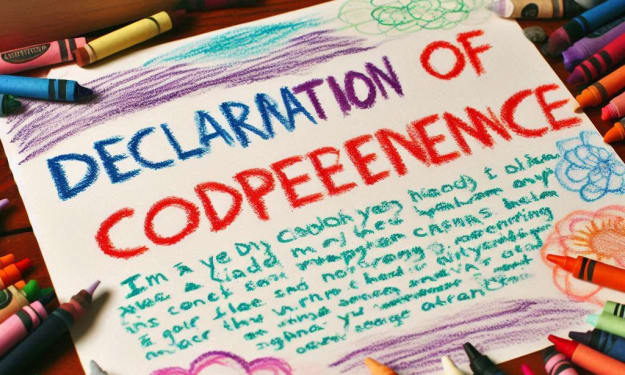
We the People of the Husbands of the United States of America, in Order to form a more perfect Union, and I mean you...with me...establish Justice, insure domestic Tranquility, provide for the common defence, promote the general Welfare, and secure the Blessings of Liberty to ourselves, after Puberty, do ordain and establish this Declaration of Co-Dependence.
By Gerard DiLeo6 days ago in Humans
Solutions For Singles Dealing With Confusion About Open Or Monogamous Relationships
The misunderstanding of making the decision between open and monogamous relationships is usually initiated by the ambiguity of the personal values. A lot of singles are confused about what society wants and what they need to know. Contemporary love has seen psychotherapist Esther Perel examine the existence of desire, security and autonomy. There are those who desire to have the exclusivity of emotions, and those ones who value freedom and adventure. Single people have to consider that they know what really matches their emotional needs but not what is fashionable or acceptable in the society.
By Grace Smithabout 10 hours ago in Humans



Comments
There are no comments for this story
Be the first to respond and start the conversation.