
SpaceX: Elon Musk's Crazy Space Dream That’s Actually Working
How SpaceX Is Making Sci-Fi Look Like Yesterday’s News

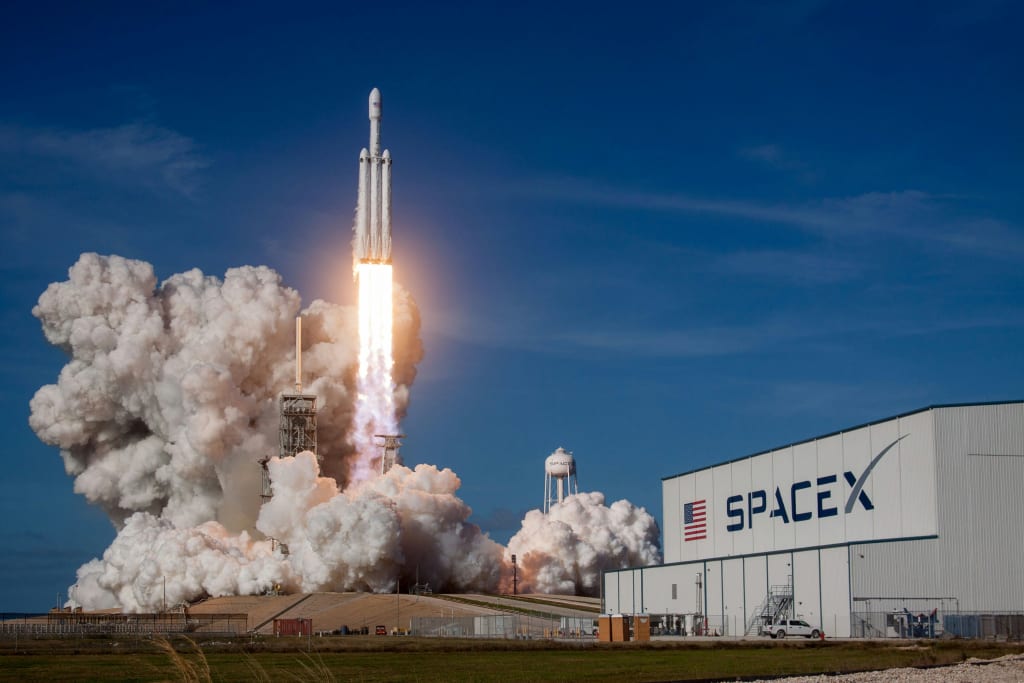
This article is the second in a five-part series exploring the life and ventures of Elon Musk. From his earliest entrepreneurial days to his most ambitious projects, we’ll delve into how he built his empire and what lies ahead.
SpaceX is rewriting the rules of space travel. With reusable rockets, crewed missions, and plans for Mars, Elon Musk’s company is doing what once seemed impossible. This isn’t just a tech revolution—it’s the dawn of a new space age.
The Space Race 2.0
For decades, NASA and the Soviet Union controlled space exploration. The Apollo missions put humans on the Moon, and the Space Shuttle allowed reusable spaceflight. But as budgets shrank and political priorities shifted, the dream of deep space exploration stalled. Then came SpaceX.
Founded in 2002, SpaceX had one goal: make space travel cheaper and more accessible. Musk envisioned a future where humanity could not only visit space but thrive there. Many dismissed his vision as science fiction, but within two decades, SpaceX disrupted an entire industry.
Reusability: The Game Changer
Before SpaceX, rockets were single-use machines—each launch destroyed hardware worth millions. This inefficiency made spaceflight astronomically expensive. SpaceX tackled this problem head-on.
In 2015, Falcon 9 made history by landing its first stage booster after launching a payload into orbit. The world watched in awe as SpaceX achieved what was once thought impossible. Reusability transformed economics: launching satellites, resupplying the ISS, and even deep space missions became far more affordable. Today, Falcon 9 boosters routinely land and fly again, a feat once considered a fantasy.
Breaking Barriers with Crewed Missions
NASA’s retirement of the Space Shuttle in 2011 left the U.S. dependent on Russian Soyuz rockets for astronaut transport. SpaceX changed that. In May 2020, Crew Dragon carried NASA astronauts to the ISS, marking the first crewed orbital flight by a private company.
This wasn’t just a milestone—it was a paradigm shift. SpaceX proved that commercial companies could safely transport humans to space. NASA’s reliance on SpaceX for crew transport signaled a shift from government-dominated spaceflight to a commercial future.
Starship: The Future of Space Travel
While Falcon 9 revolutionized near-Earth operations, Starship aims for the stars—literally. Designed as a fully reusable spacecraft, Starship promises to make Mars travel affordable. With a payload capacity surpassing the Saturn V, it could transport humans and cargo across the solar system.
But Starship is more than just a Mars rocket. NASA selected it as the lunar lander for the Artemis program, meaning it will help return humans to the Moon. If successful, Starship could replace all existing rockets, making deep space travel routine.
The Commercial Space Boom
SpaceX’s success ignited competition. Companies like Blue Origin and Rocket Lab emerged, each offering unique approaches to spaceflight. SpaceX also launched Starlink, a global satellite internet network. While critics raise concerns about space debris and night sky pollution, Starlink could provide high-speed internet to underserved regions worldwide.
Additionally, space tourism is no longer a fantasy. In 2021, SpaceX’s Inspiration4 mission sent an all-civilian crew into orbit. The future of space isn’t just for astronauts—it’s opening up to private citizens, researchers, and adventurers.
Why This Matters
SpaceX isn’t just launching rockets—it’s redefining humanity’s relationship with space. The implications are profound:
- Economic Growth: A thriving space industry creates jobs, fuels innovation, and attracts investment.
- Technological Advancements: SpaceX’s innovations improve not just rocketry but also robotics, materials science, and artificial intelligence.
- Inspiration: Just as Apollo inspired a generation, SpaceX is sparking renewed interest in STEM fields and space exploration.
The Road Ahead
Challenges remain. Starship’s development faces technical hurdles, regulatory scrutiny, and environmental concerns. Mars colonization is a logistical and ethical challenge. But if history has shown anything, it’s that SpaceX thrives on defying expectations.
With each successful launch, the line between science fiction and reality blurs. Humanity is no longer just an Earth-bound species—we’re on the verge of becoming interplanetary.
Next article
About the Creator
Alain SUPPINI
I’m Alain — a French critical care anesthesiologist who writes to keep memory alive. Between past and present, medicine and words, I search for what endures.
Keep reading
More stories from Alain SUPPINI and writers in Humans and other communities.
Mastering French Without Losing Your Sanity: A Realistic Guide for Beginners
Learning French can feel like solving a Rubik’s Cube blindfolded. The tricky pronunciation, the never-ending grammar rules, and the surprising exceptions make it seem impossible. But don’t worry—equipping yourself with key expressions and effective strategies can turn frustration into fluency. Let’s simplify French and make learning enjoyable.
By Alain SUPPINIExclusive • 11 months ago


Comments (1)
What a compelling deep dive into one of the most transformative forces in modern space exploration. SpaceX has truly reignited the dream of reaching beyond Earth not just with vision, but with real, measurable progress. Reusable rockets, crewed missions, and the audacious goal of reaching Mars are no longer distant ideas they’re happening now. This article captures that momentum beautifully. Looking forward to the rest of the series.