

“Bye, Buddy,” Sophia said as she kissed the top of the old dog’s head, “see you when I get home!” She grabbed her backpack from beside the door and checked to make sure her lunchbox was inside before swinging it over both her shoulders. “Bye, Buddy,” she said again as she backtracked to kiss the top Buddy’s head once more, “see you when I get home!”
Sufficiently satisfied, Sophia headed out the front door. She had completed this same ritual every morning for as long as she could remember. Buddy had been her companion since she was a small child and one of her greatest fears was knowing that his lifespan would be significantly shorter than her own. When she became fixated on a particular fact, she found that if she performed a certain, predetermined action back to back, it helped ease her worry. Important actions in sets of two always made her feel better, just in case the first time it didn’t stick. In fact, she could recall the only time ever she hadn’t said goodbye to Buddy twice before leaving for school: she had overslept and was running late, so in her haste she only said goodbye to him once as she grabbed her backpack and ran out the front door. Halfway to school, she panicked as realized she hadn’t properly said goodbye but she couldn’t turn around or she receive a demerit. Sophia spent the rest of the school day distracted and filled with anxiety, absolutely certain that something bad would happen to Buddy before she got home. Her distress was so profound that she texted her father in-between every class to make sure Buddy was still okay, then she proceeded to run the whole mile home as soon as the last bell rang. It was after this incident that Sophia’s father bought her a worry journal on the advice of her psychiatrist.
As Sophia stepped into the warm morning sun and headed down the busy sidewalk to begin her daily route, she reached into the side pocket of her backpack to pull out the small black notebook that her father had given to her many years ago. The notebook was expertly bound with a cover made from a supple Italian leather and had an elastic band to keep it shut, allowing all the pages to remain crisp and neat. Despite its many years of daily use, the spine remained smooth and intact: a true testament to the quality craftsmanship of the notebook. Sophia smiled as she ran her fingers over the gently rounded corners before flicking the notebook open to the page marked by a grey ribbon. It was here within the sturdy pages of her journal that she felt most at ease and the least judged: she could truly be herself, eccentricities and all. She clicked her pen to mark the date at the top of the new page, then wrote “Buddy” directly underneath of it followed by two hearts.
Sophia preferred to spend her morning walk making note of specific things, such as how many red cars she saw on her walk to school or whether the old man was sitting at his usual seat at the café reading the morning paper. She would make notes in her journal as she walked through the city blocks depending on what she saw, or didn’t see: all of which, to Sophia, would determine what kind of day she was going to have.
Sophia learned the hard way to only make notes in her journal outside of school. When she was first diagnosed with obsessive-compulsive disorder and her father had bought her the little black notebook to help quiet her loud mind, Sophia would write down every pattern she noticed, when she noticed it, including during the middle of class. She used these patterns to decipher their meaning as to what kind of day she was having and why. One of her classmates saw her pull out and put back her notebook over a dozen times during the course of one particular period, so when the bell rang to change classrooms, her classmate snatched the notebook off Sophia’s desk to have a look for herself.
“Ew,” Sophia’s classmate said with genuine disgust as she flipped through the pages, “what is this?” As she read, she laughed and pointed to various things as she showed her friends, who egged her on.
“Oh my God, you’re such a freak,” another classmate said, looking from the book to Sophia and back again with her mouth open in delighted cruelty.
Sophia wanted to explain but no words came out when she opened her mouth, so instead she just looked down at her desk in shame. Sophia was only saved by Grace, who came up behind the other girls to grab the notebook out of their greedy gaze and return it to her. Grace didn’t understand her classmate’s mental illness, but she didn’t treat Sophia any differently from anyone else. For Sophia, it was better this way: none of her classmates understood the complexities of her disorder, but at least Grace didn’t torment her. The rest of her classmates, on the other hand, would routinely make comments along the lines of them “being so OCD!” and proceed to straighten the books on the classroom shelves or make a fuss about the desks not being in perfect rows and then laugh about it. It wasn’t like that at all for Sophia. They just didn’t understand that it was a feeling of foreboding and dread; the deep understanding that something bad would happen if Sophia didn’t do a particular action, like count how many red cars she saw on the way to school or kiss Buddy on the head twice before leaving each morning.
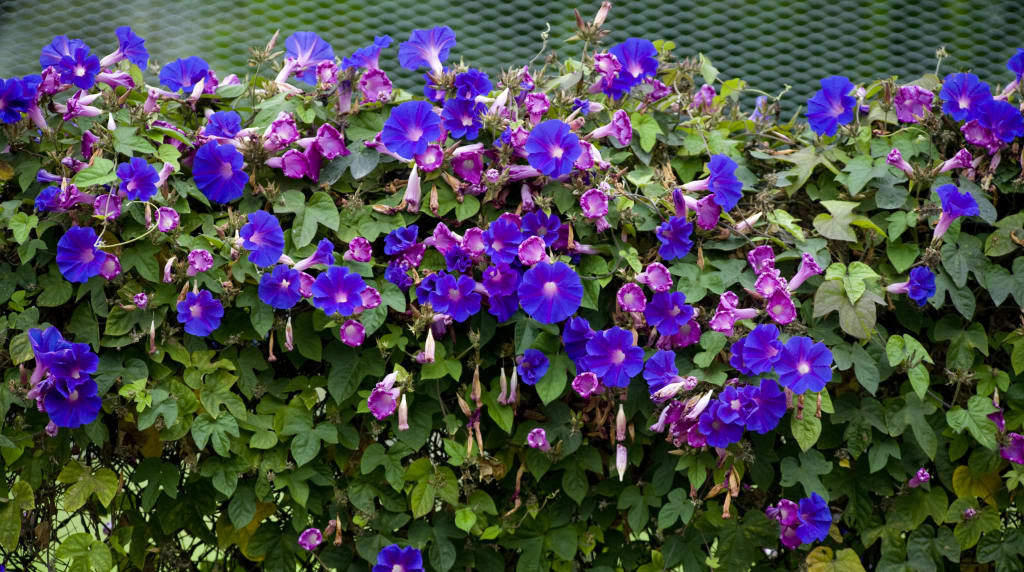
Sophia sighed as her mind returned to those awful girls taunting her, as her mind often did. She had learned since then to keep her journal private and would analyze the day ahead of her on her morning commute instead. She had only seen three red cars so far on her walk and as such had made three small tally marks in her notebook. Not a great sign for the day ahead, but oh! The old man was at his table right where he was supposed to be. Sophia smiled as she made a note. He had been at the café yesterday, too, but had been at the wrong table. It was a bit startling but the day had ended up more or less okay. She had come up with a ranking system for everything she encountered along the way. The most important thing for Sophia to see was the number of wild morning glories that grew along an old chain link fence: it was her favorite part of her daily walk. As she rounded a corner, Sophia frowned. There was usually a group of smartly dressed professionals waiting at the number 312 bus stop, but there wasn’t a single person hanging around the dirty bus shelter today. The number 312 bus must have been early for once.
Sophia scowled as she scribbled notes to herself on an unusually bare page. She flipped back to yesterday’s page, which had a moderate number of annotations and for all intents and purposes had ended up being a halfway decent day. There had been ten morning glories blooming, which wasn’t as many as the day before (fifteen) but was at least substantially more than there had been on Monday (only two), which had just been an awful day (rightfully so). Sophia looked up from her notebook to see the familiar red, white, and blue striped barber’s pole of Sal’s Barbershop: she took a deep breath and held it as she passed in front of Sal’s, then New To You Boutique, and finally the Stop ‘n’ Shop corner store. Just beyond the stoop of the Stop ‘n’ Shop was an entrance to the small alleyway she’d been eagerly looking forward to all morning. Still holding her breath, Sophia peered her head down the narrow alleyway that sat between two brick buildings.
“Wow!” Sophia gasped, startling a few passersby.
At the end of the dirty and cramped alleyway was an old chain link fence that was completely covered in tangled, leafy green vines and dozens of pastel trumpet-shaped flowers. Sophia hurried down the alleyway, barely noticing she stepped in a questionable puddle near the wall. She knew September was peak season for morning glories but she had never seen so many all at once! She slowed down to take her time counting all of them.
“56!” Sophia said excitedly to herself, as she finished counting up the tallies in her notebook. “Today is going to be an excellent day. Oh, wait.” She noticed a few more pale pink blooms peeking out from behind a rusty, beat-up trashcan. The trashcan was wedged in a considerably smaller alley that ran perpendicular to the one she was in. These types of alleys were all over the city: not much wider than a single person, but they were meant to be used as escape routes in case of a fire and you found yourself trapped in the main alleyway. Sophia pulled the trashcan free; when she did, a canvas sack fell forward.
“What is this?” Sophia wondered. She put her notebook down on the ground so she could pick up the canvas sack more easily: it wasn’t much larger than a bag of flour but significantly lighter than she’d expected. She noticed one side of the bag was covered in a blue dye; it had left a blue stain on the side of the brick building where it had been jammed between the trashcan and wall. Sophia peered inside the sack to see 10 neatly bundled stacks of 20 dollar bills, each with a band that read $2,000 on it. She couldn’t believe her eyes! She didn’t dare touch the money: it looked like blue ink had exploded all over the inside of the bag and it coated many of the bills. Sophia didn’t want to get dirty, so instead she just looked at all the money and marveled at how few bills actually made up $20,000. It was amazing, really; to her, $20,000 was an incredible amount of money, but when broken down like this, it hardly seemed like much at all. It all fit so nicely into such a small bag…
“What do you think you’re doing?” a gruff man’s voice asked from behind her. Sophia shook the daze from her eyes with a start. She turned around to see a rough looking man with dirty clothes and something that looked like a ski mask in his left hand, staring at her from the front of the alleyway.
“I…” Sophia started, but the rest of her words got stuck in her throat. Something about the man made every hair on both of her arms stand on end. He looked like he’d been in a recent fight and wasn’t afraid of another one.
“I’ll ask again,” the man said, taking a few steps closer to Sophia and fully blocking the main alleyway entrance, “what do you think you’re doing?” The man’s eyes fell on the canvas bag in Sophia’s hands and he said more angrily, “that doesn’t belong to you.” He took a few more steps towards her, flexing his free hand in a menacing way as if to warn, you're going to regret this. Sophia’s body reacted before she could even think: she knocked the rusted trashcan down between them and ran through the narrow fire escape, canvas bag in hand, as fast as her legs could take her. She didn’t stop running, or look back even once, until she got to the safety of the school grounds. It was only then, when she finally stopped to catch her breath and think more clearly that her stomach dropped: she had left her notebook behind.
About the Creator
Keep reading
More stories from Emily Scott and writers in Humans and other communities.
First Lady of Song
The First Lady of Song, Queen of Jazz, Lady Ella: these loving nicknames have been bestowed upon arguably one of the greatest singers of all time, Ella Fitzgerald. And for good reason, too. I grew up listening to Ella’s sultry voice thanks to my music-loving father, who has a particular soft spot for the classics and oldies. Although, I never truly appreciated the importance and impact of her long musical career until I was much older. I just loved the way she sang and how her songs made me feel. It was only when we began to take an in-depth dive the civil rights movement in school did the gears begin to turn and things clicked into place for me. By every right, Ella was an incredibly talented singer; however, for her to have such a successful career during the late 1930’s through 1960’s takes her to a completely different level of powerhouse.
By Emily Scott5 years ago in Beat
Autonomy Is The Real Privilege
Good morning, freedom-seekers! Today we’re gonna be looking at autonomy. A strange word, I know; one many would probably look at blankly and run away from on sight. We’re gonna figure out what it actually means, consider how it’s achieved, and decipher just how deeply most of us are tangled up in dependence without realising it.
By That ‘Freedom’ Guya day ago in Humans
How Do Himalayan Salt Bricks Create Healthier Hospitals?
Himalayan salt bricks are changing how hospitals promote health. Today, medical centers seek simple ways to help patients heal safely. Instead of using advanced technology, some now opt for natural materials, such as salt bricks.
By david smith7 days ago in Humans
Smart phones, Humans and Aliens.
WARNING. I will be tapping into one of your favorite creative tensions: The absurdity of humans worshipping their glowing rectangles as if they were tiny oracles. There’s something deliciously poetic about that contradiction, and it lends itself beautifully to an instructive proviso.
By Novel Allen5 days ago in Poets




Comments
There are no comments for this story
Be the first to respond and start the conversation.