
Slander and Taoism

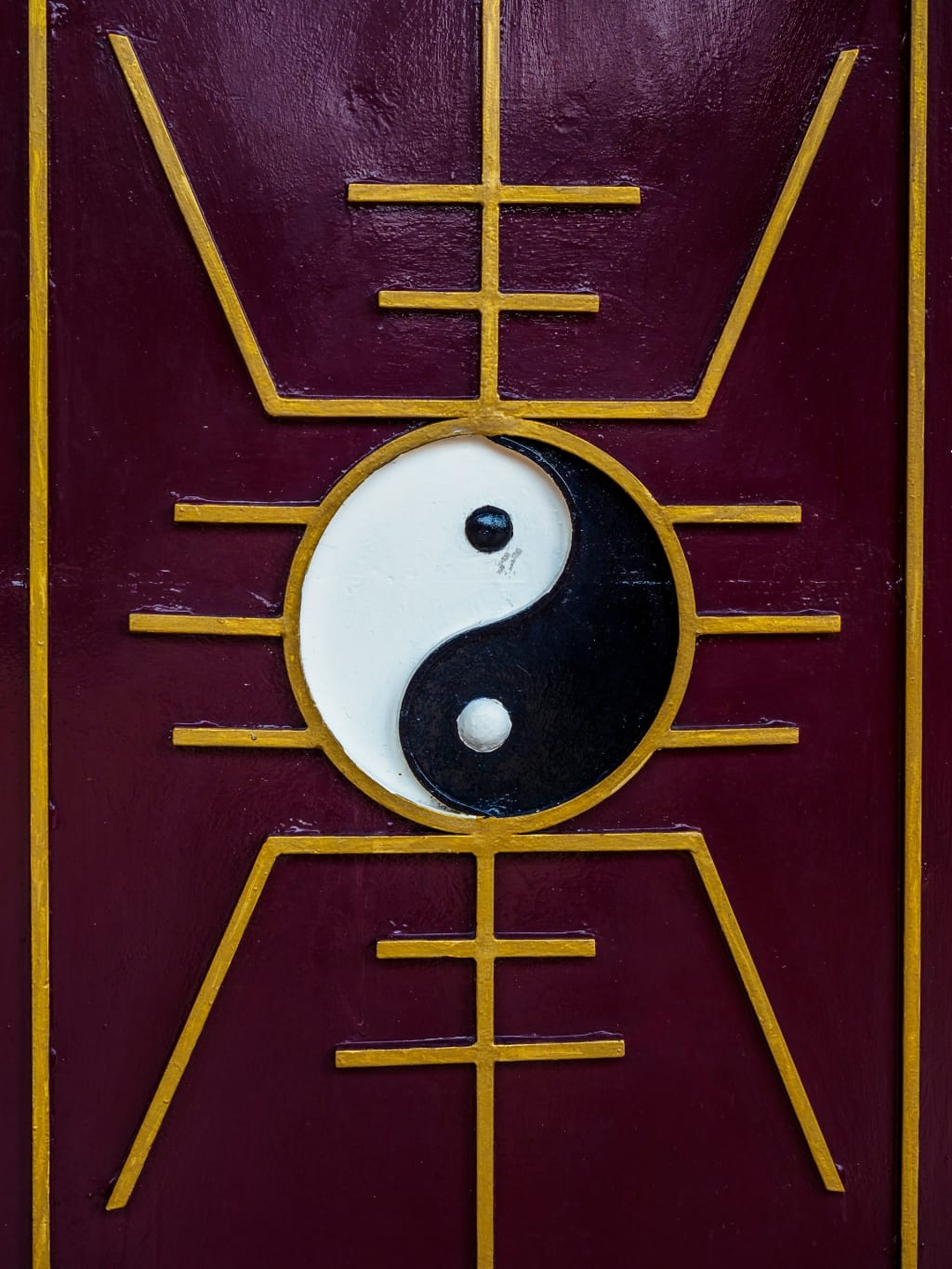
This is part of a series I am doing on how various religions view slander and gossip. It is just not a "Christian" thing, and it is the point that is destroying us.
Taoism is a path made of many human methods for living in harmony with the Tao — the natural flow of life. It is a collection of human methods by humans for humans. It began with early Chinese wisdom and grew across dynasties like the Zhou, Han, and Tang. Taoism includes meditation, rituals, inner alchemy, a deep respect for nature, the quest for truth, the refinement of humanity, and the acquisition of spiritual power. It is not based on one book or prophet but is a living tradition that changes with time.
Introduction to Taoism
Taoism is one of the world’s oldest spiritual traditions, but it doesn’t always look like a religion. It doesn’t ask you to worship a god or believe in a fixed story. Instead, Taoism offers ways — or methods — for living in balance with the world around you. These methods were discovered, tested, and passed on by people walking a spiritual path. They form a living tradition.
Taoism is not one single thing. It has quiet thinkers and powerful rituals. It has ancient texts and secret oral teachings. It has monks, farmers, warriors, artists, and healers — all finding different ways to follow the Tao, the great Way of the universe.
The Tao Zang and the Oral Tradition
Taoist teachings are stored in a massive library called the Tao Zang (or Daozang) — the Taoist Canon. It holds over 1,400 texts written across centuries and is often referred to as the Taoist Bible. Included in these writings are the following:
- Quiet guides for meditation
- Complex rituals for protecting a village
- Recipes for healing and extending life
- Maps of the spirit world
- Songs, prayers, and stories
- But not all Taoist knowledge is written down...
Much of it is passed by oral tradition — teacher to student, through posture, breath, silence, and presence. A master might give a student one practice to work on for years before saying another word. This is how Taoism stays alive: not by memorizing, but by living it.
These human methods — gathered through effort, refined through experience — make Taoism a changing but connected stream. It grows through what works, not through what must be believed.
Unity in Diversity: What Taoists Tend to Share
With all its paths, you might wonder ... what do Taoists think?
- Wu wei – acting without forcing. Letting things unfold naturally.
- Qi – life energy. Taoist practice often includes breathing, movement, and awareness of energy.
- Harmony with nature – Taoists see mountains, rivers, trees, and seasons as teachers.
- Simplicity – less clutter, fewer words, more space.
- Meditation and stillness – sitting quietly to sense the Tao.
- Non-dogma – Taoism doesn’t insist you believe anything. It invites you to observe, try, and grow.
There’s no one way to be a Taoist. Some chant. Some meditate. Some cook in silence. Some practice martial arts. Some serve the community. Some walk alone in the woods. The Way is wide enough for all of them.
Taoism Views on Slander and Gossip
Taoism generally discourages gossip and slander, emphasizing harmony, naturalness, and avoiding actions that disrupt the flow of the Tao. It views gossip and slander as harmful behaviors that create disharmony, both within the individual and within the community. They are seen as actions that stem from a lack of understanding of the Tao and a focus on superficial appearances rather than the underlying truth.
Disruption of Harmony
Taoism stresses living in accordance with the Tao, the natural order of the universe, which promotes harmony and balance. Gossip and slander disrupt this harmony by creating conflict, negativity, and disharmony within individuals and communities.
Lack of Understanding
Taoism suggests that those who engage in gossip and slander often lack a deep understanding of the Tao and the interconnectedness of all things. They may be overly focused on external appearances and fleeting events rather than the underlying truth and the natural flow of life.
Focus on Superficiality
Taoism encourages a focus on inner virtue and naturalness, rather than on outward appearances or social status. Engaging in gossip and slander often involves judging others based on superficial information and appearances, which is seen as a distraction from cultivating true virtue and understanding.
Negative Impact on the Individual
Taoism teaches that negative actions, like gossip and slander, ultimately harm the individual who engages in them. They create negative karma and contribute to a state of disharmony within the individual's own being.
Emphasis on Naturalness and Non-Interference
Taoism emphasizes the importance of non-interference and allowing things to unfold naturally. Engaging in gossip and slander is seen as an attempt to control or manipulate situations, which goes against the Taoist principle of Wu Wei (effortless action).
Cultivating Virtue
Instead of engaging in gossip and slander, Taoism encourages the cultivation of virtue, such as compassion, humility, and respect for others. These virtues are seen as essential for living in harmony with the Tao and creating a positive and harmonious environment. "
About the Creator
Julie O'Hara - Author, Poet and Spiritual Warrior
Thank you for reading my work. Feel free to contact me with your thoughts or if you want to chat. [email protected]
Keep reading
More stories from Julie O'Hara - Author, Poet and Spiritual Warrior and writers in Humans and other communities.
The CEO of Everything
They say "jack of all trades, master of none," but they forgot to mention the part where the jack of all trades is also the camera woman, the makeup artist, and the person currently yelling at a tangled Wii microphone cable in a her own bathroom while recording herself singing and trying to make it look realistic and professional. (As professional as you can make it with nothing but a cell phone camera and a mic that doesn't work)
By Sara Wilson6 days ago in Humans
Hard Work or Talent?
In a small town surrounded by dusty roads and silent fields, two boys grew up with the same dream—to become the best runners their country had ever seen. Their names were Ayaan and Rohan, and from the outside, their lives seemed similar. They attended the same school, ran on the same broken track, and dreamed under the same open sky. Yet the paths they took, and the lessons they would teach the world, were very different. From an early age, Rohan was known as “the gifted one.” He ran faster than everyone else without much effort. Teachers praised him, classmates admired him, and coaches spoke about him with pride. His stride was smooth, his breathing calm, and his victories came easily. People said he was born to run. Talent, they believed, lived in his blood. Ayaan, on the other hand, was ordinary. He ran slower, tired faster, and often finished near the back. No one applauded his efforts. No one called him special. But Ayaan had something few noticed—an unbreakable determination. While others went home after practice, Ayaan stayed. While others rested on weekends, Ayaan trained alone. He believed that if talent was a gift, then hard work was a choice—and he chose it every day. As the years passed, the difference between them grew clearer. Rohan continued to win local races with ease. Because success came naturally, he trained only when required. “Why push so hard when I’m already the best?” he often thought. He enjoyed praise and believed talent would always carry him forward. Ayaan’s journey was much harder. He woke up before sunrise, running through empty streets while the world slept. His legs ached, his lungs burned, and doubt often whispered in his mind. There were days he wanted to quit, days when progress felt invisible. But each time he stumbled, he reminded himself of one truth: effort never lies. Even when results are slow, work is never wasted. Their first major competition came in high school—a regional championship that attracted scouts and professional coaches. Rohan entered with confidence. Ayaan entered with quiet focus. When the race began, Rohan surged ahead effortlessly, while Ayaan stayed behind, steady and controlled. As expected, Rohan won. The crowd cheered his name, and reporters asked about his “natural ability.” Ayaan finished far behind, unnoticed and exhausted. That night, Rohan celebrated. Ayaan trained. Time moved on, and both boys entered a national sports academy. Now the competition was tougher. Everyone was talented. Everyone was fast. For the first time, Rohan met runners who were as gifted as he was—some even more. Suddenly, talent alone was not enough. Training sessions became brutal. Discipline mattered. Consistency mattered. Rohan struggled. He wasn’t used to pushing past comfort. When training became painful, he slowed down. When coaches criticized him, he felt offended. “I’ve always been the best,” he told himself. “Why should I suffer like this?” Ayaan, however, felt at home in struggle. Pain was familiar to him. Discipline was his companion. While others complained, he listened. While others skipped sessions, he showed up. Slowly, almost invisibly, he began to improve. His times dropped. His endurance increased. His confidence grew—not from praise, but from proof. Years later, the two met again at a national championship—the kind that could decide careers. Rohan was still talented, but inconsistent. Ayaan was not the fastest on paper, but he was reliable, focused, and mentally strong. The race was long and demanding. Halfway through, Rohan pushed hard, relying on his natural speed. But as fatigue set in, his form broke. Doubt crept in. He had never learned how to fight exhaustion. Ayaan ran differently. He paced himself. Every step reflected thousands of unseen hours. When his body begged him to stop, his mind answered, “Keep going.” One by one, he passed runners who had relied only on talent. In the final stretch, Ayaan surged ahead—not because he was born faster, but because he had trained his body and mind to endure. He crossed the finish line first. The crowd roared, surprised by the name they barely knew. Rohan finished far behind. For the first time, he understood a painful truth: talent opens doors, but it does not keep them open. After the race, Rohan sat alone, staring at the track that once felt so easy. Ayaan approached him, offering a quiet smile—not of pride, but of understanding. “I always thought talent was everything,” Rohan admitted softly. Ayaan shook his head. “Talent is a spark. Hard work is the fire.” Years later, Ayaan became a respected athlete and mentor. He taught young runners that success is built when no one is watching. Rohan, too, changed. He learned discipline late, but sincerely, discovering that talent grows only when watered by effort. The world often debates hard work versus talent, as if one must defeat the other. But the truth is simpler and deeper. Talent may give you a head start, but hard work decides how far you go. Talent can shine once—but hard work shines every day. In the end, the most powerful force is not what you are given at birth, but what you are willing to build through patience, pain, and persistence. Because talent may impress—but hard work transforms.
By The best writer 4 days ago in Humans



Comments
There are no comments for this story
Be the first to respond and start the conversation.