
"Skin: The Marvelous Mantle of Protection and Connection".
The fact that The Skin Is Your Largest Organ.

Introduction:
The skin, the body's largest organ, is a remarkable tapestry that envelopes us, serving as both a protective barrier and a canvas of connection with the external world. Beyond its evident role in aesthetics, the skin is a dynamic and multifaceted organ, housing a complex network of cells, tissues, and sensory receptors. In this exploration, we delve into the intricacies of the skin, unraveling its physiological functions, the sensory symphony it orchestrates, and its role as a sentinel guardian in the human body.
Chapter 1: Anatomy of the Skin
The skin is composed of three layers: the epidermis, dermis, and subcutaneous tissue. The outermost layer, the epidermis, acts as a shield against environmental hazards. Beneath it lies the dermis, containing blood vessels, nerves, and essential structures such as hair follicles and sweat glands. The subcutaneous tissue provides insulation and houses fat cells.
Chapter 2: Protective Barrier
One of the skin's primary functions is to act as a protective barrier, shielding the body from external threats. The epidermis, fortified with a waterproof protein called keratin, prevents water loss and protects against bacteria, viruses, and harmful substances. This formidable barrier plays a crucial role in maintaining internal homeostasis.
Chapter 3: Regulation of Temperature
The skin is a key player in the body's thermoregulation, helping to maintain a stable internal temperature. Sweat glands release perspiration, which evaporates and cools the body during exertion or exposure to heat. Conversely, blood vessels in the skin constrict or dilate to regulate heat loss or retention in response to external temperatures.
Chapter 4: Sensory Symphony
Beyond its protective functions, the skin is an extraordinary sensory organ, equipped with an array of receptors that perceive touch, pressure, temperature, and pain. Meissner's corpuscles detect light touch, Merkel cells respond to pressure, and thermoreceptors and nociceptors convey temperature and pain sensations. This sensory symphony allows us to navigate and experience the world around us.
Chapter 5: Touch and Emotional Connection
The sense of touch, facilitated by the skin, plays a pivotal role in emotional connection and communication. Touch is a primal form of communication, conveying warmth, comfort, and empathy. The skin's sensitivity to touch fosters social bonds, from the gentle caress of a loved one to the reassuring handshake of a friend.
Chapter 6: The Diversity of Skin Colors
The diversity of skin colors is a testament to the adaptability of human populations to different environments and levels of UV radiation. Melanin, the pigment responsible for skin color, provides protection against UV radiation and plays a role in determining an individual's susceptibility to sunburn. The variation in skin tones across populations is a celebration of human adaptability and evolution.
Chapter 7: Healing and Regeneration
The skin possesses remarkable regenerative capabilities. In response to injury or trauma, the skin undergoes a complex process of wound healing. Platelets, proteins, and cells work in concert to repair damaged tissue and restore the integrity of the skin. The ability to regenerate is a testament to the skin's resilience and capacity for self-renewal.
Chapter 8: Skin Conditions and Disorders
While the skin is a resilient organ, it is not immune to conditions and disorders. From common ailments such as acne and eczema to more serious conditions like psoriasis and melanoma, the skin can be affected by a range of disorders. Understanding the underlying mechanisms of these conditions is crucial for effective diagnosis and treatment.
Chapter 9: Cultural Significance of Skin
The cultural significance of skin spans across time and societies. Skin has been a canvas for expression, cultural identity, and rituals. Tattoos, scarification, and body painting have played roles in religious ceremonies, rites of passage, and expressions of individuality. Exploring the cultural importance of skin reveals the diverse ways in which humanity interacts with this integral organ.
Chapter 10: Skincare and Self-Care
The appreciation of the skin's complexity has given rise to the field of skincare and self-care. From ancient beauty rituals to modern skincare routines, humans have sought to nourish and protect their skin. Understanding the specific needs of one's skin type, practicing sun protection, and adopting healthy lifestyle habits contribute to the maintenance of skin health.
Conclusion:
As we navigate the world, our skin stands as a sentinel guardian, a versatile communicator, and a resilient protector. From the intricate network of sensory receptors to the profound cultural significance woven into its fibers, the skin encapsulates the essence of our human experience. Acknowledging the skin as the body's largest organ invites us to marvel at its complexities, honor its vital functions, and embrace the diverse beauty it manifests across the rich spectrum of humanity. In the fabric of life, the skin remains a testament to the incredible interplay of biology, culture, and the intricate dance of existence.
About the Creator
Keep reading
More stories from fatima zahra ajankar and writers in Humans and other communities.
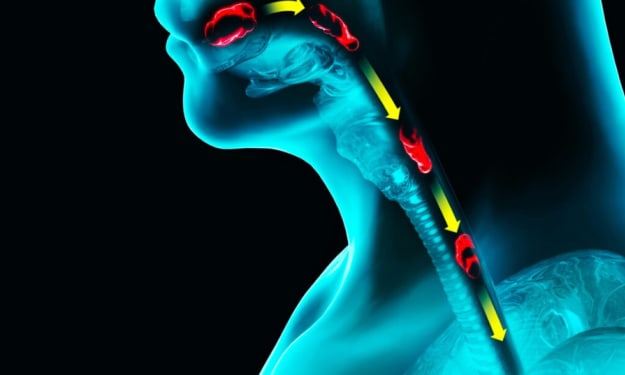
"The Delicate Dance of Breath and Swallow: Exploring the Intricate Balance"
Introduction: Breathing and swallowing, two fundamental processes that sustain life, seem deceptively simple, yet they engage in a delicate dance within the human body. However, one might not realize that the act of breathing and swallowing cannot occur simultaneously. In this exploration, we unravel the intricacies of this physiological phenomenon, delving into the anatomy, neural control, and evolutionary significance of the seamless coordination between respiration and swallowing.
By fatima zahra ajankar2 years ago in Humans
Whiskey At Dusk
Guess the whiskey was more important to you in the end, wasn’t it? It was more than the well-being of your friends; more vital than showing up to the places you promised you would and could come to; more critical of a matter than fulfilling your damn responsibilities and getting the press off your back.
By Snarky Lisa2 days ago in Humans


Comments
There are no comments for this story
Be the first to respond and start the conversation.