
Shipwreck Worse Than The Titanic
The Sultana Steamship
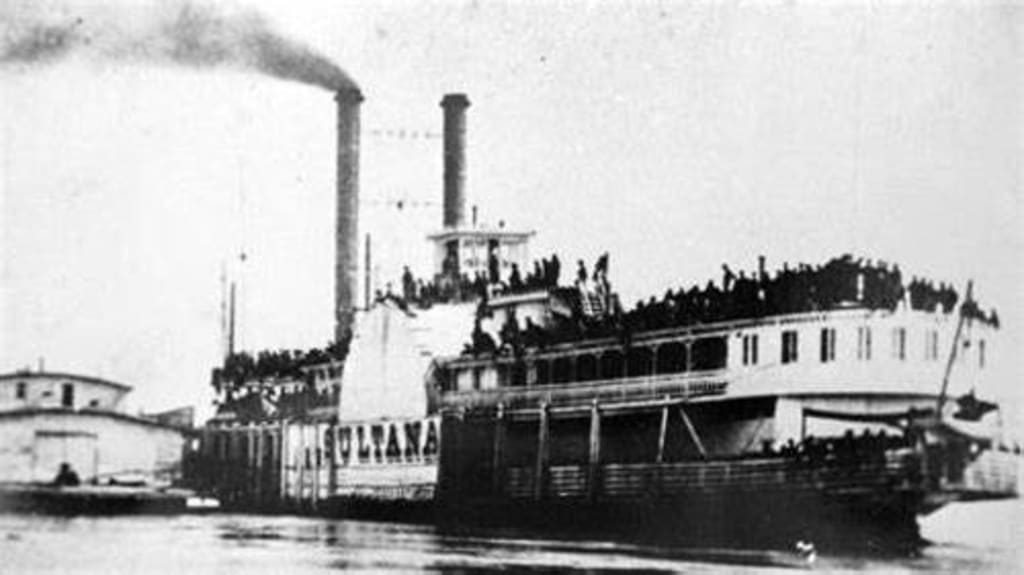
The Titanic disaster gained worldwide fame in large part because of claims that it was the most technologically advanced ship ever built, that it was unsinkable, and that when it sank, a movie was made about it. But sadly, the Titanic disaster was not the only significant shipwreck, and there have been cases much worse than the tragedy of the Titanic, one of which happened on April 27, 1865.
On April 23, she was on a routine trip from New Orleans when it broke down. There was a problem with the boiler, so the ship docked in Vicksburg. The Sultana Steamboat was a pretty large wooden boat with three decks and was 260 feet long and 70 feet wide, almost twice the size of a basketball court. It could carry about 350 passengers, but on that unfortunate day, more than 2000 people were on it.
Captain James Cass Mason learned of a fantastic opportunity to make a lot of money, all he had to do was transfer a sizable number of former prisoners to the north. The captain agreed to do it, but the boiler needed a lot of time to be repaired. Mason was concerned that his rivals would take the job, so he decided to sail despite the ship's malfunction, patching up the boiler's holes rather than making a major repair and inviting all the ex-prisoners on board.
The Sultana set out on a journey and sailed up the river for two days. At this time, one of the worst floods in the history of the Mississippi River began. The river overflowed its banks, and as a result, the water level rose several feet. All of the trees along the shore disappeared, leaving only their tops above the water. The Sultana sailed against this strong current, which made the boiler work too hard. On the evening of April 26, the Sultana arrived in Memphis, Tennessee.
200 passengers, 120 tons of sugar, and even more passengers made the Sultana extremely heavy by midnight. As the ship continued its perilous journey, the captain sailed to barges to load a shipment of coal at 1 am. At 2 am, the ship departed the barge when the broken boiler, unable to support the load, suddenly exploded. The Sultana was just seven miles north of Memphis.
The Sultana tragedy is regarded as the most devastating shipwreck in American history; the precise number of those who perished ranged from 961 to 1800 individuals, according to various reports.
On September 26, 2002, the Lejula sailed between Southern Senegal and Dakar. At 11 p.m., it sailed towards the Gambia, where a severe storm had just started. The wind had generated huge waves, but this wasn't dangerous for the large passenger ship as long as the number of passengers didn't go above the limit. The Lejula was only built for sailing in coastal waters but that day it sailed far from the shore, big waves started rocking the boat, and at some point, it just turned upside down. The Lejula was only built for sailing in coastal waters but that day it had many more passengers than it was designed to carry, two crewmembers, poor repairs, and a strong storm caused severe problems for the ship.
There were no holes or other damage in the ship's Hall, and water filled the lower decks for a considerable amount of time. The ship's deck submerged, and its lower portions remained above the surface like an iceberg. All the people within the cabins fell to the ceiling and lost their sense of direction in space. The boat started to sink when water started to seep through the deck and hold after standing in a twisted position for several hours.
The passengers had to wait over four days to be rescued even though the ocean was warm, and just a few of them made it out alive.
In the Philippines, which is made up of thousands of islands and a large area with shallow water, ships can run aground and sustain hull damage from reefs and pitfalls.
On September 20, 1987, the Philippine passenger ferry Dona Paz departed from one of the islands and sailed towards Manila. The weather was perfect—the sun was shining, the ocean was calm, and visibility was excellent—but for some reason, the crew members failed to notice how the tanker Vector was approaching them.
Only a few dozen people survived that catastrophe on September 27, 1854, when the passenger ship Arctic sank. The two ships collided at low speed. The collision wasn't strong, but the problem was that the vector had tons of oil on board and the donut Paws crashed into the cargo hold where that oil was stored, causing it to spill all over the ocean. Then a spark slipped through, and not only did the two ships catch fire but also filled with water.
As the fog rolled in, visibility became quite poor. The French steamer Vesta was the second vessel to emerge from the dense white haze. The French ship was smaller, so it appeared to the Arctic's captain that Vesta had sustained a lot of damage. While the captain was looking at the other ship, his boat quickly filled with water. He gave the order to sail to the shore as quickly as possible, but the ship's engines broke down due to the flood.
The ship's crew began to lower lifeboats with women and children still when rescuers discovered lifeboats with people, it turned out that only 87 of 400 survivors C5 crew members and 22 passengers, among them the ship's captain, survived by clinging to the wreckage. All newspapers reported the story as one of the most terrible and shameful tragedies in navigation history, and survivors were criticized because they failed to save women and children, and the crew members were accused of being responsible.
About the Creator
Keep reading
More stories from writers in Humans and other communities.
Whiskey At Dusk
Guess the whiskey was more important to you in the end, wasn’t it? It was more than the well-being of your friends; more vital than showing up to the places you promised you would and could come to; more critical of a matter than fulfilling your damn responsibilities and getting the press off your back.
By Snarky Lisaa day ago in Humans
He Was Not Sting
Tasawur, Sajid, and Nasir were close friends. Nasir had joined the college only two months earlier and soon developed a friendship with Tasawur and Sajid. Nasir belonged to a middle-class family and was a well-mannered, kind-hearted boy. No student in the class had any complaint against him. However, Sajid and Tasawur often called him stingy.
By Sudais Zakwan3 days ago in Humans
🅼🅸🅳🅽🅸🅶🅷🆃 🆂🅽🅰🅲🅺🆂
"It's 10 in Tuscon! We all know what that means... It's Time for Midnight Snacks with your man, Gerald Gee! Ready to spend the night together? Me too! I'm full of snacks and can't wait to regurgitate them all back into your hungry ears. Crack a brew! Pop some corn! Anything to get ready for one hell of a show where the talk maybe cheap but the words cut deep...
By Lamar Wiggins3 days ago in Fiction


Comments
There are no comments for this story
Be the first to respond and start the conversation.