
Shinji Mikamo’s 8:15 A Life Rebuilt from Hiroshima’s Ashes
In the shadow of the world’s first atomic bomb, a 19-year-old survivor carried a message of trust, resilience, and peace across generations

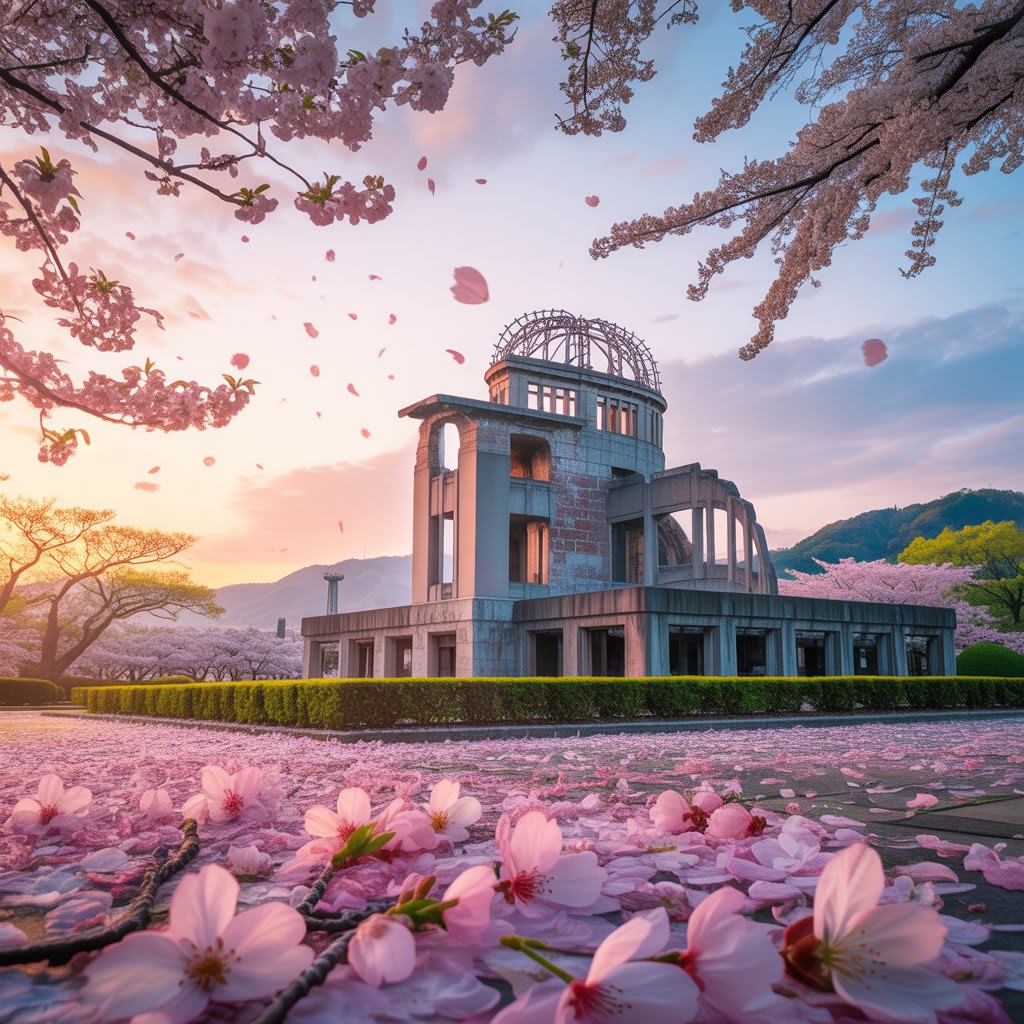
At 8:15 a.m. on August 6, 1945, the summer sky over Hiroshima was bright and cloudless. The cicadas were loud. Nineteen-year-old Shinji Mikamo stood on the tiled roof of his family’s home in Kamiyanagi-cho, about 1.2 kilometers from the city’s center. He and his father, Fukuichi, were removing roof tiles as part of a government fire-prevention program. The work was tedious but familiar another morning in a city already shaped by years of war.
Then came the flash.
It was not the flash of lightning, nor the dull burst of an artillery shell. It was a light so fierce it erased shadows. In the fraction of a second before the shockwave, the air itself seemed to ignite. The rooftop beneath Shinji splintered as if it had been struck by a giant’s hammer.
The blast threw him sideways. Heat seared his skin an instant burn, deep and blistering. He landed hard amid debris, ears ringing, vision swimming. All around, the neat grid of Hiroshima had been replaced by dust, rubble, and smoke. Wooden houses had vanished into splinters. Walls lay flattened like paper screens.
Shinji’s right side thigh, back, arms, and face was raw with burns. The pain was blinding. He could not move at first. Then he heard his father’s voice.
Through the haze, Fukuichi appeared, his own clothing torn and skin scorched. Without hesitation, he hoisted Shinji onto his back. The city around them was unrecognizable people staggered in silence, their hair burned away, their skin hanging in tatters. Others stumbled toward the rivers, desperate for relief from the heat. The smell of burning wood mixed with something far worse: the smell of burned flesh.
They crossed streets littered with debris and bodies. Telephone poles leaned drunkenly over the shattered road. Fires crackled in every direction. No aid came. The military had been hit as hard as the civilians. The air was thick and hot, dust catching in their throats.
By the time they reached the Motoyasu River, Fukuichi was breathing heavily. They found a patch of open ground and collapsed there. Someone handed them water. Others tried to rinse Shinji’s wounds, but there were no bandages, no antiseptics only torn cloth. That night, they lay under the open sky, listening to the moans of the injured.
The next day brought no relief. Rumors spread of a “new bomb” with power unlike anything seen before. The sun rose over a city still burning. The heat made the air shimmer. Shinji’s burns began to swell, the pain constant and sharp. Flies landed on the wounds.
Still, Fukuichi stayed by his side, fetching food when he could rice porridge in dented tin bowls, bits of pickled radish, sometimes nothing at all. But after several days, he left to search for more supplies and did not return.
Shinji waited. He searched what was left of the neighborhood. No one had seen his father. In the weeks that followed, he learned the rest of his family was gone too his mother had died, and his brother had already been lost to the war.
For a time, he drifted between makeshift shelters. The burns healed slowly, leaving deep scars. He carried his father’s last gift: a pocket watch, its hands frozen forever at 8:15, the moment their world had changed.
Some might have let grief harden into hatred. But Shinji held onto something else a saying his father had repeated: “Trust takes ten years to build, but can be lost in a single moment.”
Hiroshima began to rebuild, and so did Shinji. He resumed his studies despite the pain that flared when he bent his burned limbs. He found work in electronics, becoming known for his integrity. In a country struggling to recover, those who dealt with him learned they could rely on his word.
He married, built a family, and never stopped carrying the scars visible and invisible. But he did not let them define him. Instead, he chose to see survival as a responsibility.
In later years, Shinji donated his father’s watch to the United Nations, where it became part of a permanent exhibit on the horrors of nuclear war. Visitors saw not just the artifact, but the time it displayed 8:15 and the weight that moment carried for one man, his family, and his city.
His daughter, Dr. Akiko Mikamo, would one day share his life with the world. In her book Rising from the Ashes and the documentary 8:15 Hiroshima: From Father to Daughter, she recounted the day the bomb fell, her father’s long recovery, and his decision to forgive. She described how he met Americans later in life and chose kindness instead of resentment.
Shinji lived until 2007, carrying his message quietly but firmly: peace is not built through vengeance, but through understanding.
The story of August 6 is often told in numbers the distance from the hypocenter, the temperature of the blast, the death toll. But for Shinji Mikamo, it was always about the people: the father who carried him through the fire, the strangers who gave them water, the countless voices that faded in the days after. His life proved that even in the shadow of unimaginable destruction, it is possible to rebuild and to choose compassion over hate.
Shinji Mikamo’s story is a reminder that history’s greatest tragedies are lived one heartbeat at a time. His choice to forgive after losing almost everything is a challenge to all of us to live with empathy and purpose
About the Creator
Jawad Ali
Thank you for stepping into my world of words.
I write between silence and scream where truth cuts and beauty bleeds. My stories don’t soothe; they scorch, then heal.


Comments
There are no comments for this story
Be the first to respond and start the conversation.