
Shield of the Sky: The HQ-19 Air Defense System and China-Pakistan Strategic Alliance"
"Exploring the Role of Advanced Missile Defense in Strengthening Regional Security and Bilateral Ties"

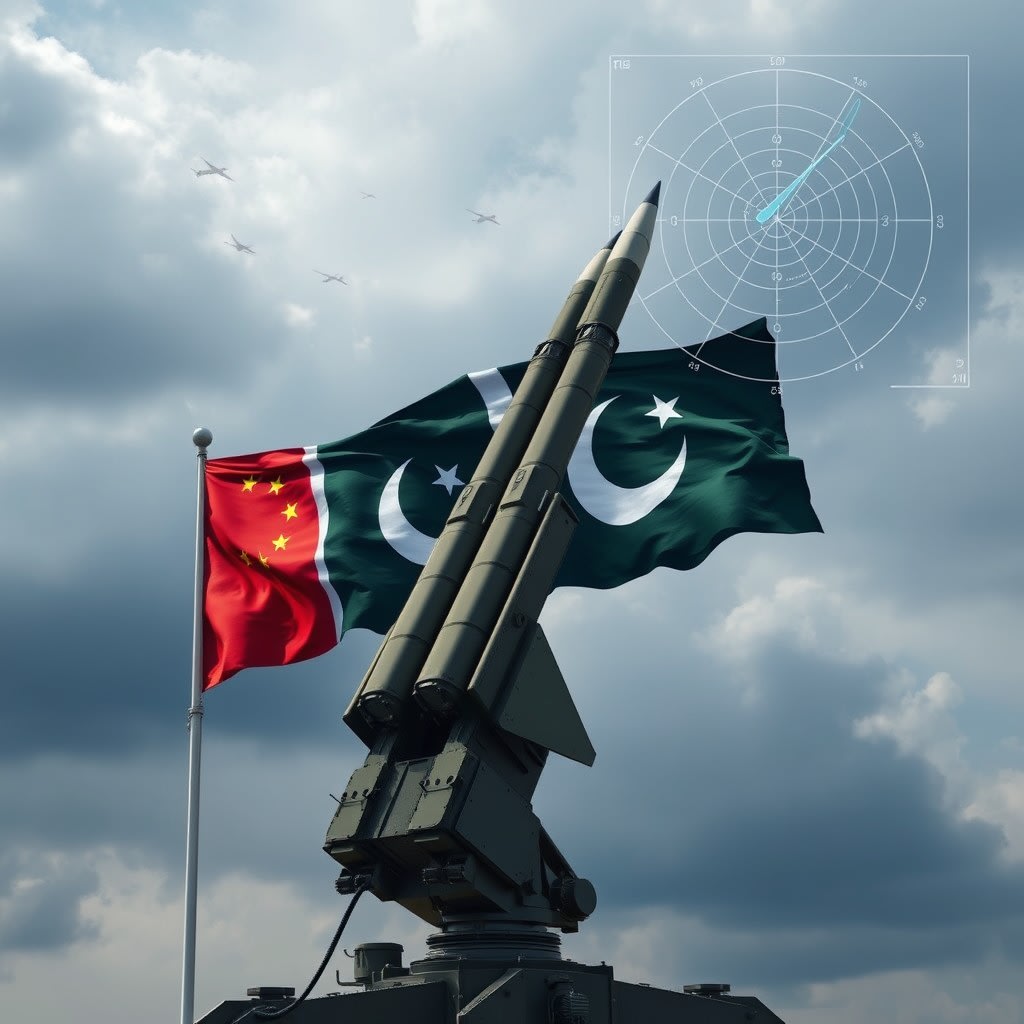
In today’s evolving global security landscape, air defense has emerged as a cornerstone of national sovereignty and strategic autonomy. Nations across the world are investing in advanced missile defense systems to safeguard their airspace and maintain a strategic edge. In South Asia, the deepening defense partnership between China and Pakistan is taking a new turn with the possibility of Pakistan acquiring or receiving support for the HQ-19 Air Defense System from China. This move is not just about military hardware—it reflects a broader geopolitical alignment and mutual strategic interests.
Understanding the HQ-19 Air Defense System
The HQ-19 is a high-altitude, long-range missile defense system developed by China, comparable in capability to the U.S. THAAD (Terminal High Altitude Area Defense). Designed primarily to intercept ballistic missiles, especially intercontinental ballistic missiles (ICBMs), the HQ-19 uses kinetic hit-to-kill technology—a method where the incoming missile is destroyed by direct impact, rather than an explosive warhead.
Key capabilities of the HQ-19 include:
Range: Up to 3,000 kilometers (for targeting ballistic missiles)
Radar integration: Advanced phased-array radar and satellite tracking
Target types: High-speed ballistic missiles, potential hypersonic threats
Mobility: Mounted on transporter-erector-launcher (TEL) vehicles for fast deployment
Strategic value: Exo-atmospheric interception, allowing early defense in a conflict scenario
This system represents a major technological achievement and marks China's growing stature in high-end defense manufacturing.
China-Pakistan Defense Cooperation: A Deepening Alliance
The China-Pakistan relationship is often described as “deeper than the oceans, higher than the mountains, and sweeter than honey.” This friendship has extended robustly into the field of defense over the decades. Both countries have collaborated on multiple high-profile defense projects, including:
The JF-17 Thunder multirole fighter jet, co-developed and used by Pakistan’s Air Force
Sale of advanced naval vessels and submarines
Military drones, surveillance systems, and guided missile technology
Introducing or supporting the HQ-19 system for Pakistan would be a natural next step in this evolving partnership, aimed at strengthening Pakistan’s defensive and deterrent capabilities against regional threats.
Why Is the HQ-19 Important for Pakistan?
Pakistan faces a complex security environment, especially with India’s growing missile arsenal, including the Agni-series long-range ballistic missiles. India’s development of anti-satellite (ASAT) weapons and increasing cooperation with Western defense powers further complicates regional security dynamics.
In this context, acquiring a system like the HQ-19 offers Pakistan:
A missile shield against high-speed ballistic threats
Greater confidence in national defense planning
Strategic deterrence by signaling strong second-layer defense capabilities
Protection of critical infrastructure, including nuclear assets and economic zones like CPEC
This would also give Pakistan an edge in electronic warfare and radar surveillance, areas where it has historically lagged.
China’s Strategic Goals in Supporting Pakistan
For China, providing HQ-19 technology or support aligns with several strategic objectives:
Securing CPEC and Belt and Road Investments:
China has invested billions in the China-Pakistan Economic Corridor, a critical part of its global Belt and Road Initiative. Ensuring Pakistan’s security indirectly protects Chinese assets and trade routes.
Counterbalancing India and U.S. Influence:
By enhancing Pakistan’s defense capabilities, China reinforces a reliable partner on India’s western border. This provides a strategic check on India’s influence and serves as a geopolitical lever against U.S. military presence in Asia.
Expanding China’s Defense Exports and Technological Influence:
Exporting high-end systems like the HQ-19 boosts China’s image as a global defense supplier and showcases its ability to compete with Western technologies.
Regional Implications and Concerns
The possible induction of HQ-19 into Pakistan’s military raises eyebrows in New Delhi and Washington, both of whom are wary of growing Chinese influence in South Asia. It could trigger:
An arms race in missile defense and hypersonic weapon development
Increased militarization of South Asia
Greater dependence on foreign defense suppliers, especially for Pakistan
However, supporters argue that the move would bring strategic stability by creating a deterrent balance between India and Pakistan, potentially preventing miscalculations or escalations.
Conclusion
The HQ-19 Air Defense System symbolizes more than a technological milestone—it represents the deepening strategic embrace between China and Pakistan. In a region marked by rivalries and shifting alliances, such partnerships are pivotal. As Pakistan continues to modernize its defense posture, systems like the HQ-19 could become a cornerstone of its national security doctrine, reinforcing both sovereignty and deterrence in an increasingly volatile neighborhood.
Word Count: ~710
About the Creator
Keep reading
More stories from Zain Ul Abedin Khan and writers in Humans and other communities.
"The Bond Beyond Vows"
Marriage has been a cornerstone of human civilization for centuries—celebrated in rituals, protected by laws, and shaped by culture and religion. In today’s rapidly evolving society, the traditional concept of marriage faces scrutiny and change. Despite this, a growing body of scientific research continues to affirm the many psychological, physical, social, and economic advantages of marriage. Far from being a fading institution, marriage remains one of the most influential human relationships—with benefits that extend beyond the couple to families, communities, and even national well-being.
By Zain Ul Abedin Khan8 months ago in Humans
Lost and Alone in the French Alps
Looking back, I can trace some of my life’s biggest adventures to a simple action from my sister. She’d introduced me to Tommy (a very long time ago), a colleague of hers, who had overshared his penchant for Italian-looking women, and I ticked that box.
By Chantal Christie Weiss20 days ago in Humans




Comments
There are no comments for this story
Be the first to respond and start the conversation.