
Shah Jahan and Mumtaz Mahal: A Love Story Etched in Marble and Myth
From their first fateful meeting to the untimely death that shattered an empire, their love story is as monumental as the Taj Mahal itself.

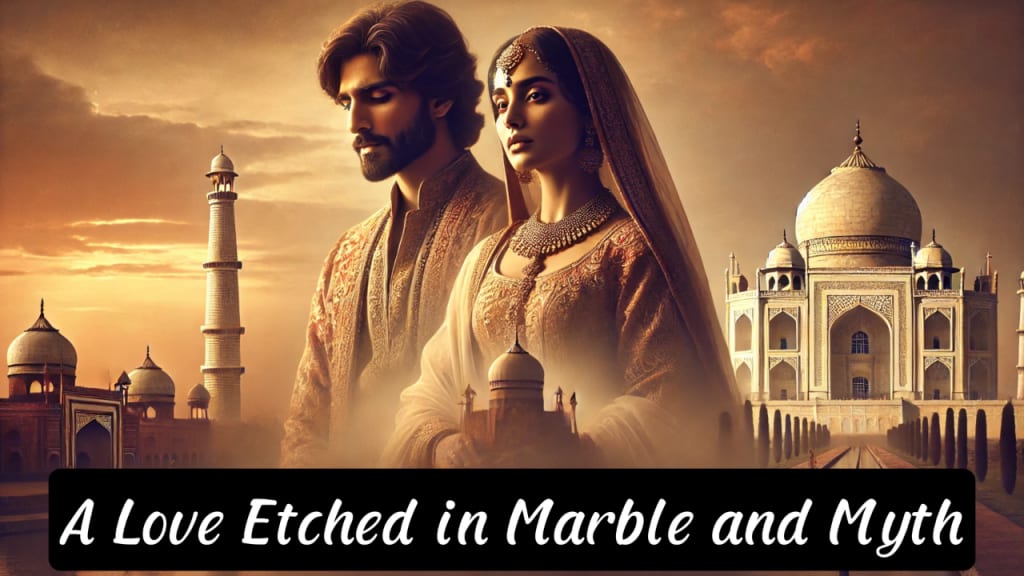
When it comes to timeless love stories, one couple stands out: Shah Jahan and Mumtaz Mahal. Their story is not just etched in history but in the very stone and marble of the Taj Mahal, a symbol of devotion that’s stood for centuries. But the truth behind their love? It's far more complex and heart-wrenching than you could ever imagine. From their first fateful meeting to the untimely death that shattered an empire, their love story is as monumental as the Taj Mahal itself.
The Beginning: A Prince’s First Love
Shah Jahan, born as Prince Khurram in 1592 to Emperor Jahangir and the noble Jodhabai, was destined for greatness. Growing up under the careful tutelage of the best scholars, with martial training and a silver spoon, Khurram was well-prepared to inherit the Mughal throne. But what the future emperor didn’t know was that the love of his life would come from an unexpected place—and he would first meet her not in the halls of the royal palace, but in the bustling streets of Agra.
It all started in 1607, when the 15-year-old prince wandered through the Meena Bazaar, a famous market known for its fine jewels and handicrafts. There, he laid eyes on a Persian beauty hawking wares at one of the stalls—her name, Mumtaz Mahal. From that very moment, Shah Jahan was smitten. Mumtaz was a sight to behold, but little did he know that their bond would grow into a legendary love story.
After several years of courtship, the two married in 1612, making the young couple inseparable. Mumtaz Mahal was not just a royal wife; she was Shah Jahan’s confidante, his partner in both life and empire.
A Marriage Built on Trust and Love
Shah Jahan and Mumtaz Mahal’s marriage was filled with affection, mutual respect, and a lot of children—13, to be exact. Mumtaz stood by her husband through thick and thin, accompanying him on military campaigns and handling royal matters with a poise that earned her the title of Empress of the Mughal Empire. It wasn’t just royal duty, though. Their relationship was built on love, trust, and shared responsibility. Shah Jahan often called Mumtaz his “jewel of the palace,” and she, in turn, supported him as his most trusted advisor.
The Heartbreaking Tragedy: A Love Cut Short
But as with many great love stories, theirs took a tragic turn. In 1631, while accompanying Shah Jahan on a military campaign in Burhanpur, Mumtaz Mahal fell seriously ill. Pregnant with their 14th child, she was already in frail health, and her condition deteriorated quickly. Despite the best efforts of physicians, Mumtaz died on June 17, 1631, after 35 long hours of labor. Her death sent shockwaves through the empire, leaving Shah Jahan devastated.
As Mumtaz's body was temporarily buried in Burhanpur, Shah Jahan's grief was only just beginning. Before she passed away, Mumtaz Mahal made her husband promise three things: first, to care for their children and subjects; second, not to remarry; and third, to create a monument that would immortalize their love. These final words would send Shah Jahan on a mission that would span years, cost a fortune, and result in one of the greatest architectural wonders the world has ever known.
The Taj Mahal: A Monument of Love
Shah Jahan, heartbroken by the loss of his beloved, vowed to fulfill Mumtaz’s wishes. He returned to Agra and immediately began planning what would become the Taj Mahal—a monument of unparalleled beauty, built in white marble and designed to reflect the eternal love he had for his wife. It was more than just a tomb; it was his tribute to their everlasting bond.
The construction of the Taj Mahal began in 1632, and the site was chosen so that Shah Jahan could see it from his palace in Agra every day. Mumtaz’s body was exhumed from Burhanpur and reburied at the site, where Shah Jahan hoped to be laid to rest beside her for eternity. However, Shah Jahan’s dream of seeing the Taj Mahal completed was shattered when he was overthrown by his son, Aurangzeb, in 1658. Shah Jahan was imprisoned in Agra Fort for the rest of his life, gazing out at the monument from his window, forever separated from the woman he loved.
The Mysteries and Myths Surrounding Their Love
As with any royal love story, myths and mysteries abound. One of the most intriguing legends surrounding Shah Jahan’s love for Mumtaz is the story of a second Taj Mahal—built in black marble for Shah Jahan himself. Some claim that he wanted to build a symmetrical, twin monument across the river from the Taj, but his son, Aurangzeb, stopped him, leading to the tale of the black Taj Mahal being lost to history. Other rumors suggest that Shah Jahan had the hands of the Taj’s architects cut off so they could never replicate the beauty of the Taj Mahal. Whether true or not, these stories add a layer of intrigue to an already complex and emotional history.
Final Thoughts: A Love That Defies Time
The Taj Mahal, now one of the Seven Wonders of the World, is not just a symbol of Shah Jahan’s devotion but also a reminder of the power of love to transcend time, space, and even death. The marble mausoleum is the culmination of a love story that started in the crowded streets of Agra and ended with a king’s final promise to his queen. Today, millions of visitors flock to see the Taj Mahal, not just for its beauty, but for the story that lies behind it—a story of passion, loss, and a love that will never be forgotten.
So, the next time you find yourself standing in the shadow of the Taj Mahal, remember this: It’s not just marble and stone you’re looking at—it’s the eternal love of Shah Jahan and Mumtaz Mahal. A love that no empire, no tragedy, and no time can ever erase.
About the Creator
Keep reading
More stories from Marveline Merab and writers in Humans and other communities.
Abelard and Heloise: A Love Story for the Ages (With a Scandalous Twist)
Love in the 12th century wasn’t exactly a walk in the park. No dating apps, no love songs on Spotify, and absolutely no room for scandal. Yet, despite all odds, Abelard and Heloise’s story managed to pack enough passion, intellect, and drama to make even Shakespeare look tame. This was no ordinary medieval love affair—oh no. It was a high-stakes romance involving a brilliant philosopher, a fiercely intelligent young woman, secret rendezvous, forbidden passion, and a scandal so juicy it made medieval Europe’s gossip mill spin faster than a knight jousting for glory.
By Marveline Merababout a year ago in Humans
The Power of Daily Discipline
In a crowded city where ambition filled the air like dust, lived a man named Elias. He was not poor, yet never comfortable. Not unsuccessful, yet far from fulfilled. Like many others, Elias carried dreams quietly inside him—dreams of becoming skilled, respected, and at peace with himself. But his daily life told a different story. His mornings began late, his nights ended later, and his days slipped away in distractions that offered comfort but no progress.
By The best writer 5 days ago in Humans


Comments
There are no comments for this story
Be the first to respond and start the conversation.