
Self-Care and the Death of Intimacy
A Personal Essay on Marriage


Modern society tells us to take care of ourselves. Self-care is everywhere, from fashion magazines to Instagram feeds. There are endless ideas for DIY self-care kits aimed at helping us drink more tea, journal each day, and take long relaxing baths accompanied with all the accouterments on a hand-carved wooden tray. There are many meditation and mindfulness apps and new books each week about the power of Self. In 2020, “self-care” peaked as a Google Trend, doubling in interest since 2014. All of this, of course, is guided to help us through anxiety, depression, and unending stress.
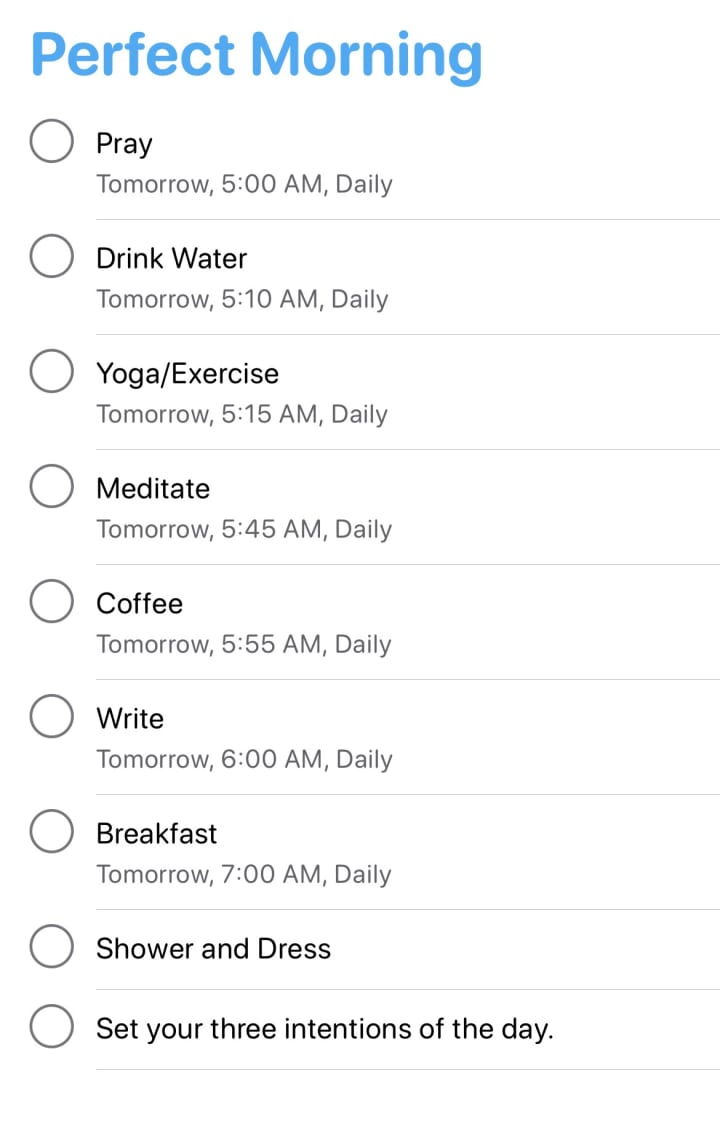
I am not against embracing the power of Self. I have my daily routine, which I named the “Perfect Morning.” It reminds me to exercise, practice gratitude, drink water, write, and take in my favorite podcast episode, all before my family wakes up. You can’t improve unless you put in the work; I agree with that.
Self-care is good, but there is a converging line where self-care can become too self-obsessed. Yes, I know the oxygen mask analogy. When an airplane experiences a sudden pressure loss, oxygen masks will drop down to supply a couple of minutes of emergency oxygen. You must secure your mask first before helping others. It’s a great piece of advice and one that self-care totes as its theme. But genuine relationships are not created by people solely looking out for themselves. Too much self-care can create dependency on processes, causing us to be less adaptable and less willing to sacrifice our oxygen mask for another. We might be losing the philosophical, psychological, and theological idea of dying to one’s Self.
Death to Self, also referred to by psychologist Carl Jung as “ego death,” refers to a complete release of one’s self-centeredness, helping carve new neural pathways in the psyche.
Why is “dying to ourselves” important in relationships?
August marks the 18th year of my relationship with my wife Laura and our eleventh wedding anniversary. We met right out of high school when I was a guitar-rocking backyard wrestler, and she was a world-traveled thespian, directing and performing in her own shows. It was the good ole days of AOL instant messenger and MTV’s Total Request Live.
At that age, my life was all about me. My friends had to conform to my ideas, my ambitions, my hobbies — even my workplace. I hired all my friends to work at my video store when I became the manager. I was like a mini Italian mob boss, only half Irish and Emo, mainly for liking Dashboard Confessional. (FYI, they’re still my jam).
I remember living self-care very clearly those days within my ego. But it was pinned there by fear, depression, and a deflated sense of self-worth. From the age of five, I was exposed to a life surrounded by drugs. I watched the police raid my house and remember feeling confused seeing my parents in handcuffs. I’ve witnessed drug deals take place in our garage with a family friend who used to take us to the park. I even found a massive bag of narcotics in a tin can that I rightfully flushed down the toilet. I was fortunate to be tainted by that world so much that I was never interested in using any drug. Yet, that exposure wasn’t without its effects.
I grew up thinking I only needed to take care of myself because no one else would do it. I internalized everything, repressing years of anxiety. I was in this alone. That was until I met Laura.
She was on her own journey of self-discovery. She was in a relationship that made her feel voiceless, while friends seemed to think she was making the right decision. She set her plans to go to college out of state, moving away from her close familial relationships. Her boyfriend made it into the same university, and they were going to study theater together. What an adventure that would be, yet something remained unsatisfied in her being. In a sense, their relationship was full of self-interest and lacking self-care.
We met a few weeks after high school graduation. I wrote a short film intending to get it into a few film festivals. My friends held auditions at my house, and Laura showed up. I immediately knew that she was going to get the part. I also knew that as the screenwriter, I would write myself into the script as her love interest. Creepy, I know. I can’t explain how it happened afterward, but things started to change for us emotionally, as a teen romance movie. We started spending lots of time together that summer, getting to know each other more intimately. At first, I was so afraid of being vulnerable that I would flat out ignore her. I would pull my corded headphones over my head and blast my custom “burnt” CD of mixed Dashboard Confessional songs I downloaded from Napster.
Yet, little by little, my walls went down, we captured our first kiss on camera, and something changed within me forever. My future wasn’t my sole concern anymore. I wanted to watch Laura thrive in this world as well. The comfortable bubble of my self-care could no longer suffice. And it couldn’t fit more than one person in it either. It needed to pop.
The Bubble of Self-Care
Self-care is vital. Stress, mental anguish, and depression are crippling to our being when we overwork ourselves. Self-care is a bubble of protection in an anxiety-fueled world. But the bubble cannot be used to block out “the other” in a real relationship like marriage. It must be broken down to make room for their well-being. Two must become one.
Today, I have created a new bubble. It comes in the form of a checklist. My “Perfect Morning” routine should be a kickstarter to my day, but I have become a slave to it, often feeling guilty when I don’t complete the tasks that ought to make me happy. You can’t get everything done, and that reality can be damaging to people. I know my sister gets anxious if she doesn’t achieve her daily mindfulness practice. Is the approach even practical if you cannot control the emotions you practice taming each day when a sudden life change occurs?
With strict routines comes the inevitable loss of Self. This is entirely different from the “ego death.” Dying to one’s Self should come with resurrection, a renewal of identity. Losing one’s Self is what Sara Bareilles’ writes about in her musical Waitress. Jenna is pregnant and trapped in an abusive marriage. She sings, “sometimes life slips in through the back door, and carves out a person and makes you believe it’s all true.” She has lost her identity. Fortunately, upon seeing her baby for the first time, she undergoes an “ego death” and hands her life over to her daughter.
As far as our self-care routines go, it’s easy to feel disconnected and become irritable when you don’t achieve your goals. We seem to be cramming too many things in and then frustrated when they don’t get done. What I am saying is that modern self-care is not working when it’s only about you. The bubble that popped when I met my wife was an actual death to Self, confirmed and sealed through the commitment made on our wedding day. It was liberating. But after many years, it came back in a new form.
Within my marriage today, I have been guilty of selfish care. I have privatized my spirituality, my wellness, and my intellectual ambitions. The bubble started to expand the moment our first daughter was born. The fear of failure as a parent was real. My lack of knowledge in every scenario caused me to respond with action. JGTD (Just Get Things Done) was my mantra. I took on all the domestic work I could, cleaning dishes, cooking, taking care of the yard, allowing my daughter to grow dependent on me. All things I thought were necessary to lead a happy life, but before I knew it, the bubble had become so small that I pushed my wife out of it.
I was so preoccupied with “doing” that I never spent time with my wife just “being.” I was often told to sit down and talk when guests came over instead of doing chores. I thought all of this was self-care because it made me feel good to get things checked off my list. Yet, it was once again a form of selfish care fueled by my insecurities.
I was overwhelmed, and instead of pulling my wife into the bubble, I tried managing it all independently. I know that women have been balancing this since the beginning of time, and I have found a deep admiration for their natural strength, something I wish I could perpetuate. But that kind of care is not entirely effective at being relational.
What seems like too much work, I realize, is not how relationships must work. In reality, your self-care should be the primary concern of your partner. This doesn’t mean that you don’t care about your well-being, but it makes it easier if someone is looking out for you.
Self-Care as Self-Gift
It’s possible to achieve our dreams on our own by writing them down, reading them every day, and pursuing them relentlessly. But that is only half of your victory. You have a 50% chance of hitting your goals when you follow this process. However, there is a 95% chance that you will hit your goals when you have accountability check-ins with another person committed to those goals.
Writer Chloe’ Flowers puts it eloquently when she says, “In our romantic relationships, we may focus more on our needs and expectations opposed to the ideals of our partner. This can create turmoil and many other unhealthy habits within the union. You have to accept others wholeheartedly if you want to be accepted fully.” If we want to practice daily self-care, we must get someone else involved, particularly our spouses.

A marriage must be a self-gift of who you are, your essence, individuality, and personhood emptied into the other. If one-sided, this could be damaging to the relationship because it demonstrates unrequited love. Worse, these relationships end in divorce or drag on with bitter resentment, as in Jenna’s case in the film/musical Waitress — leading a life of unnecessary suffering that will emotionally scar their children and grandchildren.
But, if both parties agree to empty themselves into the other, they find themselves constantly filled. A philosophical idea called “The Law of the Gift.”
What does this kind of marital self-care require?
- A Sense of Self — You must know your wants and needs. For example, I need time carved in my day for physical activity. There may be many chores to do that day, but I see exercise as necessary, not a privilege.
- A Sense of Other — Just as you know your wants and needs, you must intimately know your partners. Does she need your time each day to talk? If so, that time should be sacred and not combined with chores or other tasks.
- A Vulnerable Exchange — Knowing your wants and needs is crucial, but there must come an open exchange. Your partner cannot figure out all of your subjective desires. Trust that you can share those needs no matter how foolish, childish, or silly they may sometimes sound. Your spouse needs to take them seriously. You do this by making a gift of yourself, completely emptying who you are into their being.
- A Willingness to Die to Your Self and Grow New with Your Spouse — This last step is all about evaluating those desires and pushing your partner to grow in maturity, and challenging them to become better. This is where your self-care becomes a part of your spouse’s responsibilities while you take on the responsibility of their well-being.
The Law of the gift comes from Karol Wojtyla’s book, Love and Responsibility. Dr. Edward Sri commented on this idea when analyzing the text. He says: “Wojtyla responds by saying that while on the natural and physical level it is impossible for one person to give himself to another, in the order of love a person can do so by choosing to limit his freedom and uniting his will to the one he loves. In other words, because of his love, a person may actually desire to give up his own free will and bind it to the other person. As Wojtyla says, love ‘makes the person want to do just that surrender itself to another, to the one it loves.”’
I don’t think many couples get to this point because, honestly, the work becomes too hard. Your spouse will go through depression, illness, mental strain, physical exhaustion, and it honestly becomes too hard to think about the other when they don’t want to help themselves.
I remember listening to a psychologist say that they cannot help anyone who doesn’t desire help. The first step in helping anyone get the help they may need is to be open enough to receive the support and administer change. They have to recognize there is something wrong. That’s the work that the spouse must put in.
For example, there is societal and mental pressure to provide, regardless of how modern society defines it. Imagine that your husband is suffering a terrible cognitive loss after losing his job. Men feel bruised egos when they can’t fight for their families or feel weakened for not doing so. You may not help them as a psychologist would, but it is your job as a spouse to help them see the benefits of finding assistance.
I have put together several spiritual weekend retreats and see many men who go into that first day closed off, unwilling to talk about themselves or their marital problems. They are forced to be there, dropped off by their spouse, and told not to return until the retreat ends, abandoned in some sense. Yet, these men discover throughout this experience a self-emptying of unanimous love from these other male leaders who are showcasing the work that it takes to build a genuine relationship.
Often the women who send their husbands see a profound change in their behavior; they attend the next women’s retreat. They relearn what they committed to on the altar. In complete surrender, they handed themselves over, promising to not live for themselves anymore but to live for the other.
It Takes A Lot to Die

On the day before my wedding, one of my groomsmen made a toast to me and said, “Get ready; your life as Frank is about to be over.” And I remember vividly and unflinchingly responding, “Yes, my life as Frank is about to be over, but my life as Frank and Laura is about to begin.”
I think about that a lot when I get lazy in our marriage. That idea is profound that my life belongs to another. It is not mine anymore. Yet, as the natural digression of life paves its way through us, I can feel my sense of self slipping. When that happens, I become selfish and try to fix Frank rather than fix Frank and Laura. I am taught by our culture that I need a “me” day. When in actuality, I need a “we” day.
But alas, “we” days happen far less than I would hope. Why? Because giving up your self-care for another’s, takes work.
Work within a relationship, especially within a family with children, becomes quickly overwhelming. If you don’t work on the pillar, the married couple, then lots of things dissolve. It takes a lot of work to die to yourself.
I have a friend who is a professional speaker and business coach. He told me that coaching was his least favorite part and has moved away from it slowly. He said that it frustrates him when he provides the pathway for someone to succeed, but they refuse to listen or try. The coaching sessions are a waste of time because the other person is unwilling to work. This creates frustration within the coach leading to resentment of the whole idea of coaching.
Yeah, marriage can function the same way.
Suffer Together
If I am honest, married couples don’t need to hear that their purpose is tethered to their spouse. They already know that. They committed to that. They need to know that if they want to be satisfied with their lives, they must be willing to suffer. This is the final distinction between the culture of self-care and the revelation of self-gift.
There is no pain-free marriage or relationship. Suffering is at the heart of human existence, and the more we avoid it, the more we suffer.
Yet, when we lean into the suffering, becoming one with it, it becomes bearable.

You are not going to change your wife, and she is not going to change you. You must become part of your wife to deeply empathize with her so you can give her your strength when she needs it. You must not only see her self-worth but live her self-worth. And vice-versa.
If you want to practice self-care effectively, make these five habits a part of your relationship checklist.
- Communicate Daily — Openly, honestly, and with complete transparency.
- Live in the Present — Avoid your phones when you’re together and practice “being” rather than “doing.”
- Be Vulnerable — Share your fears, anxieties, and troubles. Risk embarrassment of looking foolish.
- Trust — Don’t criticize, judge, or condemn each other’s vulnerabilities. Help sometimes comes best through a listening ear.
- Die to Yourself and Accept the Suffering — No matter what hardships present themselves, lean into the suffering together. It’s a guarantee that you will suffer, but it doesn’t have to feel like suffering when someone else is carrying the weight with you.
This is the required work to make any relationship one of lasting value, and it is how we grow as human beings.
The ancient people grew together, not isolated from one another. They grew together for their survival because doing it alone would be impossible. Their relationships defined them. We have forgotten that important lesson of our ancestors. Who we are is not about our individual needs but the needs of others.
The Buddhists discovered this early on when they found meditation to be an isolated practice. The Sangha, or Buddhist community, was established to bring people closer together within their mindfulness practices, but without disconnecting an assemblage of believers.
If we bring this concept into our most intimate relationships, then I believe we will see that satisfaction, joy, and a thrill for life won’t come from our “Perfect Morning” routines but from being with each other and caring for our deep needs.

To conclude, I would like to go back to my rehearsal dinner. What did I lose when I gave up my life as just Frank? Living life just for me may help maintain my weight, stay on a strict daily schedule, carve out more time to pursue hobbies, supply me with more possibilities to travel and do the things I love, but it won’t make me more loved. It’s only when I shed away that former Self to become a new identity, endlessly emptying who I am and being filled by who my wife, Laura, is. Our identities are intertwined so powerfully that it expands more fully. We expand our existence through this self-gift of each other.
Death of Self, then, is the ultimate form of self-care.
About the Creator
Frank Brennan
Speaker | Writer | Storyteller
I write about film, fatherhood, and faith.
Keep reading
More stories from Frank Brennan and writers in Humans and other communities.
The Book Hound
This was how he liked to spend his birthday, a fresh brew of his favorite coffee and an adventure book in his hands. There was nothing different today than any other Saturday morning for the past twelve years. He came to Hound's Books and Café every week, and the associates knew him by name and mood. Based on how he dressed himself that week, they were in tune with his feelings. Today was a loafer and white pocket polo day, that's how he celebrated, and that's what Horace liked about this place, the friendly staff and the peaceful ability to get lost in a book. One book a week for twelve years.
By Frank Brennan4 years ago in Fiction
5 Things to Know About Intensive Outpatient Care and How It Works
Intensive outpatient care has become an important treatment option for individuals seeking support for substance use or mental health challenges without entering residential treatment. This level of care offers structured therapy while allowing people to maintain daily responsibilities such as work, school, and family life.
By Jordan Blake3 days ago in Humans
Wild Card Weekend Recap: What Happens Now?
I think I figured out why I love Wild Card Weekend so much. It's because it's the first playoff anything of the calendar year. The NFL season starts in the fall, and once upon a time, the champion was crowned either on or slightly before New Year's. The evolution of the NFL schedule has resulted in the playoffs starting just into the New Year, and currently, the final week of the season falls on the first weekend of the New Year, with Wild Card Weekend coming a week after that. So yes, chronologically, the NFL's Wild Card Weekend serves as the first playoff anything of the calendar year.
By Clyde E. Dawkins4 days ago in Unbalanced



Comments
There are no comments for this story
Be the first to respond and start the conversation.