
Scientists Create High-Efficiency Solar Cells That Work Best Indoors and in Low Light Spaces.
As the world continues to seek cleaner and more sustainable sources of energy, solar technology has become a leading solution. Traditionally, solar panels are associated with large outdoor installations under direct sunlight. However, a new breakthrough by scientists is changing the way we think about solar energy. Researchers have developed high-efficiency solar cells that perform exceptionally well indoors and in low-light environments a major advancement that could power the future of indoor electronics, smart homes, and wearable technology.

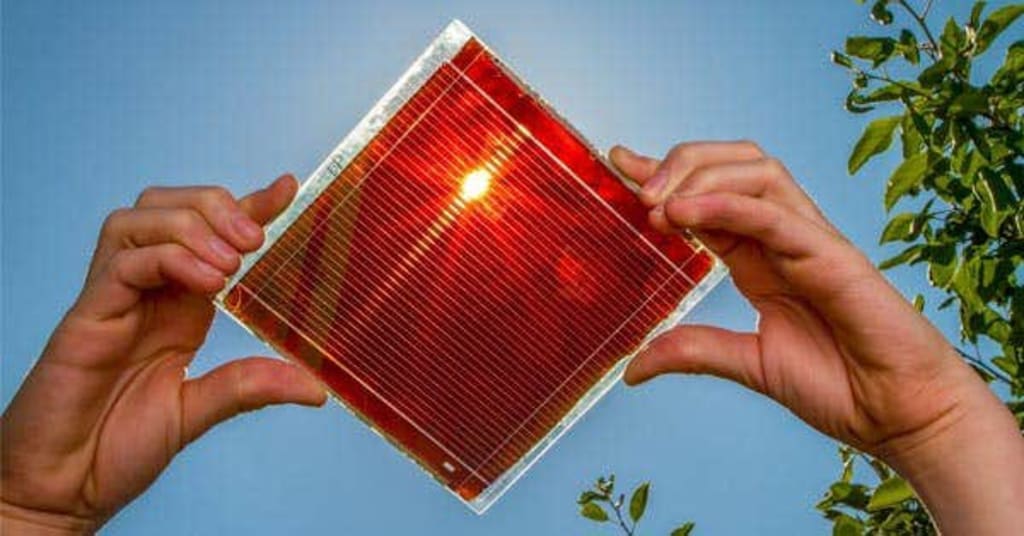
As the world continues to seek cleaner and more sustainable sources of energy, solar technology has become a leading solution. Traditionally, solar panels are associated with large outdoor installations under direct sunlight. However, a new breakthrough by scientists is changing the way we think about solar energy. Researchers have developed high-efficiency solar cells that perform exceptionally well indoors and in low-light environments—a major advancement that could power the future of indoor electronics, smart homes, and wearable technology.
The Challenge of Indoor Solar Energy
Conventional solar panels are designed to absorb sunlight, which contains a broad spectrum of light energy. Indoors, however, lighting conditions are much different. Artificial lights like LEDs and fluorescents emit a narrower and weaker range of light. This makes standard outdoor solar panels inefficient indoors, as they are not optimized for the specific light wavelengths found in artificial lighting.
This has posed a significant limitation for devices that operate inside homes, offices, hospitals, and industrial buildings. Think of small electronics such as wireless sensors, remote controls, smart door locks, and wearable health monitors. These devices often rely on batteries that need frequent recharging or replacement. If solar cells could function efficiently indoors, it would allow many of these devices to run independently for years without battery changes.
A New Type of Solar Cell
Scientists have now created a new type of solar cell that excels in low-light environments. These solar cells are made using a material called perovskite—a synthetic crystalline compound known for its excellent light absorption and energy conversion properties. Unlike traditional silicon-based solar cells, perovskite solar cells can be tuned to absorb specific wavelengths of light, making them ideal for capturing the types of light found indoors.
The newly developed cells have achieved conversion efficiencies of over 40% under LED lighting, a record for indoor solar performance. This means they can convert 40% of the light they absorb into usable electricity, which is significantly higher than most standard outdoor panels under the same conditions. Additionally, these cells are lightweight, flexible, and inexpensive to produce, making them suitable for a wide range of applications.
Applications and Benefits
The potential uses for these high-efficiency indoor solar cells are vast. In smart homes and buildings, sensors and devices could be powered continuously without the need for wires or battery changes. Imagine a building full of light-powered temperature sensors, security systems, and air quality monitors—each functioning autonomously thanks to ambient light.
In healthcare, wearable devices such as fitness trackers and medical monitors could use indoor light to stay charged throughout the day, improving reliability and reducing maintenance. Industrial applications could also benefit, with factory equipment and monitoring systems becoming self-sufficient in terms of power.
Moreover, these solar cells could play a big role in reducing electronic waste. Since fewer batteries would be needed or replaced, less toxic material would end up in landfills. In turn, this supports a more sustainable and eco-friendly tech ecosystem.
Overcoming Remaining Challenges
Although this breakthrough is promising, some challenges remain. Perovskite materials, while efficient, are known to degrade more quickly than silicon in some environments. Scientists are actively working to improve the long-term stability of these solar cells to ensure they can last for many years without performance loss.
There are also efforts to commercialize the technology at scale. While lab results are impressive, manufacturing processes need to be refined and made cost-effective before we see widespread adoption in consumer electronics.
Conclusion
The creation of high-efficiency solar cells that work best indoors and in low-light spaces marks an exciting turning point in renewable energy technology. These advanced cells promise to power a new generation of smart devices, reduce battery waste, and bring solar energy into environments where it was once considered impractical. As scientists continue to improve the durability and scalability of these innovations, the future of solar-powered indoor living is looking brighter than ever.
About the Creator
Active USA
Motivation, News, technology
Keep reading
More stories from Active USA and writers in Humans and other communities.
Human Rights
Human rights are the basic rights and freedoms that belong to every human being simply because they are human. These rights are universal, inalienable, and apply to everyone regardless of race, religion, gender, nationality, or background. Human rights are essential to ensure that individuals can live with dignity, freedom, equality, justice, and peace.
By Active USA 7 months ago in Humans
I Don't Need My Phone... Wait, Is That Actually True?
My parents gave me my first cell phone when I was twelve years old. It wasn't a fancy iPhone or anything, not even close. Just a simple black flip phone for when I needed to call or text them after school.
By Madison "Maddy" Newton24 days ago in Humans




Comments
There are no comments for this story
Be the first to respond and start the conversation.