
Schizophrenia Insights - The Brain's Search for Words Reflects Animal Foraging Patterns.
Neuroscience
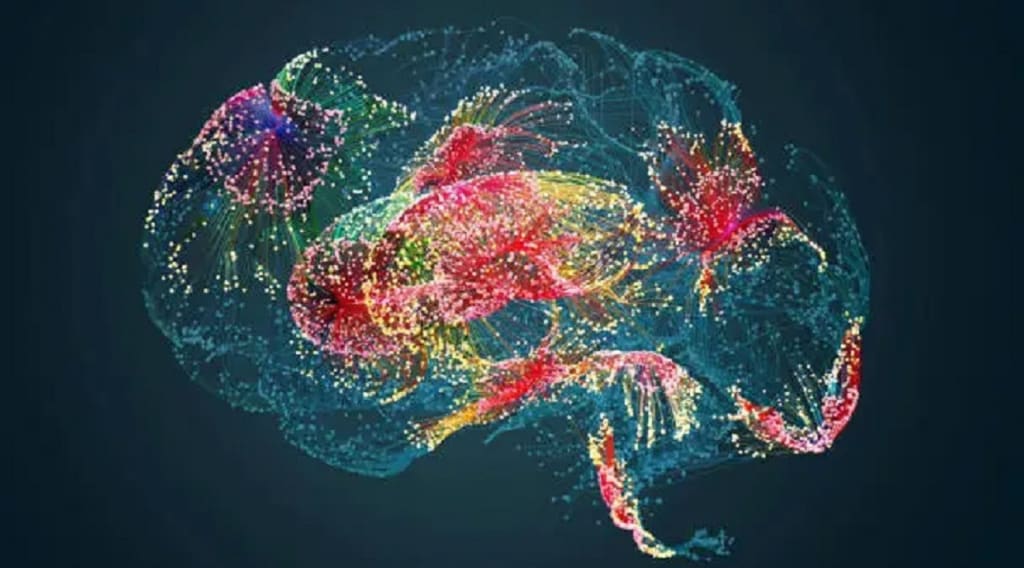
Summary: A recent study indicates that the cognitive process of retrieving words and concepts from memory in humans may exhibit similarities to the ancient foraging patterns employed by animals in their search for sustenance within their habitats.
This new revelation comes from a neuroimaging study that examined the brain activity of participants as they delved into their long-term memories to retrieve words associated with different concepts. The study found a potential connection between the internal search for stored concepts in humans and the external search for resources, such as food or shelter.
These findings provide valuable insights into understanding schizophrenia, a condition characterized by speech and thought disorganization.
Key Facts:
- The study suggests that the patterns used by humans to internally search for memories may have evolutionary origins and resemble the strategies employed by animals to forage for resources.
- In tasks involving memory, people tend to produce words in clusters or "patches," shifting their focus when a particular patch is exhausted, similar to how animals switch between food sources.
- Heightened activity in the hippocampus and posterior cerebellum was observed when participants switched between memory patches, revealing distinct cognitive processes.
(Source: Indiana University)
The way in which the mind searches for words and concepts in memory may be rooted in age-old patterns demonstrated by both humans and nonhuman animals as they search for food and other resources in their physical surroundings. This theory has recently garnered support from a neuroimaging study that examined the brain activity of participants as they recalled words from their long-term memories that were associated with various concepts.
In addition to shedding light on the basic strategies used by individuals to locate relevant information, this research may offer a fresh approach to comprehending conditions like schizophrenia and other forms of psychosis, where disorganization of speech and thought constitutes a key symptom. The study, conducted by researchers from the Indiana University Department of Psychological and Brain Sciences in the College of Arts and Sciences and their collaborators, was published on October 12, 2023, in the Proceedings of the National Academy of Sciences. Its findings provide neural evidence of a link between foraging in physical space and the realm of the mind.
Principal investigator Peter Todd, whose research focuses on the evolutionary origins of cognitive processes, explained how patterns of search used to locate external resources like food, water, or shelter could also shed light on the way humans search for internal concepts stored in memory.
"We don't solely rely on external searches; we also search internally," stated Todd, who is a Provost Professor in the IU Department of Psychological and Brain Sciences and Cognitive Science Program.
"These strategies, which have evolved to aid other organisms in finding what they need in the physical world, also appear to guide our information searches in libraries, on the web, and within our own minds when we are trying to access and utilize stored information."
The key similarity between external and internal search strategies lies in the transition from one patch of items with a high concentration of a particular resource to a new patch when the previous one becomes depleted. For example, if a bear is searching for berries, it will spend time at one bush until it has consumed most of the berries, prompting the bear to move on to another bush in the hopes of finding more.
This pattern of exploiting one patch until it's time to move on, known as the "exploitation/exploration tradeoff," is a strategic process that enables an organism to maximize food consumption over time by deciding when it is advantageous to leave one location and search for new sources of sustenance.
The researchers have demonstrated that the search for concepts within the semantic spaces of memory replicates this strategic switching between local searching within clusters of items and global searching for new clusters.
During the study, thirty participants underwent functional magnetic resonance imaging (fMRI) to measure their brain activity while they were asked to recall all the words they could think of in a three-minute period, focusing on conceptual categories such as animals, food, occupations, or words beginning with a specific letter.
In memory tasks like these, individuals typically generate words in clusters or patches. For instance, if a participant is instructed to list animals, they might start with farm animals until their recall of farm animals depletes, prompting a shift to a new cluster comprising "pets" or "African animals."
With the expertise of IU Professor Josh Brown from the Department of Psychological and Brain Sciences, known for his research on decision-making processes using fMRI, the researchers explored the participants' brain activity during moments of switching between memory patches and while searching within patches leading up to a switch.
As Nancy Lundin, lead author on the study and a former Ph.D. student in the IU Department of Psychological and Brain Sciences and the IU Program in Neuroscience, explained, "We endeavored to describe and classify the cognitive search processes observed during phases of clustering, wherein individuals recollect pertinent words from their memory, as well as during periods of switching, where a transition is made to a novel domain.
"To inform our investigation, we drew from computational models focusing on semantic and phonetic distances, as well as participant reports detailing instances of switching. Our findings reveal heightened activity in the hippocampus and posterior cerebellum during switching as opposed to clustering. This disparity provides compelling evidence supporting the notion that these cognitive search processes possess distinct meanings."
Brown, who is also associated with the IU Cognitive Science Program and Program in Neuroscience, further expounded on the implications of this brain activity.
He suggested that the study confirms the hippocampus' role as more than a mere repository for memories during their journey to long-term storage. In fact, he referred to it as a "scratch pad" that facilitates the representation and manipulation of memories.
"The hippocampus demonstrated increased activity when subjects were tasked with exploring different segments of semantic space. This occurrence indicates the presence of mechanisms that aid in new idea generation, the discovery of novel information, and the willingness to experiment with alternative approaches."
Lundin, now a postdoctoral fellow in the Department of Psychiatry and Behavioral Health at the Ohio State University College of Medicine, similarly emphasized that the study contributes to recent research on the cerebellum's underexplored role in cognitive processes, acknowledging her Ph.D. advisor and fellow author on the study, Professor Bill Hetrick in the IU Department of Psychological and Brain Sciences.
Traditionally, the cerebellum was principally associated with motor coordination and control.
"With respect to our investigation, posterior regions of the cerebellum, which have more recently been linked to cognitive processes, were implicated in the act of transitioning to new segments of cognitive space for both semantic and phonetic word retrieval tasks."
Clinical Implications
Lundin, as a clinical psychologist, regards the current study as fundamental to her future plans of analyzing the organization of speech and thought among individuals with psychotic illness and other psychopathologies.
She noted that schizophrenia, a term coined by Swiss psychiatrist Eugen Bleuler in 1908, has consistently been characterized as a disorder characterized by loosened associations, leading to fragmented thought, language, behavior, and emotions.
Lundin points out that extensive research has been dedicated to understanding thought disorders and disorganized speech in psychosis. However, the underlying mechanisms and reasons why certain individuals struggle more with effective communication remain largely unknown.
She and her colleagues are actively exploring the relationship between cognitive foraging processes, specifically the decision-making process of exploration and exploitation, and speech and thought organization in psychosis. They aim to investigate whether individuals with psychosis adopt suboptimal foraging strategies, such as perseverating on a cluster of concepts for an extended period or prematurely abandoning these clusters.
Lundin has already conducted several studies focused on these cognitive search strategies among individuals with psychosis. Thus far, she has noticed discernible differences in the patterns of local exploitation and global exploration during semantic search between individuals with psychosis and those who are neurotypical.
Nevertheless, more research is required. Lundin plans to collect new data at the hospital where she works to enhance her understanding of how unrestricted, everyday speech aligns with the foraging process explored in the current study.
She expresses a strong belief that this novel conceptualization of word and concept retrieval in memory can elucidate the root causes of psychosis and potentially pave the way for groundbreaking treatments for individuals struggling with this condition.
Other authors involved in the study include Brendan T. Johns from the Department of Psychology at McGill University; Michael N. Jones from the Department of Psychological and Brain Sciences and the Cognitive Science Program at Indiana University; John R. Purcell from the Department of Psychological and Brain Sciences and the Program in Neuroscience at Indiana University, as well as from the Department of Psychiatry and Brain Health Institute at Rutgers University; William P. Hetrick from the Department of Psychological and Brain Sciences, Program in Neuroscience, and School of Medicine Department of Psychiatry at Indiana University; and Brian F. O'Donnell from the Department of Psychological and Brain Sciences, Program in Neuroscience, and School of Medicine Department of Psychiatry at Indiana University.
About the Creator
Keep reading
More stories from writers in Humans and other communities.




Comments
There are no comments for this story
Be the first to respond and start the conversation.