
Savoring the benefits of bone broth: Worth a taste?
Health
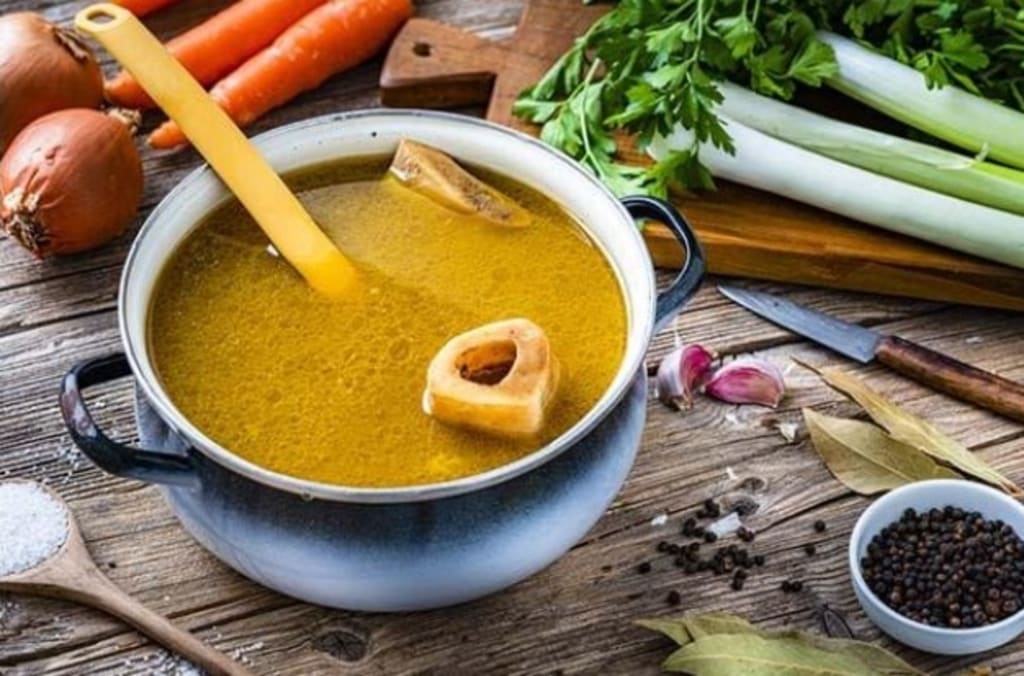
If you've been to the soup section of the supermarket lately, you've probably noticed that bone broths are crowding the shelves. These savory broths are having a moment, especially among those following paleo, keto, or other trendy low-carb diets.
What is bone broth?
At its simplest, bone broth is made by simmering animal bones (usually chicken or beef) in water for a long period of time, extracting their nutrients and flavors to produce a savory broth. Meat, skin, and connective tissue may also be simmered with the bones, along with aromatic vegetables, herbs, and seasonings for flavor. Most bone broth recipes include an acidic ingredient like vinegar to help break down the collagen and minerals in the bones.
What's the difference between bone broth, regular broth, and stock?
Because it's made mostly from bones, bone broth is different from regular broth, which is traditionally made from meat (along with vegetables and flavorings) and simmered for a much shorter time. Bone broth also has a slightly thicker texture and a richer mouth feel than regular broth, because the cooking process converts some of the collagen in the bones to gelatin.
Bone broth and stock, however, are essentially the same thing: they're both based on bones rather than meat, and include similar vegetables and seasonings. The difference is mostly in timing: Stocks generally simmer for a few hours, while bone broth recipes usually call for much longer cooking — from four to six hours to as much as a day or more — until the bones are almost falling apart.
Nutritional benefits of bone broth
Bone broth provides a fair amount of protein — about 8 to 10 grams per cup, versus just 2 to 6 grams in a cup of most broths or stocks. Getting enough protein is important to maintain or gain muscle mass as you get older, as well as for overall health and well-being.
Bone broth also contains small amounts of calcium, magnesium, and phosphorus — minerals that support bone health.
What to look for in store-bought bone broth
Choosing the best bone broth is mostly a matter of taste. But whether you're choosing chicken bone broth or beef bone broth, look for reduced-sodium or low-sodium varieties, as some can weigh in at over 450 milligrams of sodium per cup. That's about 20% of the recommended daily sodium limit.
A simple homemade bone broth recipe
Making your own bone broth is easy; even though the cooking time is long, it's mostly hands-off. What's more, making your own bone broth lets you adjust the ingredients and salt to your taste.
To make about 6 to 8 cups of bone broth, place 2 to 3 pounds of chicken or beef bones in a large, deep pot (you can roast them first, for extra flavor and deeper color). If you like, add some roughly chopped vegetables like carrot, celery, and onion, and seasonings like thyme and bay leaf. Pour in about 12 cups of water, or enough to cover by several inches, and 1 or 2 tablespoons of vinegar.
Cover and bring just to a boil, then reduce the heat to low and simmer, covered, for 12 hours. Strain through a fine-mesh sieve, discarding the bones and solids (you can compost them). Season to taste with salt and pepper.
About the Creator
Keep reading
More stories from Jahangir Alam and writers in Humans and other communities.
Hind Rajab: A Child the World Heard Too Late
Cinema has always been a powerful medium for telling stories that history books often reduce to numbers. When a film chooses to focus on a single child caught in the machinery of war, it forces audiences to confront reality not as statistics, but as human loss. The movie inspired by the tragic story of Hind Rajab, a young Palestinian girl, does exactly that. It is not merely a film; it is a testimony, a memorial, and a question posed to the conscience of the world. Hind Rajab’s name became known globally after reports emerged of her final hours during the Gaza conflict. She was a child trapped in circumstances no child should ever experience. The film based on her story does not sensationalize her death, nor does it turn her suffering into spectacle. Instead, it approaches her story with restraint, dignity, and an unwavering focus on innocence lost amid violence. The Story at the Heart of the Film The movie centers on a young Palestinian girl who becomes separated from safety during intense military escalation. Through her eyes, viewers witness fear, confusion, and the fragile hope that someone, somewhere, will come to help. The film follows her final journey—both physical and emotional—using minimal dialogue and powerful visual storytelling. Rather than relying on graphic imagery, the filmmakers choose silence, pauses, and close-up shots to convey terror and vulnerability. This artistic choice makes the film even more haunting. The audience is left to sit with the child’s fear, her calls for help, and the unbearable waiting that defines her final moments. By focusing on Hind as an individual rather than a symbol, the film restores her humanity. She is not portrayed as a political tool, but as a daughter, a child with dreams, and a life that mattered. A Child as the Center of a Global Tragedy What makes this movie particularly impactful is its refusal to shift focus away from the civilian cost of war. The story does not revolve around soldiers, strategies, or power struggles. It revolves around a child who should have been worried about school, friends, and play—not survival. This narrative choice challenges the audience to rethink how conflicts are discussed in media and politics. Wars are often framed in terms of borders, ideologies, and victory. This film asks a different question: What is the price paid by those who have no role in choosing the war? By centering the story on Hind, the film exposes the imbalance of power and the devastating consequences faced by the most vulnerable. Artistic Direction and Emotional Weight The film’s direction is deliberately restrained. There is no dramatic background score overpowering the scenes. Instead, ambient sounds—distant explosions, static-filled phone calls, the quiet breathing of a frightened child—carry the emotional weight. This realism makes the film deeply unsettling. The young actress portraying Hind delivers a performance that is heartbreakingly authentic. Her expressions alone communicate fear, confusion, and bravery far beyond her years. The filmmakers avoid overacting or melodrama, allowing the story’s truth to speak for itself. Cinematography plays a crucial role as well. Tight frames and limited perspectives reinforce the feeling of entrapment, while long, unbroken shots force viewers to experience time as Hind did—slow, uncertain, and terrifying. A Political Film Without Political Speeches One of the film’s greatest strengths is that it does not rely on speeches or overt political messaging. Its power lies in its simplicity. By telling one child’s story honestly, it exposes the broader reality of civilian suffering in conflict zones. The film does not tell audiences what to think. Instead, it asks them to feel—and that is far more powerful. Viewers are left to grapple with difficult questions about responsibility, accountability, and the value of human life. This approach has made the movie resonate across cultures and ideologies. Even those unfamiliar with the details of the Palestinian struggle can connect with the universal themes of childhood, fear, and loss. Reception and Global Impact Since its release, the film has sparked intense discussion on social media, in film circles, and among human rights advocates. Many viewers describe it as one of the most emotionally challenging films they have ever watched. Critics have praised its ethical storytelling and refusal to exploit tragedy. For many, the movie serves as an entry point into understanding the human cost of the Gaza conflict. It has been screened at independent film festivals and community events, often followed by discussions about civilian protection and children in war zones. Most importantly, the film ensures that Hind Rajab’s name is not forgotten. In a world where news cycles move quickly, cinema has given her story permanence. Why This Film Matters This movie matters because it stands against normalization of suffering. It reminds us that behind every headline about war are real people, real families, and real children whose lives are forever altered—or ended. By immortalizing Hind Rajab’s story, the film becomes an act of resistance against silence. It insists that her life had meaning and that her death deserves acknowledgment, reflection, and accountability. In the end, this is not just a film about one Palestinian girl. It is a film about every child trapped in conflict, every unanswered call for help, and every moment when humanity fails its youngest members. Cinema cannot undo tragedy, but it can refuse to let it be ignored. And in doing so, this film ensures that Hind Rajab’s story continues to speak—long after the screen fades to black.
By Hasbanullah6 days ago in Humans


Comments (1)
Bone broth sound good. Maybe I’ll try it.