
Romance behind the dumpster
People experiencing homelessness still maintain intimacy but it is challenging and sometimes unwanted

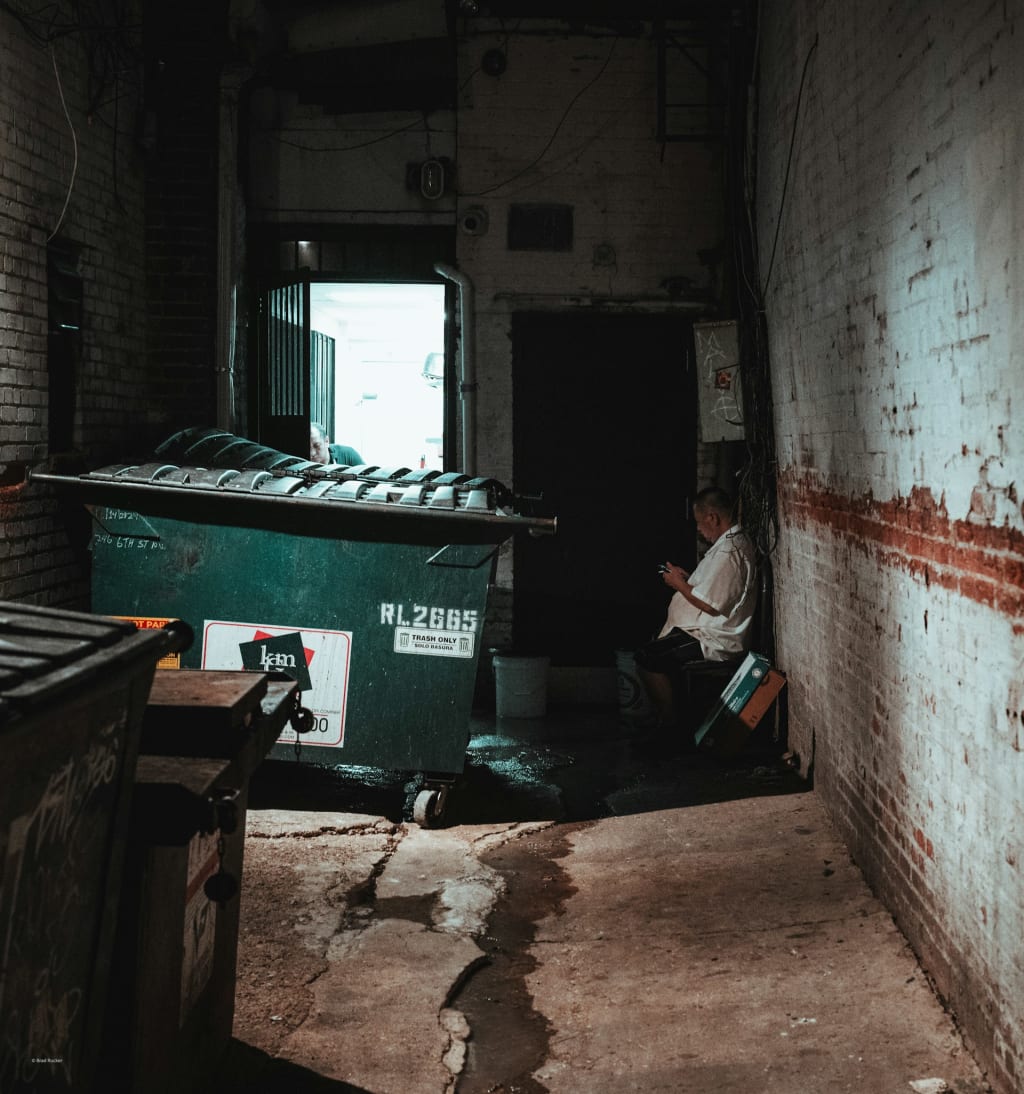
One of the things that struck me when I became homeless was how many unhoused people had paired off.
While some of these relationships were platonic, others were romantic. At first, I wondered how people who worried where their next meal would come from could possibly put in the work needed for a relationship. But in fact, homeless people who are at their most vulnerable often crave human connection both for companionship and safety. “Find a buddy,” an older homeless man told me when I became homeless. “There’s safety in pairs.”
Pairing up can mean someone to watch your back, share resources, and navigate the chaos together. Homeless people form relationships seeking:
Emotional intimacy and connection: In a world that often dehumanizes the unhoused, romantic relationships can offer validation, affection, and a sense of being seen.
Resource pooling: Couples can combine money, food, and gear, making day-to-day survival more manageable.
Access to services: Some shelters or transitional programs prioritize couples or families, so pairing up can be strategic. However, most shelters segregate men and women, making relationships for different-sex partners hard to maintain.
Identity and dignity: Being in a relationship can help preserve a sense of normalcy and self-worth, especially when everything else feels stripped away.
Sexual agency: The “My Shelter or Yours?” study found that both men and women emphasized physical attraction and sexual desire, with participants engaging in casual sex, monogamous relationships, and sex that sometimes led to pregnancy.
A toolkit for homeless couples
According to St. Mungo’s Homeless Couples Toolkit, a London-based homeless resource, “Homeless people have the right to a sex life and intimacy whether this is experienced with their romantic partner(s) or through experiences with casual partners. The World Health Organization working definition of sexual rights describes “all people’s rights to fulfil and express their sexuality and enjoy sexual health, with due regard for the rights of others and within a framework of protection against discrimination.” This reinforces the need to practice talking about sexual health needs and relationships with every client during regular key work sessions.”
The toolkit continues, “Clients may have more than one partner. This is reflective of relationships experienced by non-homeless people, however, for clients living in staffed accommodation services, unlike a person in private housing, personal details are often made public due to the nature of high need services. Workers should remain non-judgmental and ensure any discussions with their team about a client’s sex life are necessary and carried out in private.”
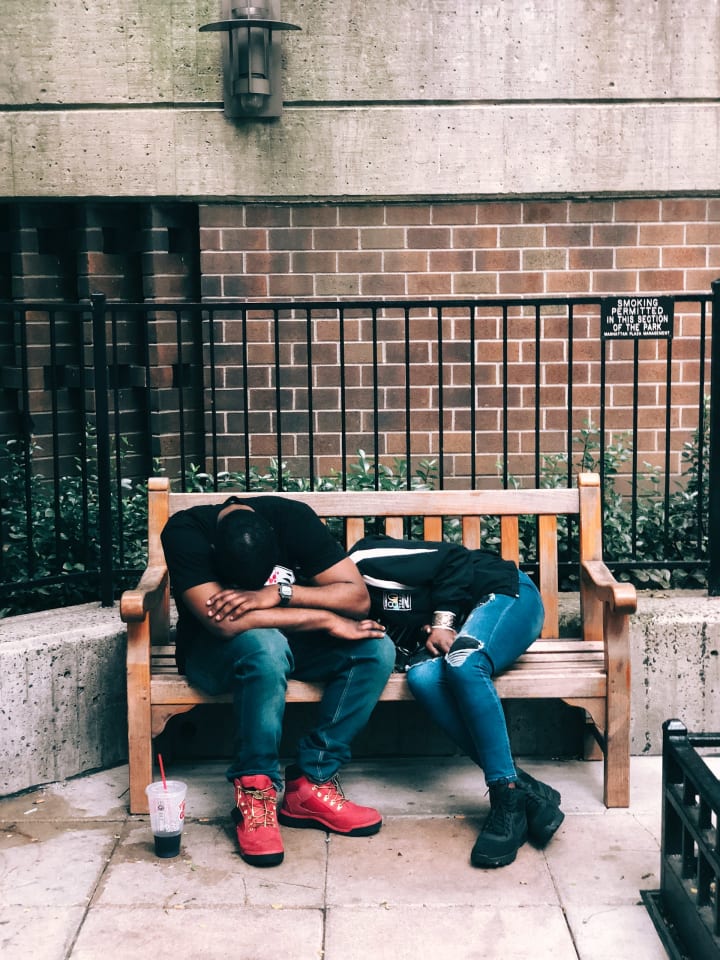
Calgary, Canada study
In a study published in the Journal of Social Policy, unhoused people in Calgary, Canada shared their experiences. “The men, like some of the women in our study, who spoke about their current intimate relationships saw their partners as a source of hope and a motivational factor to make a change,” the study reported. “For these men, the continued relationship with their partners may represent a sense of normalcy and stability in their unstable lives.”
The study explained that women sometimes become homeless after fleeing violent relationships. This applies to men, too. The fact that most shelters are not co-ed means partnered homeless people can’t even share a meal at night, let alone a bed.
“In their study of homeless women, Nyamathi et al. identified that women in non-conflictive relationships had greater psychological wellbeing and life satisfaction and less non-injection drug use than either single homeless women or homeless women in conflictive relationships,” according to the paper. “While a study by Wesley and Wright focused more heavily on negative relationships experienced by homeless women, some attention was paid to experiences recounted by study participants whose intimate partnerships were a source of support and stability even while experiencing housing instability. For these participants, their partners provided a sense of safety and connection during these unstable periods. Positive intimate partnerships may represent hope for survival of and escape from homelessness.”
My own experience during homelessness
I ran across a lot of unhoused couples during homelessness, particularly gay couples (likely because I am gay). It is very unsafe for gay people on the street to show any kind of affection toward each other, so most remain closeted in shelters. But at least same-sex couples can sleep under the same roof with their partner.
I remember one couple in particular who seemed to normalize homelessness. One of the men had a battery-operated Christmas tree attached to his cart during the holidays. They always seemed happy and did nice things for other homeless people. They never complained about being homeless.
I’ve seen other couples where mental illness strains the relationship. Many unhoused people suffer from conditions that cause paranoia, which can be extremely detrimental in a relationship. Trust is very important.
“Fertig and Reingold found that homeless mothers with dependent children are more likely than housed mothers to have been abused by their children's fathers,” the paper continues. “Similarly, Benda found a connection between sexual or physical abuse at any point in the lifecycle and homelessness amongst female veterans. Often, the male population is generally not considered when examining the role of domestic abuse due to systematic under-reporting of incidences, but a number of studies have examined the connection between other forms of trauma and increased homelessness amongst males (Herman et al., Intimate partner abuse, for instance, is a traumatic experience that may contribute to the onset of male homelessness for some.”
So where do homeless people have sex? Some do so in their tent, but others who don’t have tents may risk breaking the law by having sex in public spaces such as parks, alleys or abandoned buildings.
Healthy bonds, healthy outcomes
As with any relationship, healthy bonds between mates lead to more positive outcomes. “Nyamathi et al. identified that women in non-conflictive relationships had greater psychological wellbeing and life satisfaction and less non-injection drug use than either single homeless women or homeless women in conflictive relationships,” the paper continues. “While a study by Wesley and Wright focused more heavily on negative relationships experienced by homeless women, some attention was paid to experiences recounted by study participants whose intimate partnerships were a source of support and stability even while experiencing housing instability. For these participants, their partners provided a sense of safety and connection during these unstable periods. Positive intimate partnerships may represent hope for survival of and escape from homelessness.”
Other women, however, become homeless by leaving abusive relationships. “I am a very independent woman,” reported one woman in the study. “I fell back (into a situation of homelessness) because I was hooked up with the wrong guy and I didn't want to be around the drugs anymore. I worked all the time, and my money was always going to him for his fix. So, I walked out on him last week. He doesn't know where I am. I don't want to be around that. I don't want to be in that environment. I want to move forward and build something.”
Another respondent similarly stated, “My boyfriend and I stayed at my mom’s, and he got a job while I went to school. We tried to clean up our lives and we eventually got a place down in (respondent states area of city she was living). Then my ex decided to get back into the habit because he was going through depression after his dad died and because his mom was dying on him. He started using crack and he started sneaking out at night to steal from cars. I said to myself, ‘I can't do this with my daughter. I'm not doing this.’ I gave him chance after chance and one day he brought crack into the house, and I grabbed it out of his pocket, and I threw it on the front lawn and I told him to get out and he didn't so we ended up getting into a fist fight. He took off so I took my daughter and my bags, and I left.”
Children keep couples on a healthy path
But for others, having a family is the motivation that keeps them on a healthy path. “I've got my family to worry about,” said one study participant. “That is what gives me hope. That is the only thing. Because I know if I didn't have them, I'd be dead. No doubt in my mind I'd be dead. My wife and my kids are the only thing that keep me alive.”
Said another: “It's just working on my fiancée and that right now, give her a good life that she never had the opportunity to have. That is important to me.”
The study concluded that shelters need to be more accommodating of couples. “Our research found a considerable number of participants who clearly identified the positive role of their present intimate partnerships on their psychosocial well-being and their motivation to address those personal factors contributing to their ongoing situation of homelessness (including abstaining from drug use and actively pursuing employment opportunities). This interaction is underexplored within the literature and deserves greater focus.
“Many shelters, intending to protect women who are seen as potentially vulnerable, maintain a strict policy of gender division. However, the potential for homeless people to build strong and positive networks of social capital and create important preconditions for a successful and lasting transition to housing is being undermined by a system that keeps people out of intimate relationships. Same-sex friendships are encouraged but limited in the often unstable world of homeless shelter use; and even more substantial barriers exist for mixed-sex relationships, intimate or not, that might also serve to foster the transition to housing.”
About the Creator
David Heitz
I am a journalist with 38 years' experience. I write for Potent, Vocal's cannabis blog, and Psyche, where I share stories of living with schizoaffective disorder bipolar one. I have lived in a penthouse and also experienced homelessness.
Keep reading
More stories from David Heitz and writers in Humans and other communities.
The CEO of Everything
They say "jack of all trades, master of none," but they forgot to mention the part where the jack of all trades is also the camera woman, the makeup artist, and the person currently yelling at a tangled Wii microphone cable in a her own bathroom while recording herself singing and trying to make it look realistic and professional. (As professional as you can make it with nothing but a cell phone camera and a mic that doesn't work)
By Sara Wilson5 days ago in Humans
I Saw God Through the Kitchen Window
Cupping my fingers, I glide them across her trapezius and steadily up and along her neck, pushing in my thumb. I finish the move at the base of her skull. I rub with small, deep circles to soften the solidified fascia.
By Chantal Christie Weissabout 22 hours ago in Humans


Comments
There are no comments for this story
Be the first to respond and start the conversation.