
Rheumatoid Arthritis: I Walk Through Fire
The Story Behind the Song
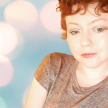
I am a professional songwriter which is a particularly cool job. People get to this point in music via a number of routes but in my case my current working arrangements came about because of a severe case of rheumatoid arthritis (and ankylosing spondylitis, an inflammatory joint condition which has fused my neck and the base of my skull) coupled with type 1 diabetes, each condition complicating the other. I have a song out at the moment called I Walk Through Fire. People add their own stories when they hear it, but I wanted to share the journey that led to me writing it.
It’s not a short story so I’m only going to hit the highlights. It actually took about 30 years in the making but for now, imagine 14 year old me. I was an academically minded teenager who frequently fell asleep in class, prompting my English teacher to do amusing impersonations. My teachers ascribed this tendency to the type 1 diabetes I had had since the age of 4, and some to overworking. Whilst it seemed comical to my less sensitive schoolmates, it was anything but. When you are busy and get tired it’s like burning down a candle. What I experienced was like someone just came along and turned out the light and I found myself in a dark fog, and keeping my head up was a Herculean effort. The technical phrase for that experience is chronic fatigue, but I didn’t know that then. Then the pain started. One morning I woke up and found that my neck hurt so badly that I had to lift my head with my hands. This persisted for days, weeks, months and years and regular trips to the doctor led to such advice as I should improve my posture. At one point a physio put my head in traction which was basically the equivalent to the Tudor rack. Everything went black. I also remember being away for a weekend and being totally delirious at one point. My adolescent friends did not understand and I was possibly construed as being weird/hysterical/deranged. My grandmother kept telling me off for raising one shoulder higher than the other but I retorted that I couldn’t lower the shoulder. My problems, now extending to my ankles, were believed by few and understood by none.
Fast forward to me aged 23. I had just handed in my Master’s dissertation and had been caring for my grandmother who had Alzheimer’s and died in September 1999. My father had been hit by a drunk driver and sustained an acquired brain injury when I was 7 and for a time I had lived with and been partially brought up by my grandparents. I received my first appointment in rheumatology just before my grandmother died, after 8 or 9 years of living with an unnamed condition. By this stage I couldn’t turn my head at all but my neck, although still painful, hurt a lot less. My ankles hurt a lot more although my GP had been of the view ‘If this was rheumatoid arthritis it would show up on an X-Ray’. Wrong!!! Not at that stage. Plus, there are more forms of inflammatory arthritis than just rheumatoid. Nonetheless, she did agree to take my inflammatory markers and they came back very, very high. After years of being fobbed off as troubled young person, I finally saw a rheumatologist. Prior to that I had never heard the word ‘rheumatologist’. X rays showed my neck had fused. An appointment was made for me in the rheumatology day ward where I was (mis)diagnosed with ankylosing spondylitis. Nothing could have prepared me for the attitudes I would encounter there. I had had type 1 diabetes for nearly 20 years by this point and diabetes care is all about patient education and learning to understand and manage your own condition. You can imagine how befuddled I was when I was told I would need regular blood tests and asked why to be told, ‘The medication can just have some effects on your blood’. Since that wasn’t an answer, I asked the doctor on his ward round what the side effects of the medication were and he replied ‘the worst they can do is kill you but then again aspirin can kill you’. That was the attitude I was to contend with for decades – flippant, uncaring and patronising. After being diagnosed with something I had never heard of in my life, I was then told I would be given three monthly reviews. In reality I wasn’t seen for another 2 years and that was only because my aunt’s friend who was in an elevated position in the health service pulled some strings.
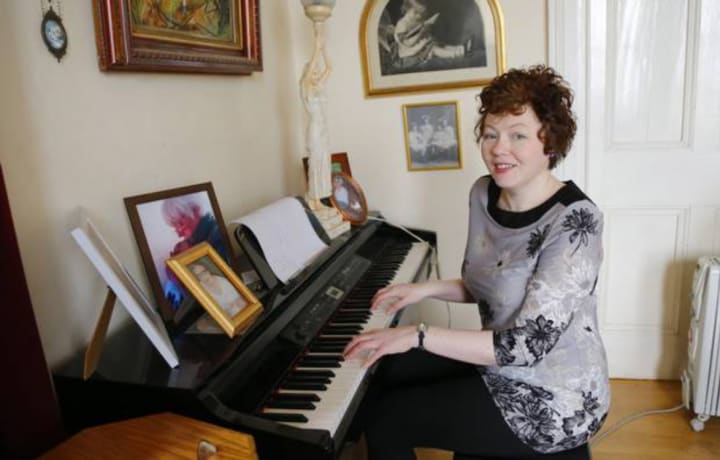
During the years that I either wasn’t seen or was seen and nothing was done, I did not fare well psychologically. Nobody ever really asked me how I was feeling or was I adapting and nobody talked to me about what the future would be like so I, being young, made a lot of suppositions. The life I had imagined had gone right out the window. The career path in music I had always dreamed of was now gone (or so I thought…), I wouldn’t end up being married. I wasn’t normal. Young people want to be normal. People kept telling me I wasn’t normal. One elderly lady I met asked me, ‘Lame, are ye?’ which made me so upset I bolted and drove for about 50 miles. I have to say this here, my life became so much better when I abandoned being normal as a goal. There came a time when I realised that when you may not have what some view as a normal life, you can still have an exceptional one, but that took a long time. There I was in my mid-20s, and then my 30s in a pit of despair which was overwhelming. I was in terrible pain. I stopped playing music. Dust gathered on my piano. I had no sense of a positive future. What faith I had was only the size of a mustard seed, but it turns out that that is all the faith you need.
Working was very difficult as I had more than 20 hospital appointments a year and frequent medical procedures which were permitted but negatively remarked upon. In the end my father gave me a job in the disability organisation he ran. Despite his brain injury, he went on to receive the MBE (a national honour in the UK) for services to disabled people. He was an absolute model of how to adapt and achieve in difficult circumstances which I didn’t appreciate until the morning we woke up and he wasn’t there anymore. After Dad died I continued to work in his organisation until his successor also died suddenly. Then a new manager came in who overturned all the reasonable adjustments I needed to work with my condition. She asked me if I was claiming disability benefits and I unfortunately said no (I did later). She replied that meant I wasn’t really disabled (Note: in the UK our employment law defines a disability as a condition lasting 12 months or more which has a substantial impact on the ability to carry out day to day activities. It has nothing whatsoever to do with benefits). This woman then began contacting me at 10pm and one day, after I had delivered especially successful training, decided I was not ‘up to scratch’. I initiated tribunal proceedings. The chairman of the organisation who had purported himself a friend of my father phoned and told me I would be letting my father down by suing, which pretty much made me decide to sue. Dad would not have thought of anything as more important than me. Unfortunately this meant suing my own mother who was on the board, but sometimes a momma will let her child sue her if she sees it’s got to be done – which it did because the manager had told the committee that nobody was to write me a reference. They settled out of court on my terns and wisely so. The legal side was fairly cut and dry but the emotional side less so because I had lost a connection to my father.

So, I moved on to another job. By this stage I had started taking humira, a powerful immunosuppressant which stops the immune system form attacking joints. It was at that point working quite well (at this stage I have been on 10 biologics as they don’t work long or don’t work at all in my case). One day the humira started to be less effective and I had to have treatment with an intramuscular steroid injection (they stabbed my butt). Steroids block the action of insulin and so this was complicated and the doctor told me to take the rest of the week off work. I phoned into work and a colleague (not my manager) answered the phone. I told her what had happened and she replied, ‘But you will be in on Friday, Eve? Your project doesn’t run if you aren’t here. We were talking about hat the other day.’ I asked who had been talking about my health in my absence and in what context. I was still on probation and the place was horrible to work. The superdrugs were failing, my arthritis was excruciating and my diabetes all over the place. My colleagues were not only unsupportive, they were actually judgemental about my condition and despite the fact it was a disability organisation, the manager was clueless and insensitive when it came to my disability. After only 3 months I walked out. Good riddance. I decided to wave goodbye to the, <cough> ‘caring’ profession.
So, you may be thinking ‘This woman just walked out of a job.’ Fair enough point but let me tell you what my days were like around that time. Can you imagine waking in the morning and the first sensation you have is pain all over your body. You are in pain lying still and that when you move at all, that pain will increase. You know that there is a real possibility that when you complete the painful process of puling yourself up by your arms that your legs may not be able to take your weight and you might fall back onto the bed. Then somehow you have to get yourself down to the kitchen for a finger prick blood test so you can take the insulin you need to eat the food you need to take the tablets you need which will take a couple of hours to kick in. Even at that point, your mobility will be limited. That was the condition I found myself in for about 2 years. My hospital care team did very little about it and on one occasion the rheumatology nurse let me know in no uncertain terms that they thought I was a time waster, saying tersely ‘This is not going to be treated as an emergency, Eve. Your appointment is in 6 weeks.’ MY GP was amazing but limited in what she could do as she couldn’t prescribe rheumatological drugs and so in effect I had no treatment and certainly no statutory support. I did see friends but only when they came to visit me as it became harder and harder to go out. I don’t know, looking back, how I lived like that for a day let alone 2 years. Something had to give… I had complained to the Trust about the lack of treatment to be told that it was me, and not my arthritis, that was difficult to deal with.
It was clear something had to give. I needed to make a change. As the mustard seed began to grow, I couldn’t just stay where I was with no treatment and an ever declining quality of life. I had once had a private appointment at the Royal National Hospital for Rheumatic Diseases in Bath in the south of England. Later that same year I had attended the UK Songwriting Festival at Bath Spa University. There I found out about Bath Spa’s Master’s programme in Songwriting. So, I made a decision. I was going to move to Bath for a year, get my MMus, be treated at a centre of excellence for rheumatological conditions and then I was going to be songwriter. It seemed completely crazy but attempting to be normal hadn’t really worked out.
There were a few practicalities to be ironed out. I couldn’t really walk that well and I had to somehow get from Northern Ireland to my new rented house in Corsham in England with enough belongings for a year. My mother came with me for the first week. We had a great time doing the tourist bit, visiting Stonehenge and the pump rooms and watching Merlin because we were so close to Wales and Glastonbury (epicentres for all things Arthurian).
My first appointment at the Royal National Hospital for Rheumatic Diseases went well. They believed me and they actually seemed like they were going to do something. Here were people to walk through the fire with me who actually knew how to use flame retardant suits (I am milking this metaphor, I know). Dr, Sengupta, my new rheumatologist told me that I would leave Bath ‘a whole new woman’. That turned out to be true in many ways.
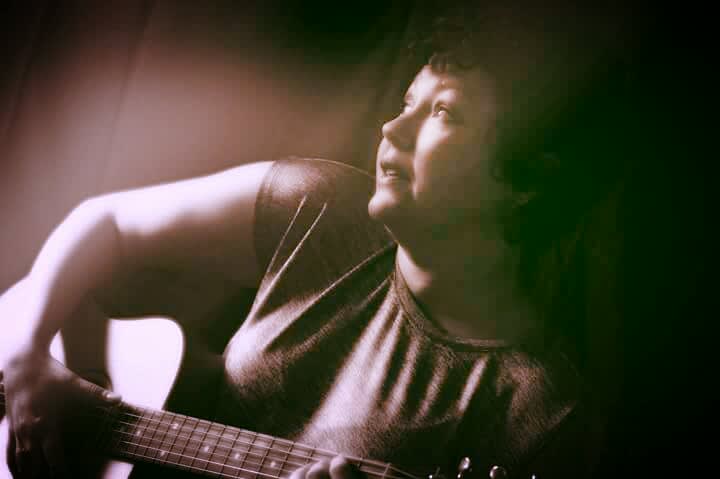
I met my classmates for the first time on 29th September 2011. What a great time that was… hanging out with musicians in the barn of a stately home kitted out with 4 recording studios, a Yamaha grand piano and every kind of instrument you could want. I was having a ball, until one day I woke up and could not stand up. My right leg was in the shape of a boomerang and I couldn’t put any weight on it. I was upstairs and my insulin was downstairs. I was in real trouble. Fortunately, my phone was by my bed so I called the biologics nurse, Judith (may she be ever blessed). I described my situation and she spoke some words that echo across the intervening decade to today, ‘We’ll send an ambulance to get you and if we can’t find you a bed we’ll put you in a chair.’ I love that woman. Compare that to the response of the nurse at the Ulster Hospital to a similar crisis, ‘This is not going to be treated as an emergency, Eve…’ After years of fighting and struggling to get help, and never having found anyone whom I perceived as particularly wanting to help I was now to experience actual care.
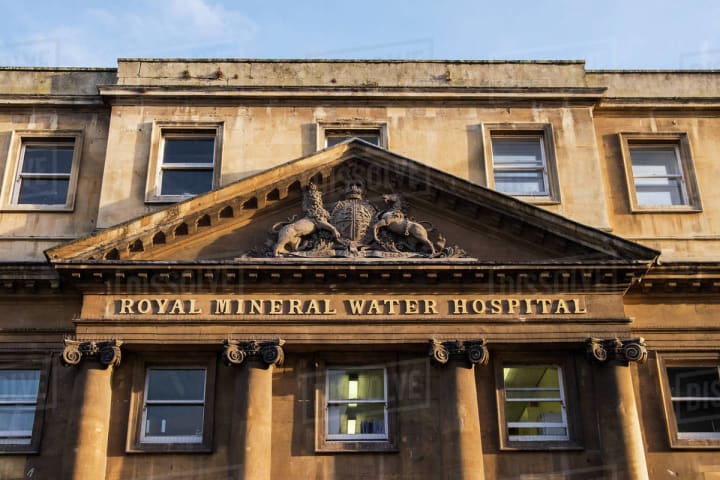
I was admitted and they did actually have a bed for me, right beside a window where I could look out at Bath from the old Mineral Water Hospital (known locally as the Min). It so happened that in the bed opposite me was my now long term friend Adele. It was actually quite late in the day by this time and I couldn’t see the doctor until the next day. The nurses brought me oromorph all through the night and a comforting thought ran through my head: last night I was in terrible pain and tonight and I’m in terrible pain, but now I’m in pain in hospital. I could hear seagulls outside (I have never understood why there are so many seagulls in landlocked Bath), reminding me of home where I live in front of the sea. They made me think of my grandfather, pointing out seagulls to me in the garden… I had a deep seated sense that everything was going to be ok. It was the mustard seed. The next day Dr. Sengupta came round on his ward rounds and asked, ‘Why did you leave it until it was this bad until you got help?’ I cried all afternoon, the exhaustion of fighting for help taken away from me and the sudden realisation that it was not actually impossible to get help being overwhelming. The other patients were sympathetic. Several came to tell me I was in the right place and I was going to be ok now, and some asked me to sit with them at lunchtime. If you weren’t on morphine, you were allowed out for coffee so Adele and I went to Café Nero or Starbucks… I can’t remember but it was one of those places. Since I’d been admitted in an emergency I had very little with me and I didn’t want to send my mostly male classmates rummaging through my underwear drawer, so I went shopping. My friend from London also visited with provisions at the weekend when many of the other patients had gone home. We had fish and chips. The food in the hospital was actually great but it was nice to have a treat. Classmates visited with Empire, The Guardian and Diet Coke. It was like they had known me for years…In between socialising I had physiotherapy, hydrotherapy, steroid joint injections and new biologics. It was one of the happiest weeks of my life, which I tried to explain to my mother when she phoned in a panic to ask if she should come over from Northern Ireland. I thought she would be lonely staying in my house without me there and said it might be better if she came over when I was discharged. Adele told me I could bring my mother to visit in the Min after I got home (it was likely she would be in hospital for some time), saying, ‘If your mother sees this place she will never feel nervous about you being in here.’
With new drugs and a caring care team my life stopped being all about my arthritis and walking through the fire was much easier. I focused on my studies in music, sitting around in the evenings writing songs and giving feedback on other people’s songs and practising close harmony singing with my housemate. To be honest I wasn’t entirely wise in the people I chose to spend most of my time with but all this time later the people who were really worth it are still here.
All good things must come to an end and the time came to move home. I arrived home on the last day of September 2012 and it was already winter. Things did not initially go well. I had about 30 job interviews without getting a job and most employment programmes for disabled people were really aimed at people with no qualifications. I had a horrifying sick record and the lady at the job centre said, ‘If it’s between you and someone without your condition, employers are going to choose the other person but they won’t tell you that’. I started to worry a lot about money.
Even worse, it was pretty hard to re-acclimatise to the Ulster Hospital rheumatology clinic after having received actual care elsewhere. My former consultant there had sent an email round saying she refused to treat me because I had complained. Good riddance. I would be crawling on my chin like a worm if I were still under her ‘care’. There was one lovely registrar and a very good nurse but when my biologics started to fail I was back to square one. They prescribed me a TNF inhibitor and I was anxious about it as I had never had a great response to TNF inhibitors. I told the nurse I was worried the drug would not work and she replied, ‘Don’t be so negative’. Even I was astonished at the extent to which I exploded as I walked out, never to return to that hell hole.
‘This is not an emergency…’
‘Don’t be so negative…’
‘What do you expect us to do?...’
‘Miss Williams’ condition is severe and unresponsive to treatment. It would not have been possible to provide further care…’
‘If we can’t find a bed we’ll put you in a chair…’
‘Why did you leave it until it was this bad until you got help?...’
There are some fires I absolutely refuse to walk though. I am now a patient in the Belfast Trust and I have rheumatologist who has empathy, compassion and professionalism. I have completely passed through that fire and I’m never going to allow even a spark of insouciance to come in my direction again.
While all this was going on, I was named One to Watch twice by Nashville Songwriters’ Association International and started writing more and more with more and more people. In recent years I have written in Norway, Ireland, England, Spain and the US with some pretty amazing artists including Ehle, JC Stuart and Katie Sky. I also found I really loved explaining to other people how to get into the industry as well as passing on the joy of the craft of music so I started my own business teaching on online platforms and in person as well as making income from my music. I am my own boss so I never have problems with my boss not understanding my condition. I work with superlatively lovely people making music. Could life be any better? So in my working life, I walked through the fire and now I’m dancing.
I still have a severe form of arthritis and I still walk through fire every day. As I write this biologic number 10 has just failed (the powerful drugs used to block the immune system from attacking joints), my knee needs replaced but he pandemic has delayed the surgery and both my ankles must be fused. Nonetheless, my days revolve round more than just my health now.
This is my story and I give it you if you are in the midst of the fire. If you love music, if you would like to talk about becoming self-employed with a chronic condition, if you are trying to help someone else through the fire or you want to water the mustard seed, please do get in touch with me.
About the Creator
Eve Williams
Eve Williams is a singer, commercial songwriter and chronic illness warrior (rheumatoid arthritis, type 1 diabetes). She travels the world writing music with lovely people. Follow her adventures and hopefully find some of your own here.
Keep reading
More stories from Eve Williams and writers in Humans and other communities.
Musicians Who Will Blow Your Mind in 2021
I’m a commercial songwriter which means that I write songs to pay my bills. In 2019 that meant heading from my native Northern Ireland to Norway, Nashville, Spain and several parts of England. In 2020 it involved learning to live stream studio files from Zoom. One good thing that I discovered whilst I was acquiring screen fatigue is that there is a lot of good music out there. A lot. Some of it is under the radar so I wanted to bring to your attention some music that is brilliantly crafted, produced and performed. We may not be jetting off, but we can travel in our minds…
By Eve Williams5 years ago in Beat
Today, Tomorrow
I had a moment recently where I contemplated what is even genuine anymore in the digital space. Humans were bound to be predictable in our unethical use of AI, I cannot think of any popular user generated platform online that has not been exploited or oversaturated in one way or another. Money, power and dominance are the pillars of society, so it is no surprise the rapid development of AI coincides with the human condition.
By Malachai Hough2 days ago in Humans


Comments
There are no comments for this story
Be the first to respond and start the conversation.