
Rev. Dr. Louise Goben on Interfaith Hunger Relief: Dignity, Golden Rule Partnerships, and Food Pantry Impact
Rev. Dr. Louise Goben, what does “interfaith” mean in practice for hunger relief work?

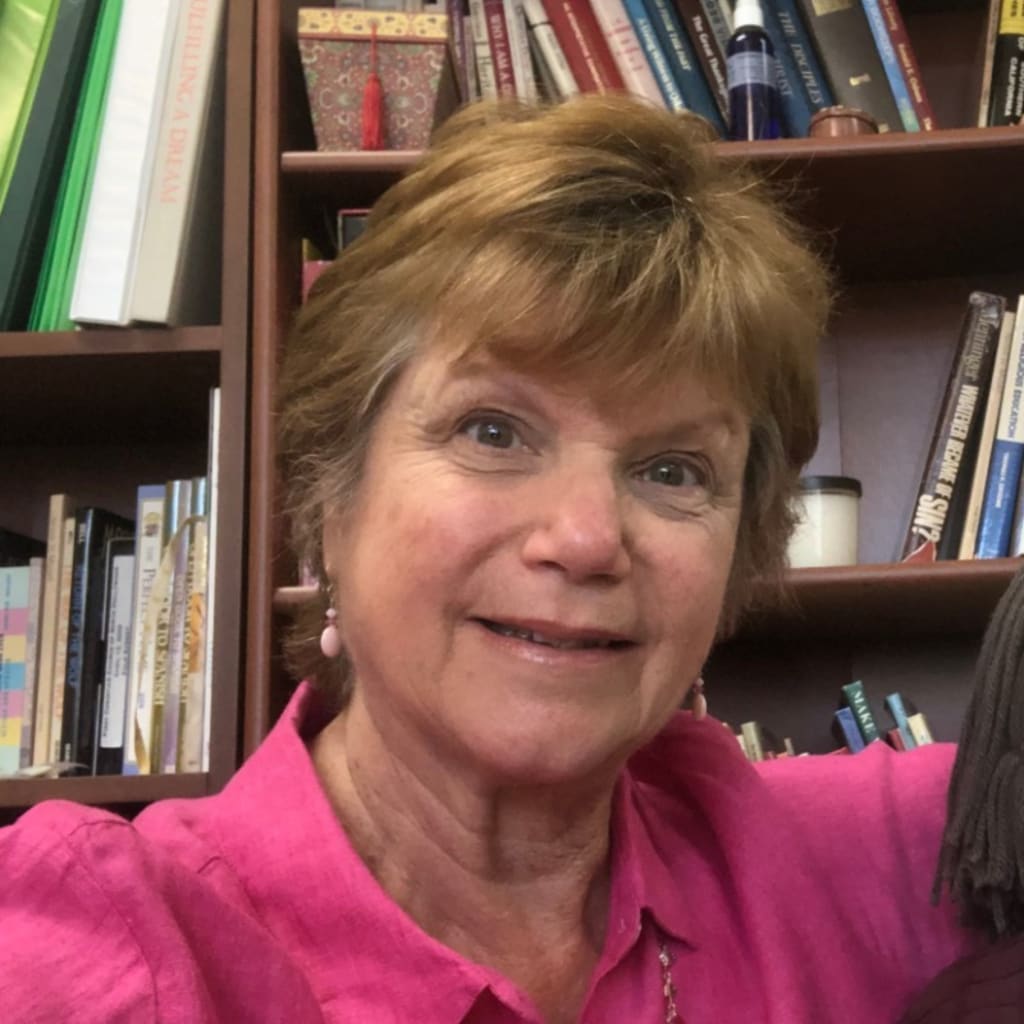
Rev. Dr. Louise Goben is President of the North Hollywood Interfaith Food Pantry and has volunteered with the pantry almost since its inception. With her family, she spent decades transporting food from Temple Beth Hillel to distribution at First Christian Church, strengthening a practical Jewish–Christian partnership against hunger in the San Fernando Valley. Ordained in the Christian Church (Disciples of Christ), she is retired from active congregational ministry but still preaches and teaches Bible when invited. She also teaches World Religion and History of Religion through the Encore Program at Los Angeles Pierce College. Her work centers on dignity.
Scott Douglas Jacobsen talks with Rev. Dr. Louise Goben on interfaith as cooperation rooted in the Golden Rule and shared humanity, not conversion. She recounts how Jewish and Christian congregations formed the Pantry in 1983 during the Reagan-era recession, motivated by compassion and an ambitious mission to eliminate hunger in the San Fernando Valley. Today, food supply is abundant, but inflation drives need—especially among seniors and families living in multigenerational homes. Key bottlenecks include limited space and the logistics of warehousing at Temple Beth Hillel while distributing at First Christian Church, sustained by volunteers and dignity-centered service.
Scott Douglas Jacobsen: What does Interfaith mean in practice?
Rev. Dr. Louise Goben: Every religious and philosophical tradition of the world embraces a concept of the Golden Rule. "Do to others as you would have them do to you." Interfaith conversation means that we seek to engage in conversation and partnerships with one another, not to convert or to gain one-upmanship, but to understand the common ground on which we all stand - our shared humanity. We posses the ability to rise above conflicts that often divide us. It is imperative that we do this as the very real possibility exists that we can destroy the world. This is not to sound doomsday-ish. Rather it is a hopeful approach to understanding the goodness that is inherent in all humanity. We work together for the benefit of the whole world.
Jacobsen: How did the partnership model evolve?
Goben: The particular partnership of the North Hollywood Interfaith Food Pantry (NHIFP) began when 5 women, representing several congregations (Jewish and Christian) became alarmed by the increasing numbers of people facing food insecurity as a result of the economic recession in the US during the Reagan administration. These women were motivated by their faith traditions and their compassion. They felt compelled to care about hungry people in their community. It was that simple - compassion. In 1983 the Pantry was created with the goal of "...eliminating hunger in the San Fernando Valley." It was an optimistic goal, but it is still part of our Mission. We believe that no one should go hungry; there is ample food available for all people.
Jacobsen: Which needs are rising fastest right now, e.g.,food quantity, families, unhoused clients, etc.?
Goben: Today we are sharing more food with our neighbors than we were during the recent pandemic. During the COVID crisis, there was a panic over resourcing enough food as everything came to a sudden, grinding halt. That is not the issue today. Food is available in abundance! However, prices are much higher due to inflation. Prices are higher for everything, including gasoline, rent, insurance, and utilities. And salaries are not rising on par with the cost of living. At the Pantry we are noticing an increase in the number of seniors seeking food assistance, as well as families. In many households we find that there are multiple generations living in a single home, and in some cases more than one family that shares the same residence. While we have a percentage of folks that are unhoused coming to us for assistance, it is the by far the smallest segment of our clientele.
Jacobsen: What are the hardest operational bottlenecks?
Goben: One of our biggest challenges is space. A little over three years ago we moved from a distribution space of about 400 sq. feet to a larger facility that is approx. 1900 sq. feet. We have outgrown it already. And this is just our distribution space. For the 43 years we have been in operation, the Pantry has had two locations for the work we do. The warehousing is done in the basement of the education building at Temple Beth Hillel, while distribution occurs on the property of First Christian Church. It requires much coordination and effort to make sure that there are sufficient volunteers to move food back and forth between the facilities. Both of these properties are located in areas that are fairly residential and there are nearby schools, so we try very hard to be aware of the impact of literally hundreds of vehicles that line up to receive assistance. We are very grateful to have an abundance of volunteer help, and the willingness of many local schools that provide us with student contributions as well.
Jacobsen: How do you balance compassion with fairness?
Goben: Interesting question that I'm not quite sure how to respond to. I don't really see an unfairness about what we try to accomplish. We serve all people that come to us equally and we have never turned anyone away because we have run out of food. If there are individuals that are unruly or appear threatening, we will serve them and get them on their way quickly. We have security on hand to keep everyone safe. And those who volunteer with us are asked to participate in a non-discrimination agreement. I think it is also important to note that at our point of distribution we have volunteers that speak several languages. The East San Fernando Valley has a variety of ethnic constituencies. We have volunteers that speak Farsi, Armenian, Russian, Ukrainian, and of course Spanish. We have had requests for other languages and that is when apps on our cell phones come in handy!
Jacobsen: What metrics track impact beyond meals served?
Goben: For this we largely rely on the stories we hear from our clients. People tell us about their health concerns, loss of jobs, housing concerns, etc. And people also share with us when they find a new job, or how they depend on knowing food is available to them. Food is what we do. We don't provide clothing or medical assistance, etc.so there are no metrics on housing or some of these other needs.
Jacobsen: As a minister and religion educator, how do you speak about hunger?
Goben: When I am speaking to gatherings of religious folks, the most obvious place to start is with scripture. The Bible is filled with both admonitions and invitations to care for "the least among you." And compassion is a hallmark of how God blesses and cares for us. That said, not all groups I address are religious folks. I was invited to speak at a meeting of the LA County Board of Supervisors last year. In that context I needed to be aware that this was a civic gathering, and emphasized that we are all engaged in serving our communities in a variety of settings. And my answer to the following question will also reflect on how I speak about hunger.
Jacobsen: What is one policy change to most reduce the pantry’s caseload?
Goben: It is difficult to choose one! In the short term, I believe it is important that the administration reduce the barriers that prevent people from receiving SNAP benefits. There is SO MUCH food that is being produced in our world. And a significant amount of that food is thrown out. The US government estimates that as much as 40% of food that is produced in the US is wasted. That's mind boggling to me. There is no reason anyone should not have enough to eat. Hunger is a man-made issue. Don't get me started…
Jacobsen: Thank you very much for the opportunity and your time, Louise.
Scott Douglas Jacobsen is a blogger on Vocal with over 120 posts on the platform. He is the publisher of In-Sight Publishing (ISBN: 978–1–0692343) and the Editor-in-Chief of In-Sight: Interviews (ISSN: 2369–6885). He writes for The Good Men Project, International Policy Digest (ISSN: 2332–9416), The Humanist (Print: ISSN 0018–7399; Online: ISSN 2163–3576), Basic Income Earth Network (UK Registered Charity 1177066), A Further Inquiry, The Washington Outsider, The Rabble, and The Washington Outsider, and other media. He is a member in good standing of numerous media associations/organizations.
About the Creator
Scott Douglas Jacobsen
Scott Douglas Jacobsen is the publisher of In-Sight Publishing (ISBN: 978-1-0692343) and Editor-in-Chief of In-Sight: Interviews (ISSN: 2369-6885). He is a member in good standing of numerous media organizations.
Keep reading
More stories from Scott Douglas Jacobsen and writers in Humans and other communities.
Rabbi Rachel Rosenbluth: Reimagining Jewish Ritual, Kehilla, and Communal Covenant in Modern Life
Rabbi Rachel Rosenbluth is the founder of Bluth’s Ritual Studio, a Toronto-based practice that works globally, and is devoted to reimagining Jewish ritual for modern life. Ordained by Beit Midrash Har El, an Orthodox yeshiva that ordains women, she works largely in a Conservative-inflected mode as a rabbi, educator, wedding officiant, and artist. Her work blends pastoral care, theology, and aesthetic craft, including Hebrew calligraphy and ceremony design. She is developing a stunning coffee-table book to help people build community around the rituals that matter most. She collaborates with couples and communities to make belonging resilient.
By Scott Douglas Jacobsen2 days ago in Humans
The Angry Man in Your House
"If you grow up with an angry man in your house, there will always be an angry man in your house" This statement has caused plenty of controversy online, people say its a statement that blames victims while also undermining those who break traumatic cycles to form health relationships... but if I'm honest now that I'm in my 30s it makes more sense to me than ever, and I'd argue that its not just about fathers and uncles.
By S. A. Crawford5 days ago in Humans
Why they’re called the “Epstein files”
The Files That Wouldn’t Stay Buried The boxes arrived at dawn. They were plain banker’s boxes, taped shut, stacked three high on a rusted cart that squeaked as it rolled down the concrete corridor of the Federal Records Annex. No labels. No inventory sheet. Just a red stamp on the side of each box that read: RESTRICTED – PENDING REVIEW.
By Maavia tahir4 days ago in Humans
📢 Raise Your Voice Thread: 02/05/2026
Our “Raise Your Voice Threads” are hosted most alternating Thursdays at 12PM ET to offer creators more avenues to uncover exceptional stories on Vocal. As we are continuously searching for fresh creators and inspiring stories, this thread provides an opportunity to exchange and discuss the stories that have moved and motivated us on Vocal.
By Raise Your Voice by Vocal7 days ago in Resources



Comments
There are no comments for this story
Be the first to respond and start the conversation.