
Researchers have established a connection between trans fats and an increased risk of diabetes and cardiovascular disease.
What You Eat Could Be Harming Your Heart and Blood Sugar

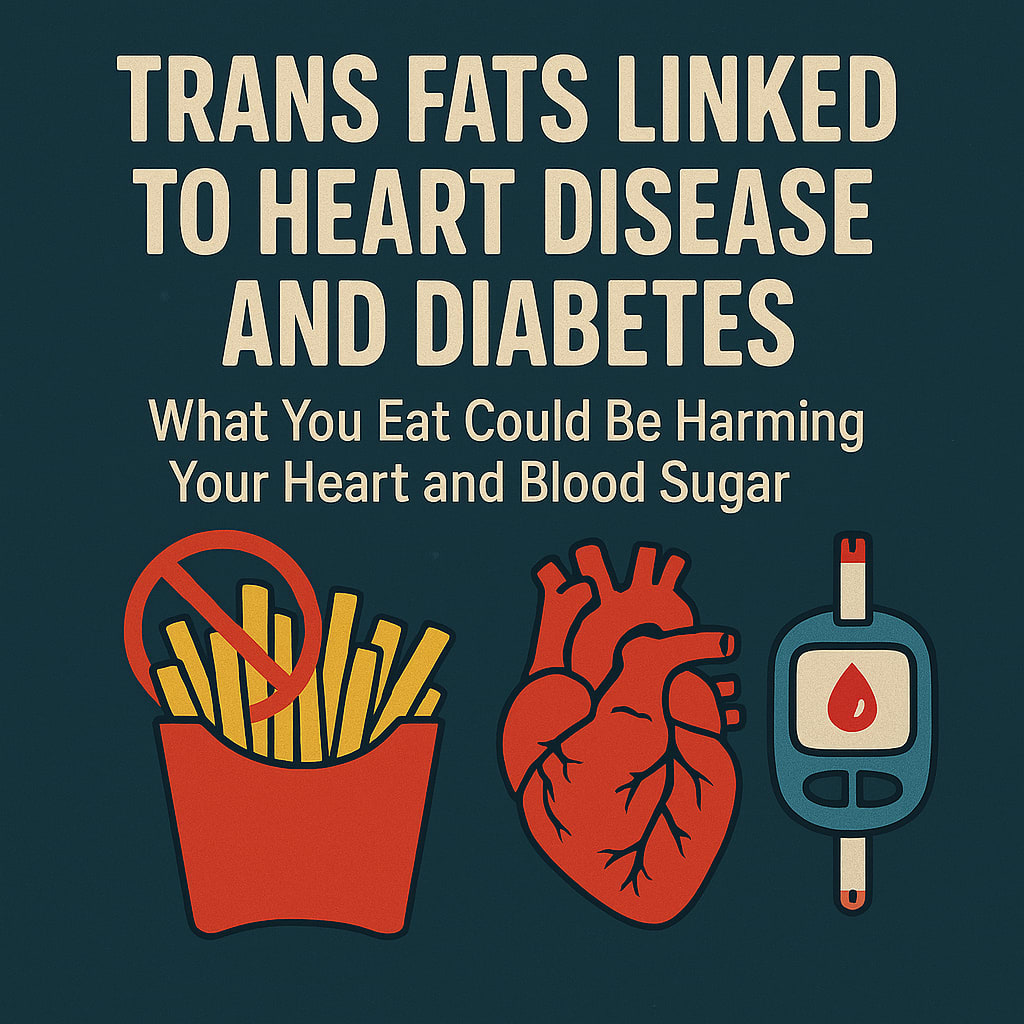
Imagine a warm, crispy donut or that mouth-watering burger with golden fries. Delicious? Absolutely. Dangerous? You bet. Behind these tempting treats lies a silent threat that’s been creeping into our lives for decades—trans fats. While they may enhance flavor and extend shelf life, these industrial fats are anything but friendly to your body. Research has shown time and time again: trans fats are directly linked to heart disease and diabetes, two of the world’s most deadly chronic illnesses.
Let’s dive deep into this greasy topic, decode the science, and understand how something so small can cause so much damage.
What Are Trans Fats, Anyway?
Trans fats—also known as trans fatty acids—are a type of unsaturated fat. But unlike healthy fats found in nuts, seeds, and avocados, trans fats are artificially created. Through a process called hydrogenation, manufacturers add hydrogen to vegetable oils to make them more solid. Think margarine, baked goods, and many fast food items. This manipulation gives food a longer shelf life and a desirable texture—but at a steep cost to your health.

There are two types of trans fats:
Naturally occurring trans fats – found in small amounts in meat and dairy from ruminant animals.
Artificial trans fats (industrial) – found in processed foods. These are the real culprits behind the health crisis.
The Sweet but Deadly Link to Diabetes
You might think fat and sugar don’t mix—but in the case of trans fats, they mess with your body’s ability to handle sugar altogether.
1. Insulin Resistance: The Doorway to Type 2 Diabetes
Insulin is your body’s key to controlling blood sugar. But trans fats can make your cells resistant to this vital hormone. This means sugar stays in your bloodstream longer, increasing the risk of type 2 diabetes.
Studies have shown that diets high in trans fats lead to:
Increased fasting blood glucose
Higher insulin levels
Greater insulin resistance
Translation? Your body gets confused. It struggles to use the insulin it produces, paving the way for chronic blood sugar issues.
2. Belly Fat and Inflammation: A Dangerous Combo
Trans fats aren’t just sneaky—they’re sticky. They tend to accumulate around your midsection, forming deep abdominal fat, also known as visceral fat. This type of fat is dangerous because it wraps around organs and releases pro-inflammatory substances. Chronic inflammation is a major driver of insulin resistance and metabolic syndrome—a precursor to diabetes.
The Heart-Breaking Truth: Trans Fats and Cardiovascular Disease
While trans fats mess with your sugar levels, they absolutely wreak havoc on your heart.
1. Raising Bad Cholesterol, Lowering the Good
Trans fats are notorious for their role in disrupting cholesterol balance. They:
Raise LDL (bad cholesterol) – which clogs arteries.
Lower HDL (good cholesterol) – which helps remove LDL from your bloodstream.
This double blow increases the risk of atherosclerosis, a condition where arteries become narrowed and hardened due to plaque buildup, leading to heart attacks and strokes.
2. Inflammation: Again, the Hidden Killer
Just like with diabetes, inflammation caused by trans fats damages the endothelium, the thin lining of your blood vessels. Once this layer is compromised, it becomes easier for plaque to build up, making your heart work harder and your risk of cardiovascular disease climb.
3. Irregular Heart Rhythms and Sudden Death
Yes, it’s that serious. Some studies have linked high trans fat intake to arrhythmias (irregular heartbeats) and an increased risk of sudden cardiac death. These are not rare consequences—they're warnings backed by years of clinical research.
What the Experts Say
Leading health organizations have taken a firm stance:
The World Health Organization (WHO) has called for the global elimination of industrially produced trans fats by 2023.
The American Heart Association recommends that trans fat intake be less than 1% of your daily calories.
The U.S. FDA has banned partially hydrogenated oils—the main source of artificial trans fats—in most processed foods.
Why such strong action? Because the science is irrefutable: trans fats are directly linked to two of the most pressing health concerns of our time.
Where Are Trans Fats Hiding?
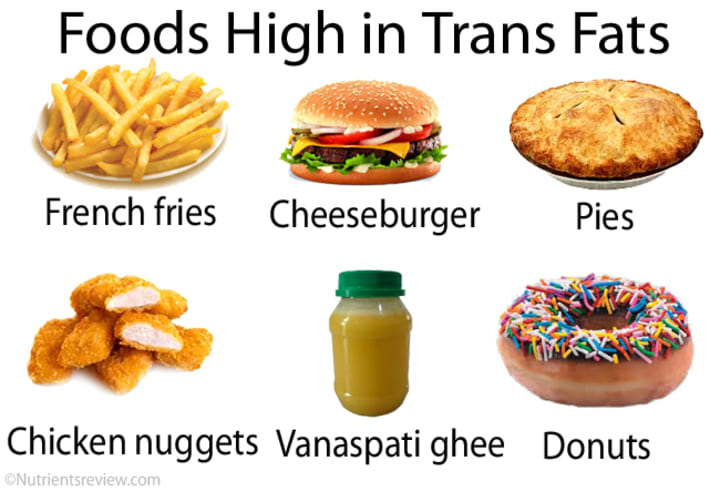
Even though bans are in place in many countries, trans fats still lurk in various foods, especially where regulations are loose or labeling is vague. Common culprits include:
Packaged baked goods (cakes, cookies, pies)
Microwave popcorn
Fried fast food
Non-dairy creamers
Frozen pizza
Margarine and shortening
Tip: Watch out for phrases like "partially hydrogenated oils" on ingredient labels—that’s code for trans fats.
The Good News: You Have the Power to Choose
While the stats may sound scary, there’s a bright side: you have control over what goes on your plate. And even small changes can have a massive impact on your health.
Smart Swaps: Choose healthy fats like olive oil, avocado oil, and nuts.
Bake at home using whole ingredients.
Eat fresh and minimize processed foods.
Read labels—don’t let slick marketing fool you.
Lifestyle Boosters:
Regular exercise improves insulin sensitivity.
Hydration helps your metabolism function smoothly.
Sleep and stress management support hormone balance.
Final Thoughts: Your Health Is Worth More Than a Snack
We live in a fast-paced world where convenience often trumps health. But as the science shows, those convenient, fatty snacks could be doing far more harm than we realize. Trans fats are more than a dietary nuisance—they are a metabolic landmine. They silently chip away at your heart health and blood sugar control with every bite.
So next time you reach for a processed treat, ask yourself: Is it worth the risk? Make choices today that your future self—and your heart—will thank you for.
About the Creator
Ahmad
🌿 Empowering you with science-backed health tips and fascinating facts about health! 🧠
The Coming Climate Migration. Which U.S. Cities Prepare and Which Stay in Denial.
Climate migration no longer sits in the future. It unfolds now. Floods displace families. Heat strains cities. Drought limits water supply. Insurance retreats. People move when daily life breaks down. The United States faces internal migration driven by climate pressure rather than borders.
By Wilson Igbasi6 days ago in Humans


Comments (1)
As a nurse i always stress this to everyone in my life. Trans fats, saturated fats and high sugar sources are always the sneaky killers. Loved reading this. Very informative!