

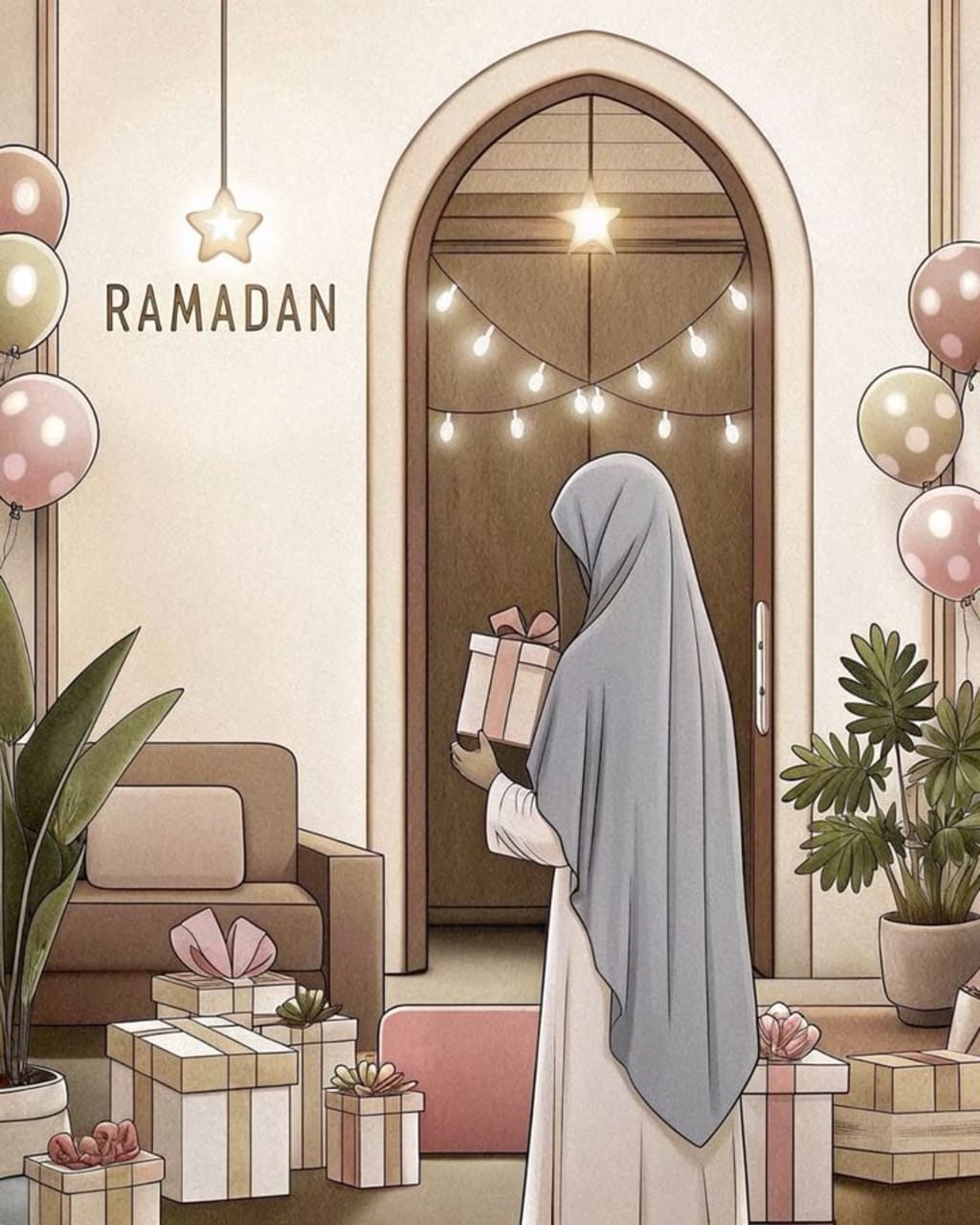
Ramadan in Different Cultures
Twelve-year-old Amina loved Ramadan. This year, however, she was experiencing it in a new way. Her father, a journalist, had been sent on an assignment to different countries, and the whole family had traveled with him. Amina was excited—but also nervous. “How do people celebrate Ramadan in other countries?” she wondered.
Her journey began in Turkey.
Turkey – The Drummers of the Night
Amina woke up suddenly to the sound of loud drumming. Boom! Boom! Boom! She rubbed her eyes, confused. It was still dark outside.
“What is that?” she asked her mother sleepily.
Her mother smiled. “That’s the Ramadan drummers. It’s a tradition here in Turkey. They walk through the streets before Fajr, waking people up for Suhoor.”
Amina peeked out of the window and saw a man dressed in a traditional vest, beating a drum and calling out words she didn’t understand. Some families waved at him and gave him small gifts.
“That’s so cool!” Amina whispered.
She ate her Suhoor quickly and prayed Fajr. As the sun began to rise, she thought about how special it was that Ramadan had unique traditions in every place.
The next day, they left for their next destination—Indonesia.
Indonesia – The Joy of Padusan
When Amina arrived in Indonesia, she noticed something unusual. Many families were heading to rivers and lakes.
“What’s happening?” she asked her new friend, Siti.
“It’s a tradition called Padusan,” Siti explained. “Before Ramadan starts, people take a bath in natural water. It helps us cleanse our bodies and prepare spiritually for the month.”
Amina watched as children splashed in the water, laughing, while elders dipped their hands into the river, whispering prayers. It was a beautiful way to welcome Ramadan.
Later, at iftar, Amina was surprised again. Instead of dates, people were eating Kolak, a sweet dessert made of bananas, coconut milk, and palm sugar. She took a bite. It was warm and delicious.
“Ramadan in Indonesia is amazing,” she thought, smiling.
The next stop was Morocco.
Morocco – The Call of the Nafar
In Morocco, Amina woke up to a different kind of Suhoor tradition. Instead of a drum, she heard the sound of a Nafar, a man blowing a long horn as he walked through the streets. He wore a long robe and called out people’s names, reminding them to wake up and eat before Fajr.
Amina found it fascinating. “Every place has its own way of making Ramadan special,” she thought.
Later, at iftar, she tried Harira, a warm soup made of lentils, tomatoes, and chickpeas. It was comforting after a long fast. She also saw people enjoying Chebakia, sweet sesame cookies shaped like flowers.
As she sat with her family, listening to the Adhan echo across the city, she felt a deep sense of peace.
Next, they traveled to Nigeria.
Nigeria – The Spirit of Communal Iftar
In Nigeria, Amina was amazed by the sense of togetherness. Every evening, streets were lined with people sharing food. It wasn’t just families eating together—entire neighborhoods gathered for iftar.
She joined a group of women who were cooking a large pot of Jollof rice, a spicy, flavorful dish. Children ran around handing out dates and small water bags to anyone passing by.
“What a beautiful way to break fast,” Amina thought as she shared food with strangers who felt like family.
She also learned a new phrase: “Barka da Ramadan”, which meant Blessed Ramadan in the Hausa language.
Her heart felt full.
Their final stop was Saudi Arabia—the land of the two holy mosques.
Saudi Arabia – The Holiest Place
In Saudi Arabia, Amina experienced something she had always dreamed of—praying in Masjid al-Haram in Makkah. As she walked into the Grand Mosque, her eyes filled with tears.
She saw people from all over the world—different languages, different cultures, but all fasting for the same reason: to seek Allah’s mercy.
At iftar, volunteers handed out dates and Zamzam water to everyone. It was simple but meaningful.
That night, Amina stood in prayer during Taraweeh, surrounded by thousands of worshippers. As the Imam recited the Qur’an, she realized something important.
No matter where Ramadan is celebrated—whether with drums in Turkey, rivers in Indonesia, or big gatherings in Nigeria—it is the same beautiful month of mercy, unity, and faith.
The Lesson
When Amina returned home, she shared her experiences with her friends.
“Ramadan is different everywhere,” she said, “but the feeling is the same. It’s about worship, kindness, and being close to Allah.”
And in that moment, she knew—Ramadan was not just a time of fasting. It was a time of love, community, and connection, no matter where in the world you were.
Moral of the Story:
Ramadan is celebrated differently in every country, but the essence remains the same.
The beauty of Islam is its diversity—each culture has unique traditions that make Ramadan special.
No matter where we are, fasting unites us as one Ummah.
About the Creator
Ling
seaking janah is my own reason
you can find my stories a calmness
alhamdulilah for everything we have in this world
Thieves Among Us
I go to the mailbox to get the mail every day. I usually like getting mail. I often have cool things coming and it’s like a mini Christmas. I like mail. Shoot me. I don’t really know why, I just do. I think I like collecting something that I don’t expect and opening it up to find some nice magazine, a card, or some small thing I have ordered. Yes, I know something I order is coming, but it’s still nice when you get it.
By Alexandra Grant4 days ago in Humans
The BAFTA Awards
By now, in a stunning departure from recent years, most of the world is aware of what happened at the BAFTA film awards. Social Media Headlines will tell you the bare bones: that John Davidson, a Tourette's Syndrome advocate, shouted a racial slur at two Actors of Colour, Michael B Jordan and Delroy Lindo.
By Natasja Rose3 days ago in Psyche


Comments
There are no comments for this story
Be the first to respond and start the conversation.