
Radical architecture. Seeing the World with Dreamy EyesAl-Bab: An Essay
Over the ages, architecture has witnessed multiple currents and intellectual orientations, which varied according to the historical context, economic, political and cultural conditions.
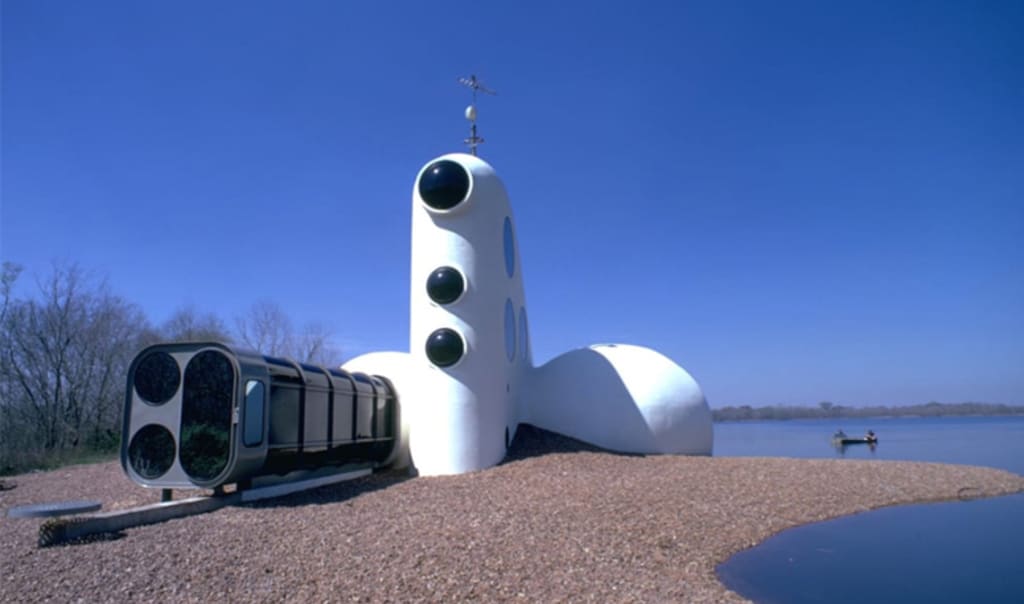
The 20th century is one of the richest and most diverse in terms of intellectual movements that influenced the trends of modern architecture. Of these currents, Radicalism is one of the most important architectural movements of the twentieth century, and even the most innovative and experimental in terms of design principles and forms, and its effects have continued to this day.
The term "radical architecture" appeared by the Italian historian Germano Celant, in a critical article describing the new architectural scene, which began in Italy in the sixties of the last century, when a group of architects and designers came together to form a pioneering movement at the time, proposing projects that would be free from the modern global trends that characterized the popular architecture of the period. This was done in turbulent political situations characterized by political violence, extremism, student uprisings and social unrest. From these crises, intellectual movements opposed to the dominant political and cultural power structures arose, and radicalism became at the forefront of these movements.
Radicalism stemmed from its critique of the intellectual and architectural current that spread after the end of World War II, as strict, harsh, and devoid of any aesthetic sense, and criticized super-architectural production aimed at housing as many people as possible, without thinking about its devastating effects on the environment and society. The movement stressed the need to liberate man from the prosperous consumer model of that period, which limited the role of the citizen to a few specific jobs: living, working, moving, and then consuming products (and ideas), which constituted a real crisis at the time. This lifestyle was inhuman, so that society makes society a machine, and man a arsenal of it.
In some dissatisfaction with the values of the profession prevailing at the time, the movement proposed working on architecture as social behavior and not as a material construction, which brought the field of architecture out of its space and commercial character, towards a new space of knowledge, more spacious and open, unlike the prevailing currents that were proposing final non-negotiable solutions, and buildings that were not available for change or accompany the requirements of the population. The movement was famous for its "provocative" projects that tend to criticize, experiment and create societal dialogue, about what architecture is in the twentieth century.
Andrea Branzi, one of the pioneers of the movement, says that radical architecture falls within a broader movement to liberate man from the tendencies of contemporary culture, and that it calls for individual liberation in rejection of all the formal and moral standards that the world knew after the end of the war. These standards, which act as a disincentive structure, make it difficult to fully
The current also criticized the stereotype of the absolute heroic architect, who seeks to solve all the problems of society through design. The post-war hero in Europe at the time was the French architect of Swiss origin "Le Corbusier", who proposed giant concrete buildings to solve the housing crisis that affected Europe in that period. The pioneers of the current criticized his works and designs, which for It should be housed
The tide started from Italy before later spreading among a number of architects, designers and researchers in various countries of the world, forming an integrated generation that shares the same ideas and trends. Among the pioneers of the movement are Archizom, Superstudio, and Archigram, all architectural offices that adopted radicalism and developed them in various design scales, and their ideas flourished widely to include multiple fields, from city design to home decoration through residential buildings and commercial complexes, to art exhibitions, critical books and articles.
These architectural experiments, although different, did not develop in isolation from each other, from Italy to the United States, Japan and Australia, everyone united to design major projects, assembled in the form of cumulative production and reviewed in joint exhibitions that contributed to the dissemination of radical thought significantly. The exhibition, titled “Italy: The New Local Landscape,” which premiered at the Museum of Modern Art in New York (MoMA) in 1972, was one of the most important in the movement’s history.
Projects that open a gateway to the future
The movement produced hundreds of projects, from city plans to pieces of furniture, designs inspired by science fiction, illustrations and even cartoons, which made the movement's projects a subject of discussion and criticism. They were purely experimental in nature, and even seemed to some wonders and eccentric.
The British Archigram Group is considered one of the most important pioneers of radicalism, as it has always been present in exhibitions and literature with its projects that distinguished themselves from working in form or materials, as they are based on societal data, facts and events. These projects have long sparked various debates that have combined architecture, technology, and society. Critics assert that the group’s projects have served as a tool for political, social and cultural criticism, through the use of collages, music, performance art, furniture, graphic design, events and exhibitions.
“When I started working with Archigram, I felt like I was reading George Orwell’s 1984 novel, their radical work was hitting in multiple streams, including politics, art, theater, and even journalism,” says Indian-American architect Akshat Bhatt, who had the opportunity to work with the office in college. We have never discussed architecture as everyone else does, that is, as physical construction, I think this is what helped the group's projects open up and distinguish from the rest of what the pioneers of that era produced.”
Archigram's work opposed the career spirit of that period, as the group designed architectural alternatives to traditional lifestyles, publishing between 1960 and 1974 nine issues of a special magazine of the same name as the office, and more than nine hundred drawings illustrating fictional architectural projects, inspired by technological developments, space travel and even science fiction.
Plug in city, one of Archigram's most important projects, and even the most famous radical projects ever, is a project that was worked on between 1963 and 1966. This provocative project proposes a virtual fictional city, containing modular housing units that "connect" to a giant machine with a central infrastructure. The project is actually not a city, but an ever-evolving giant structure that includes housing, transportation and other basic services, all transported by giant cranes. The design aims to give people more flexibility and choice in the design of their homes, allowing them to customize the capsules according to their daily requirements and easily replace them when needed.
The project was widely known at the time, introducing a new approach to reconstruction, reflecting traditional concepts of how the city was designed for the twentieth century, and also combining interest in emerging technologies and consumer culture in the sixties, while inspiring the language and aesthetics of comic books and science fiction.
Radical decline, what next?
Radicalism lasted for about twenty years, during which it received a wide public turnout, but what has been done and criticized so far is the fact that most of the current projects have never been built on the ground, as they are non-functional or impossible to implement, so everyone considered the movement as a "yotopy" intellectual current away from the real problems of architecture.
Some refer the decline of radicalism to its “non-functional” side, while others assert that it was essentially critical, not applied. Opinions may conflict about this, but the truth is that many things precipitated the end of the radical trend. First, architecture and city planning became an integral part of the neoliberal model of capitalism that emerged during the eighties, where skyscrapers and megaprojects became a symbol of the power and wealth of states, so all other possibilities for “non-con With the fall of the Berlin Wall in 1989 and the end of the Cold War, the possibility of any other methods or alternative models of society also collapsed. Market-led capitalism has triumphed and any other possibilities or alternatives have receded, anything that does not work has been dismissed as imaginary and unrealistic.
One may disagree about the main reasons for the end of the current, but there is no doubt that the ideas of the movement have had a great impact on what will come next, although most radical projects did not leave the paper, their conceptual contribution to the development of architecture is very important, the visions of the current succeeded in inspiring a new generation of architects and architecture in general. The Centre Pompidou in Paris is one of the most famous landmarks inspired by the projects of the radical period, as the idea of Archigram to reverse the hierarchy of traditional buildings, in the seventies of the last century inspired the designers of the famous Parisian teacher Richard Rogers and Renzo Piano, in a bit of madness and rebellion, to
About the Creator
Keep reading
More stories from Ahmed voyage and writers in Humans and other communities.
Cultural Intelligence: Coexistence with the Other
Major cities in many countries of the world have become multicultural cities, due to the large number of nationalities and races of their inhabitants, so you find colleagues of different nationalities, colors and languages in the labor institution. They gathered in one work environment, each with its own goals, or the reasons for its existence, but they share a general goal, which is the success of the work organization. Modern means of communication also have a great impact on the convergence of the peoples of the world, and their interaction with each other, in a hypothetical way that simulates reality.
By Ahmed voyage3 years ago in Education
Autonomy Is The Real Privilege
Good morning, freedom-seekers! Today we’re gonna be looking at autonomy. A strange word, I know; one many would probably look at blankly and run away from on sight. We’re gonna figure out what it actually means, consider how it’s achieved, and decipher just how deeply most of us are tangled up in dependence without realising it.
By That ‘Freedom’ Guyabout 13 hours ago in Humans




Comments
There are no comments for this story
Be the first to respond and start the conversation.