
Quake Threat Persists: Aftershocks and Freezing Weather Haunt Southeastern Turkey and Syria
Earthquake that the world didn't expect
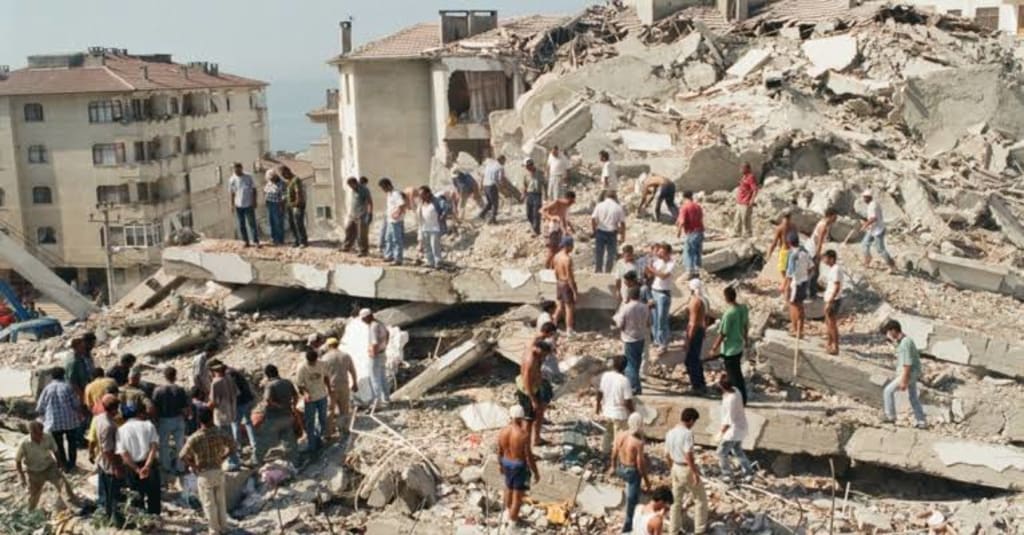
The buildings in Turkey and Syria have always been at risk from earthquakes, and the ongoing conflict has only exacerbated the situation.
On the early hours of February 6, a catastrophic earthquake with a magnitude of 7.8 hit southeastern Turkey and parts of Syria, causing widespread devastation and loss of life. The earthquake was one of the most powerful to strike the region in recent years and its impact was felt across a wide area.
According to official reports, the death toll from the quake has now surpassed 5,000 people, with thousands more injured and in need of medical attention. The number of casualties is expected to rise as search and rescue operations continue.
In addition to the initial earthquake, the region was also struck by a magnitude-7.5 event some 9 hours later, adding to the already devastating impact of the first quake. The aftershocks continued to rattle the area for hours, causing further damage to already weakened structures and adding to the already high level of anxiety among the population.
The immediate aftermath of the earthquake has seen a massive outpouring of support from around the world, with aid organizations and governments rushing to provide assistance to those affected. Emergency response teams have been deployed to the region, and hospitals and shelters have been set up to care for the injured and displaced.
The earthquake has had a profound impact on the region and its people, and the recovery and rebuilding process is expected to be long and difficult. The priority in the coming days and weeks will be to provide assistance to those in need and to begin the process of rebuilding the communities that have been devastated by this tragedy.
Turkey is situated in a highly active earthquake zone, making it vulnerable to devastating earthquakes. This is due to the fact that most of Turkey sits on the Anatolian plate, which is located between two major faults: the North Anatolian Fault and the East Anatolian Fault. The Anatolian plate is colliding with the tectonic plate that carries Arabia, including Syria, which is moving northwards, resulting in Turkey being squeezed out towards the west. This collision is causing Turkey to move west by about 2 centimeters per year along the East Anatolian fault, and half the length of this fault is now prone to earthquakes.Seyhun Puskulcu, a seismologist and coordinator of the Turkish Earthquake Foundation in Istanbul, states that people in Turkey are well aware of the risks associated with earthquakes. He emphasizes that the recent earthquake in the country was not a surprise, given the high seismic activity in the region. In fact, he was touring cities in western Turkey last week delivering workshops on public earthquake awareness.
The epicentre of the earthquake was located 26 km east of the city of Nurdaği in Turkey’s Gaziantep province, and it occurred at a depth of 17.9 km. A magnitude-7.5 event took place around 4 km southeast of Ekinözü in the Kahramanmaraş province. The earthquake was followed by several aftershocks, further exacerbating the damage caused by the initial quake.
Buildings in Turkey and Syria are vulnerable to earthquakes, and the recent magnitude-7.8 earthquake that struck southeastern Turkey and parts of Syria highlights this fact. Unfortunately, the death toll from this earthquake is expected to be high, as many of the people who lose their lives in earthquakes are killed by falling bricks and masonry.According to the US Geological Survey, the population of southern Turkey lives in structures that are extremely vulnerable to earthquake shaking, with many buildings constructed using unreinforced brick masonry and low-rise concrete frames. A study published last year in Soil Dynamics and Earthquake Engineering suggests that the center of the city of Gaziantep would experience medium-to-severe damage from a magnitude-6.5 earthquake, due to the prevalence of low-rise brick masonry structures that are constructed very close to each other.In 1999, a magnitude-7.4 earthquake hit 7 miles southeast of Izmit, Turkey, killing over 17,000 people and leaving more than 250,000 homeless. After this tragedy, the Turkish government introduced new building codes and a compulsory earthquake insurance system. However, many of the buildings affected by the recent earthquake were built before 2000, and may not have met the current building standards.The situation in Syria is even more dire, as over 11 years of conflict have severely damaged building standards in the country. The recent earthquake penetrated into Syria's northwestern regions, causing buildings to collapse in Aleppo and Idlib. The buildings that have been rebuilt in Syria after being damaged by the war have used low-quality materials or "whatever materials are available," which may have caused them to fall down more readily than buildings that were built with better materials and at greater expense.
According to researchers, the situation in the earthquake-stricken region of southeastern Turkey and parts of Syria is expected to worsen as the possibility of major aftershocks, causing additional damage, looms over the next weeks and months. In addition to the threat of earthquakes, the harsh weather conditions are also a cause for concern. The region is expected to experience sub-freezing temperatures tonight, which could be life-threatening for people who are trapped in the rubble and still waiting to be rescued. With the weather rapidly deteriorating and the threat of aftershocks looming, the situation in the affected areas is becoming increasingly critical and people are urged to be prepared and take all necessary precautions to ensure their safety.
About the Creator
Keep reading
More stories from Mohammed Sadeem and writers in Humans and other communities.
The Black Gold Rush: Exploring the Commercialization and Dependence on Oil
Oil: A Vital Commodity and its Commercialization Oil is one of the most important and valuable commodities in the world today. It is used as a source of energy, fuel, and raw material for many industries. It is also a crucial part of the global economy, generating billions of dollars in revenue each year. In this post, we will explore the commercialization of oil and its significance in the world today, including countries that are heavily dependent on oil.
By Mohammed Sadeem3 years ago in Journal
The CEO of Everything
They say "jack of all trades, master of none," but they forgot to mention the part where the jack of all trades is also the camera woman, the makeup artist, and the person currently yelling at a tangled Wii microphone cable in a her own bathroom while recording herself singing and trying to make it look realistic and professional. (As professional as you can make it with nothing but a cell phone camera and a mic that doesn't work)
By Sara Wilson6 days ago in Humans
The dark side of OF & its intentions & how to break free from lustful intent
The platform OnlyFans may seem "glamourous" but it has the dark truth behind it that's twisted the minds of it's creators along with it's audience. It markets itself as empowerment and freedom, but underneath is it carefully designed to hook both creators and consumers into an endless cycle that leaves them emptier than before. What looks like a choice is often really exploitation - of your body, your mind, and your soul.
By Bri Szumeraabout 3 hours ago in Humans



Comments
There are no comments for this story
Be the first to respond and start the conversation.