
Police Ethics vs. Principle
First thoughts on my approach to law enforcement
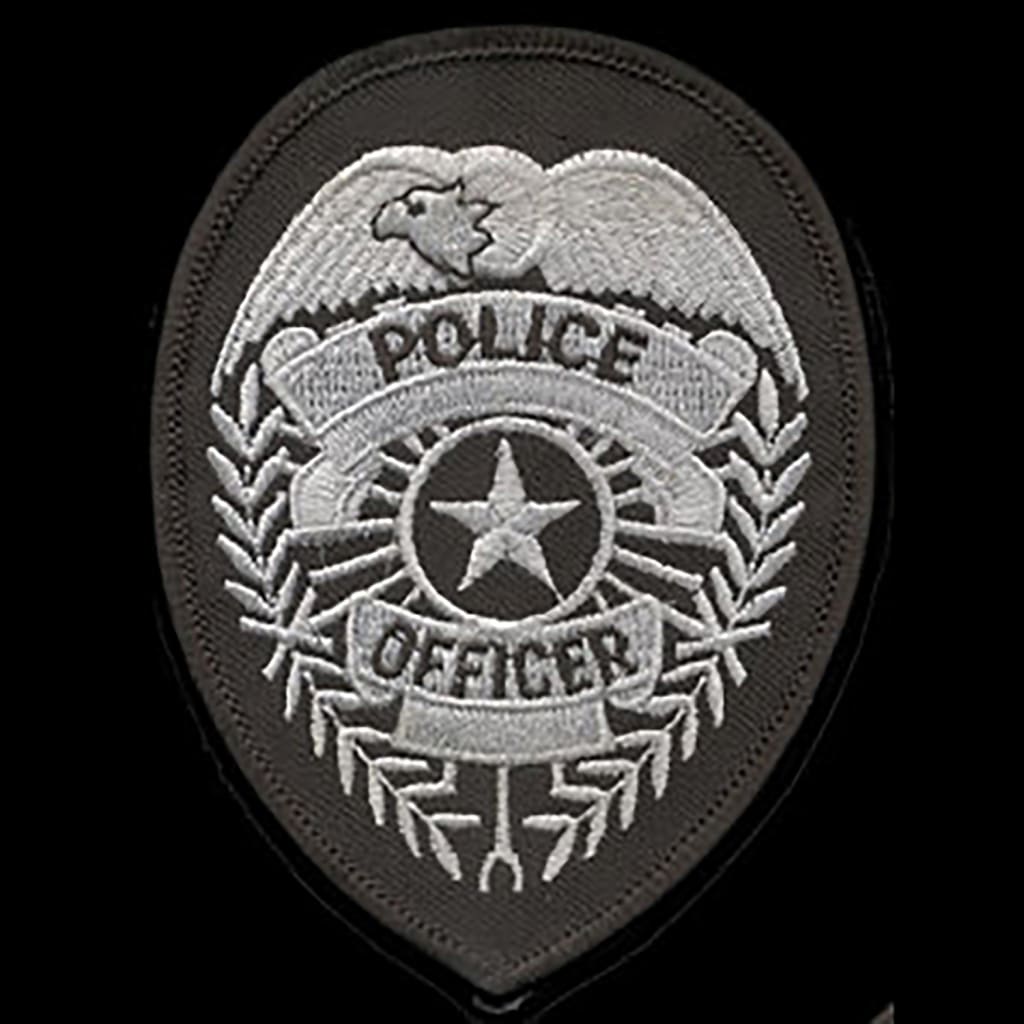
I remember my very first block of instruction in my police academy was ethics. The instructor selected a few random rookies to give their connotation of the term and attempt to give a brief example. Naturally, everyone basically gave the same “do good stuff” answer. Ethics has been defined by some research (see reference list) to not actually have one definitive meaning due specifically to various cultures and businesses. It is my understanding however that ethics would probably be more of an idea, rather than a way of conducting business and operating standards. Ethics, however, should be a standard, and something that is always being reached for to better whoever and whatever the person or situation is. If we do not work on perfecting or even critiquing something, how can we ever expect to go further than where we last left off?
Law enforcement, professionals, or not, humans are not unfailing. When the public views, a video or a portion of a body cam, for example, they only see what is meant to be seen. There are times, when what we see is mostly accurate, however, more often than not, there’s more to be exposed. Interacting with the public does not take a very specific set of skills. Anyone can do it, however, being able to communicate, effectively, calmly, and at times in very hostile or less-than-ideal environments takes a lot of self-control and immediate ethical decision-making. When I am on patrol and I stop a motorist the last thing on my mind is to get into some sort of physical or verbal altercation with that person. In regards to traffic and public safety, my mind runs to quick, harmless information, sharing encounters, and getting us both back on our way a little wiser, and hopefully, a little safer. So say someone has a tag light out, big deal. That however in most states is enough legal reason to get pulled over so what do I do? I make the vehicle stop based on the legal precedent, and advise them to get it fixed to avoid any future issues, and boom, problem solved and a potentially negative future encounter or outlook is omitted.
As law enforcement, I have an enormous responsibility and ability to protect and deal with people’s civil liberties and constitutional rights while at the same time, calling them out for violating and obstructing them. This job like many already has enough hurdles and dangers in it so I don’t need other people making bad or unethical decisions to add to it. As I tell people both at vehicle stops, and, sometimes in their houses or face-to-face in public somewhere, I can’t help what other people across the country do. I may seem annoying at times or come off as unprofessional to others simply because I say things that people don’t agree with. The facts of the matter is, if I am not coming out and doing the bare minimum of my job, why would I even show up in the first place? Public safety, and human life are some things I particularly care about. The ethical decisions that are peppered into that daily process are a constant work in progress and I for one choose not to give up on furthering safe and positive training standards that revolve around ethical decision-making.
This is where I may start to lose readers however, the reality portion is about to make an appearance. Earlier, I mentioned that stressful work environments or fast-paced, and on-the-spot decision-making should be based on good ethical choices. Again, without specifically calling individuals out, in the heat of the moment, not that it’s acceptable, but non-ethical decisions at times are made. So keeping an open mind, I challenge anyone who has never worn a set of patrol or uniform boots, to transcend themself mentally behind the wheel of a patrol car. Imagine you are on patrol, cruising around on your last hour or less just waiting for quitting time. The vehicle in front of you is minus one brake light and is also seeming to have a hard time maintaining lane control by swerving slightly across the yellow center line a few times, then across the white fog line once or twice but again, you're already on the way home. You can almost taste the freedom. By principle, you’ve got way more than you need to make a legal stop and inquire about their driving otherwise, the probable cause (pc). Could be for a medical reason, a mix of high emotions, a new or inexperienced driver, or some kind of impairment, who knows? Now, remember, you have the legal authority to actually do nothing. Now let’s say you exercise that right, the car travels another mile or so in front of you, barely keeping the car in its lane then cuts down a side road and you just keep on going home. It's a dead-end street, less than a half mile long, you figure they made it this far, should be good to go. You are on the way in to work the next morning and you discover that there was a single-vehicle accident down the same road your erratic driver was traveling just 12 hours prior except the vehicle ran off the road, into a house seriously injuring two of the residents and killing the driver of the car. Turns out, you could have made a vehicle stop, investigated the issue, and discovered that the driver was actually a diabetic and was having low blood sugar issues. The toxicology report declared that his sugar was so low it was ultimately the cause of his death and the wreck, injuring two others was an added incident. You could have stopped all of that from happening. You could have saved a life. You could have kept a house intact and prevented two other lives from being in harm's way. You didn’t do anything illegal, and probably made a bad decision that went against ethics and principles but here you are. Do you think many officers would ever come out and say they could or should have done something? Who's to say, but the fact remains even by not doing something, law enforcement remains getting bad publicity.
Yes, law enforcement makes bad decisions at times and although they may be few, those few times have caused some pretty big waves, and rightfully so. Kneeling on someone’s neck for example. To my knowledge, training, and personal opinion that is next to never okay. If there is a one-on-one situation and somehow an officer and subject are just full-on going at it and they find themselves scrapping all over the place, I can maybe see a quick reason and I mean very quick, to do what is necessary to get that person in cuffs but the positioning would also have to be extremely specific. Immediately after that, the pressure needs to be released especially once there is no more struggle. I don’t condone much past that however I also don’t make the state training standards, policy, or procedure. Reality again, however since this is a forum of transparency and as much truth as I can discover and explain these unfortunate events happen. The positive events hardly ever make it in the news though. I absolutely agree that the wrongdoings should be broadcasted but not to a point where the post is intentionally misleading or calling out specifics such as the common white vs. black. The reality is, it doesn’t matter what color anyone is. It really doesn't matter and it shouldn't. It’s 2023 now and we’re living like it’s the late 60’s. I’m out of opinion for now and don’t want to beat the same horse so let’s regroup and wait for the next one. (Probably just end up with the same horse but we’ll see)
Just for Funsies:
Same scenario as above, except this time you make an investigative stop to discover the cause of erratic driving. Younger, 19-year-old behind the wheel, torn up because they just failed out of CNA school. Emotions are flying and there’s a faint smell of alcohol emitting from the vehicle. To add a measure, the driver is the child of a county commissioner. What do you do? Comment an answer and start a conversation. Friendly and informative debates are what we’re here for. Thanks.
Reference List
Ferrell O.C., & Fraedrich J. (2018) Business Ethics: Ethical Decision Making and Cases.
About the Creator
Kenny Brown
I'm a US Navy veteran and current law enforcement officer. I have very different opinions on how law enforcement procedures should be approached and situations handled than media. Spread knowledge, not personal opinion and misunderstanding.
Keep reading
More stories from Kenny Brown and writers in Humans and other communities.
General Overview
Introduction time. I am a US Navy veteran and current law enforcement officer for a small police department in North Carolina. I have, going on roughly 8 years of carrying a gun and badge under (or actually on) my belt, and every day given is another chance and opportunity to learn something new. I treat people like people because although my job has its own high levels of stress responsibility and dangers, I still rely on humanity to get through both the hard times and the good. I wish to speak to the world or at least anyone who will listen to try and create a few new, much-needed ripples in an overwhelming pond in reference to the interactions citizens have with law enforcement. So with that being said, let's dive in and knock out the housekeeping.
By Kenny Brown3 years ago in Humans
Where there's Art there's Heart
Here's a stupid thing: I adore art, but I start to panic whenever I step into a gallery. In the one place I should be at my contented best - surrounded by walls teeming with creative expression - I fall apart. What ought to be an enriching experience, tacitly designed to facilitate the exploration of human empathy and perspective, is for me an overwhelming purgatory of anxiety that compresses me to the point I cannot breathe. At the same time, I experience a sense of extraction, as though my head is being prized open to create a hole so big my sanity could evaporate. Somewhere between these two opposing forces of vice and vortex, I feel myself dissolving in a stream of panic that makes me want to cry; and I feel so daft feeling this way, that all I want to do is run for the hills.
By Caroline Jane4 days ago in Humans
Solar Eclipse 2026: A Sky That Stops the World
There are moments when the sky feels close enough to touch. The light shifts. Shadows stretch in strange directions. Birds grow quiet. People look up together. A solar eclipse has a way of slowing everything down. It reminds us that we live on a moving planet, circling a star, part of something far larger than our daily worries.
By Muqadas khan4 days ago in Humans
📢 Raise Your Voice Thread: 02/19/2026
Our “Raise Your Voice Threads” are hosted most alternating Thursdays at 12PM ET to offer creators more avenues to uncover exceptional stories on Vocal. As we are continuously searching for fresh creators and inspiring stories, this thread provides an opportunity to exchange and discuss the stories that have moved and motivated us on Vocal.
By Raise Your Voice by Vocala day ago in Resources

Comments
There are no comments for this story
Be the first to respond and start the conversation.