
Poet Lord Byron: From Scandal to Sacrifice
The Poet Who Lived for Pleasure and Died for Liberty

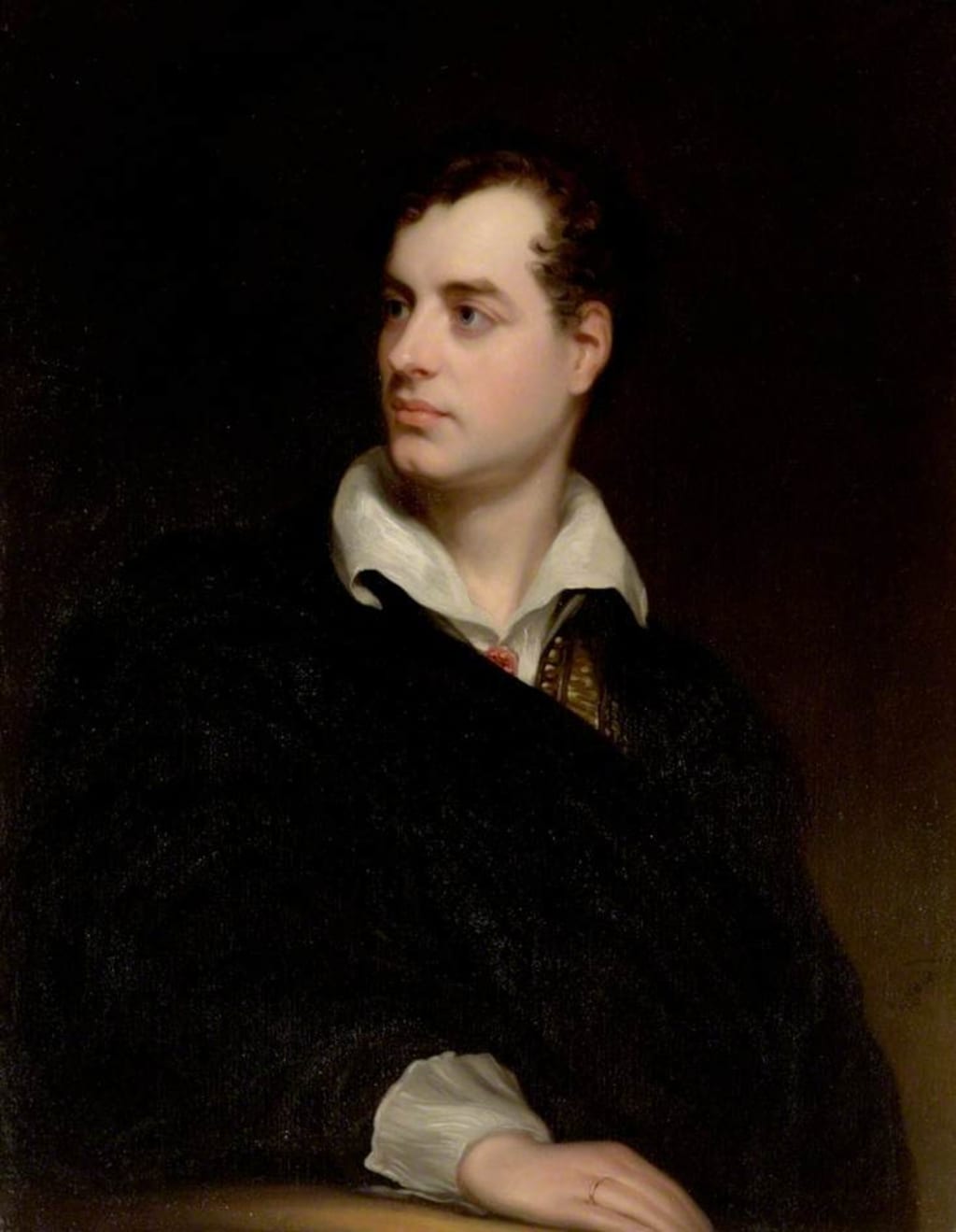
Few figures in literary history are as compelling and contradictory as George Gordon Byron, known to the world as Lord Byron. Born into the English aristocracy in 1788, Byron inherited a title and wealth, yet his life would be defined as much by scandal as by privilege. A childhood marked by physical challenges, including a clubfoot, left him both self-conscious and fiercely independent, shaping a personality that alternated between charm, charisma, and a streak of recklessness. From his earliest years, Byron displayed the restless energy that would make him both the darling and the scandal of English society.
Byron’s early adulthood in England was a collision of brilliance and controversy. His literary talents were recognized immediately, and works like Childe Harold’s Pilgrimage captured the imagination of a Europe fascinated by Romanticism, by emotion, and by the wild beauty of the human spirit. His poetry was intense, full of daring imagery and defiance, reflecting a temperament that mirrored the life he was living. Public admiration, however, often collided with whispers of impropriety. Affairs, duels, debts, and rumors of incest created a perfect storm of scandal that made Byron both irresistible and dangerous in the eyes of his contemporaries. Society’s fascination with his personal life sometimes overshadowed his literary accomplishments, yet it fueled the legend that would endure long after his death.
Venice became Byron’s stage for indulgence. In palaces overlooking the canals, he hosted parties that blurred the line between extravagance and chaos. Exotic animals roamed his residences, masked balls filled the nights, and affairs with married women fueled gossip that spread across Europe. Yet even in excess, Byron’s mind remained active. He composed poems that challenged moral norms and embraced the complexities of human desire. Don Juan, his unfinished satirical epic, emerged from this period, a work as audacious and fearless as the poet himself. Byron’s Venetian years reveal a man who lived with intensity, who refused to be constrained by the expectations of propriety, and who infused his literary output with the same audacity that defined his private life.
Despite indulgence and notoriety, Byron’s story took a dramatic turn when exile became inevitable. By 1823, England was no longer a hospitable home. Public condemnation and financial difficulties made continuing a life in society impossible, and the poet sought a new purpose abroad. Greece, a nation struggling under Ottoman rule, offered both adventure and a cause worthy of his restless energies. Byron arrived in Missolonghi to find a fragmented revolutionary effort. Leaders quarreled, soldiers demanded unpaid wages, and hope flickered weakly among those fighting for independence. Here, the flamboyant poet transformed into a committed revolutionary. He used his personal fortune to outfit fleets, pay troops, and rally factions, demonstrating a rare combination of charisma, strategic vision, and dedication to a cause larger than himself. His presence alone infused a movement teetering on despair with hope and legitimacy.
Byron’s commitment to Greece was heroic, yet tragically brief. Early in 1824, he fell ill with a fever. His condition worsened under repeated medical interventions, including bloodletting and other practices common at the time but ineffective against his illness. On April 19, 1824, at the age of thirty-six, Byron died, leaving both the literary and revolutionary worlds stunned. The man who had once scandalized England became a martyr for liberty. In Greece, his name became synonymous with courage and sacrifice, a figure whose death galvanized the independence movement and ensured that Byron’s legacy would transcend his personal excesses.
The paradox of Byron’s life—the collision of indulgence and heroism—is central to his enduring fascination. He was reckless yet visionary, self-indulgent yet capable of extraordinary moral courage. His poetry, filled with passion, wit, and social critique, remains a testament to his literary genius, while his final actions illustrate a dedication to principles far greater than personal comfort or safety. Byron’s daughter, Ada Lovelace, inherited both intellect and restless spirit, channeling them into innovations that helped lay the groundwork for modern computing. This familial connection reinforces the theme of a legacy that bridges both creativity and courage.
Byron’s influence extended far beyond his death. Across Europe, intellectuals and artists debated his life, his poetry, and the significance of his final stand for Greece. Contemporary newspapers and journals chronicled his exploits and death, cementing his image as a figure of legend. In Greece, monuments and commemorations celebrated him as a national hero, while in England and beyond, his literary contributions continued to inspire generations of writers and poets. The fascination with Byron endures because he embodies the complexities of human ambition, desire, and moral courage. He demonstrates that greatness often emerges from contradiction and that heroism can arise from unexpected quarters.
Historical scholarship has continued to explore Byron’s life with the dual lenses of personal indulgence and public action. Letters, diaries, and contemporary accounts reveal a man who understood the divide between public perception and private intent, a man who deliberately cultivated a persona that provoked, fascinated, and scandalized. His Venetian excesses, his stormy relationships, and his pursuit of adventure were all elements of a personality that demanded to live fully in every dimension. Yet in Greece, Byron’s commitment transcended personal ambition. He gave wealth, effort, and ultimately his life to a cause larger than himself, demonstrating that even a man known for excess could act with profound selflessness.
Byron’s life continues to resonate in modern culture, from biographies and historical studies to films, novels, and even operatic interpretations. He exemplifies the Romantic ideal of living boldly, embracing both beauty and danger, intellect and emotion. At the same time, his death reminds the world that the ultimate measure of a life is not merely in its pleasures or its scandals, but in the impact it leaves behind. Byron’s transformation from notorious libertine to immortal hero underscores the capacity for redemption and the enduring power of courage and principle.
In the final measure, Lord Byron’s story is one of extremes. It is a narrative of indulgence and brilliance, scandal and heroism, personal excess and public valor. His life challenges simplistic moral judgments, demonstrating that human beings are capable of both profound flaws and extraordinary virtues. Byron’s poetry captures the intensity of human experience, while his life and death embody the ideals for which many strive yet few achieve. Across centuries, he remains a figure of fascination, a reminder that greatness is rarely simple, that legacy is forged in complexity, and that the boundaries between pleasure and principle, between indulgence and sacrifice, are often fluid.
Lord Byron’s journey from scandal to sacrifice continues to inspire, provoke, and captivate. He lived boldly, wrote brilliantly, and died heroically. His story is a testament to the power of human contradiction, the transformative potential of courage, and the enduring resonance of a life lived fully, in every sense of the word. In the end, Byron remains immortal not only through verse but through a life that defied expectation, scandal, and convention, leaving the world richer in art, inspiration, and ideals.
About the Creator
Tim Carmichael
I am an Appalachian poet and cookbook author. I write about rural life, family, and the places I grew up around. My poetry and essays have appeared in Beautiful and Brutal Things, My latest book. Check it out on Amazon
Keep reading
More stories from Tim Carmichael and writers in Humans and other communities.
The Festival of Unburning
The ritual begins at dusk on the winter solstice, when darkness reaches its deepest point and light prepares to return. Across the North Carolina mountains, in cabins and hollers, around fireplaces and outdoor fire pits, people gather with parchment and pen. They have come to practice what their ancestors understood: that sometimes you must burn something away to make room for transformation.
By Tim Carmichael4 months ago in Humans
Healing Upward and Outward
Healing Upward and Outward Reconciliation is repairing the broken threads that connect us. These threads reach in two directions: up and out. First, we must consider the vertical dimension: our internal self and our relationship with the Divine. Before we can reach out to others, we are called to look inward and sit in the quiet, sometimes uncomfortable light of self-reflection. We must ask, “Where have we stumbled or contributed to a fracture?”
By Archery Owl 4 days ago in Humans


Comments (6)
What a life he lived! Thank you for sharing this story. I learned a lot about him in school but didn't know many of these facts.
Beautifully written the balance between literary insight and historical depth makes this a compelling tribute to a complex man.
I didn’t realize he lived such an extraordinary life
Thanks for this reminder of why I loved Byron's writing when I discovered it in high school!
beautiful analysis
Coming back to this when I have time for a close read. Love Byron.