
Personalised Cancer Immunotherapy
Harnessing the Body's Own Immune Sysytem
Cancer is arguably one of the most formidable health challenges yet, but the scientific community has made remarkable strides in its treatment. Among the most promising developments in recent years is personalized cancer immunotherapy, a revolutionary approach that taps into the body's own immune system to fight cancer. Unlike chemotherapy and radiation therapy, which are considered traditional treatments that hit both cancerous and healthy cells, cancer immunotherapy focuses on targeting only the tumor to minimize damage to surrounding tissues and to improve its effectiveness.
____________________________________________________
What is Cancer Immunotherapy?
Immunotherapy is the general term that encompasses therapies based on the use of the human body's immune system to fight cancer and other diseases. Normally, the human body is always supposed to possess cells that recognize and destroy unusual cells- those which multiply and develop into tumors. Cancerous cells have developed a number of advanced ways of avoiding detection by the host immune system. Immunotherapy can either strengthen the immune system to further enhance its recognition and destruction of cancer cells or employ engineered components of the immune system which directly target the cancerous cells.
Immunotherapy was once considered a one-fits-all therapy; more recent discovery has taken the course towards personalized immunotherapy. That is, now the application takes into consideration both the genetic as well as the molecular profile of a cancer patient.
The New Wave to Personalized Cancer Immunotherapy
Personalized cancer immunotherapy will leverage on the idea of precision medicine, where healthcare treatments are tailored to suit the genetic differences of each patient. In plain words, it is not very complicated but definitely cutting-edge: this is no bludgeoning sledge hammer approach but a fine-tuned approach of matching each patient's specific genetic makeup, lifestyle, and response to past treatments.
Now mounting evidence shows that all cancers are unique, even from the same type. Given that understanding genetic mutations in and how its immune system acts against a specific patient's cancer, researchers can devise strategies for immunotherapy therapy that could be well suited to be applied in a case. This will lead to more effective treatments, less side effects, and better overall results.
Key Technologies Enabling Personalized Immunotherapy
Some of the most advanced technologies are driving this rampant growth in personalized cancer immunotherapy. These are capabilities which will not only help oncologists identify the fingerprint of the genetic and molecular tumor but also to design therapy based on those unique vulnerabilities.
1. Next-Generation Sequencing or NGS:
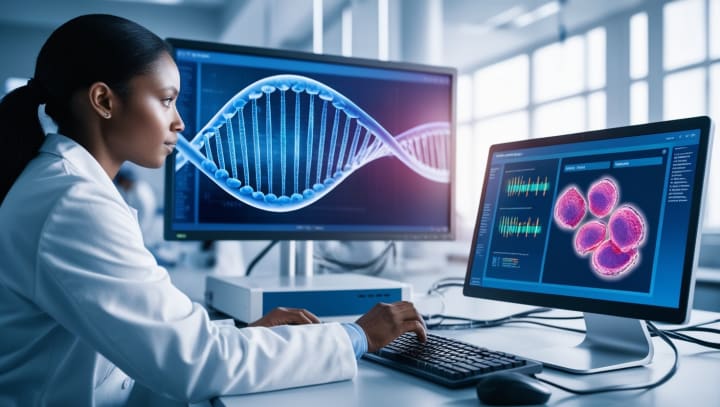
NGS is now allowing scientists to decode the complete genetic makeup of a cancer cell, which has come to become the backbone of personalized medicine. It can help identify specific mutations and changes in the tumor and may make these tumors sensitive to specific immunotherapies. The spectrum of genetic variations driving the cancer is shown by the DNA sequencing of both tumor DNA and a patient's normal tissue DNA, which allows doctors to focus appropriate immunotherapy.
2. Tumor-Infiltrating Lymphocytes (TILs):
TILs are white blood cells that have invaded a tumor and can be a source of personalized immunotherapy. In some treatments, the doctors take such lymphocytes from a patient's tumor, expand them in the lab, then reintroduce them back into the patient's body. This process basically "supercharges" the immune system's ability to identify and fight the cancer cells.
3. Checkpoint Inhibitors :
Checkpoint proteins like PD-1 or CTLA-4 have been utilized by the cancer cells to evade the immune system. Checkpoint inhibitors are antibodies against these proteins that block them, thereby lifting breaks on the immune system's attack capabilities against cancer cells. This has proven to be the most promising strategy in immunotherapy and is now being considered as an integrated treatment with other methods of treatment for specific cancers.
4. CAR-T Cell Therapy (Chimeric Antigen Receptor T-Cell Therapy):
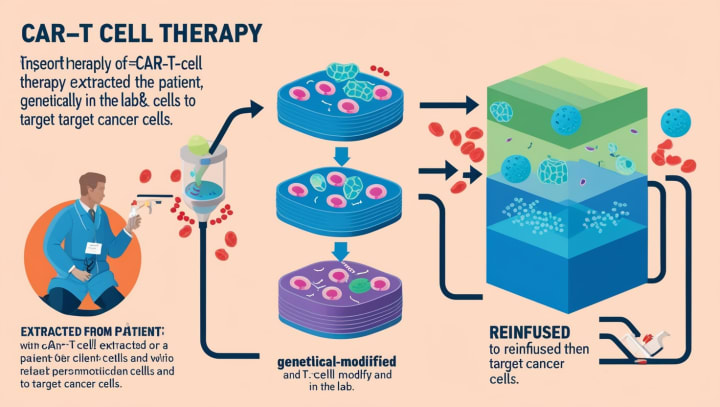
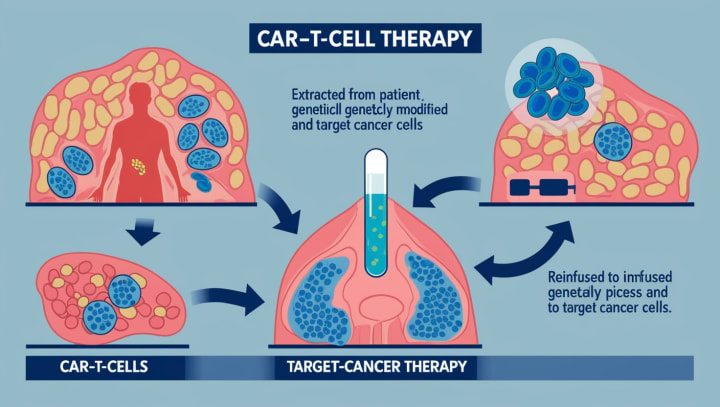
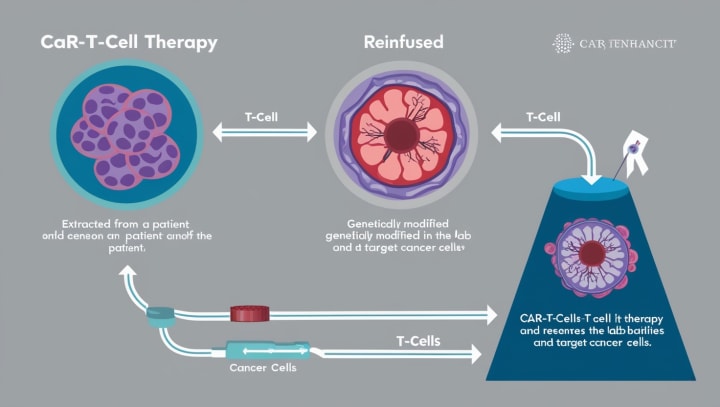
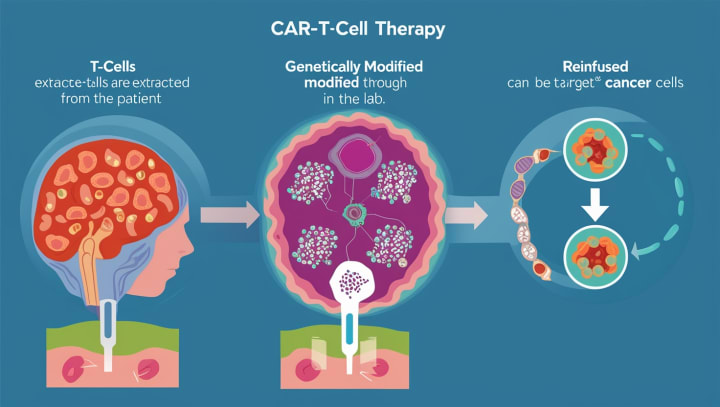
One of the most revolutionary breakthroughs in tailored immunotherapy against cancer, CAR-T cell therapy involves taking the T cells of a patient and modifying them in a lab to express a receptor which can now seek out antigens specific to the cancer. These modified T cells are infused back into the patient's body and seek out and kill the cancer cells. CAR-T has shown an unprecedented level of efficacy for the treatments of some blood cancers, such as leukemia and lymphoma; it thereby has a broader applicability towards solid tumors.
5. Cancer Vaccines:

One other hopeful area of immunotherapy research is that of personalized cancer vaccines. This 'vaccine' is quite different from the conventional vaccine, as it does not aim at disease prevention but at treating existing cancers through an immune response targeted to antigens specific to the tumor. Researchers are designing vaccines specific to the genetic profile of a patient's cancer, thus taking personalization in treatment to a whole new level. Such vaccines will allow one to boost up the body's immunity to such mutations that feed the patient's cancer and may possibly check recurrence.
Advantages of Customized Immunotherapy
Indeed, benefits from personalized cancer immunotherapy are manifold and deep. Most importantly, it is a targeted approach because unlike most chemotherapy treatments, which continue to induce a lot of harm in the body since they indiscriminately act on both diseased cells and health ones.
1. Increased Efficacy:
Personalized immunotherapies are more targeted to reach the unique genetic and molecular features of a patient's tumor and thus would generate better treatment results. Such therapies target specific weaknesses of the cancer and tend to have a greater rate of success and can be associated with longer-lasting remissions.
2. Much Less Toxic:
Traditional treatments are very toxic, including chemotherapy and radiation. Like the nausea, hair loss, immunosuppression, and so on. Targeted immunotherapy strikes cancer cells only, which would leave healthy tissues untouched, therefore few toxic side effects.
3. Less Relapse:
Since personalized immunotherapy works on the premise of retraining and strengthening body immune response, there is a potential likelihood that the trained immune system identifies the few remaining cells for the development of cancer and that reduces the amount. This strongly diminishes the possibility of relapse into cancer, one of the biggest nightmares of these cancers.
Challenges in the Implementation of Personalized Immunotherapy
Despite its promise, personalized cancer immunotherapy is not without challenges. The complexity of cancer genetics makes the development of personalized treatments costly in time and money. Still, not everyone will respond to immunotherapy, and the insensitivity of some forms of cancer—certainly most types of solid tumors—is another barrier to the treatment.
The risk of immune-mediated adverse effects, ranging from inflammation to autoimmunity cannot be excluded. In such scenarios, the immune system may end up attacking non-neoplastic tissues in addition to the neoplastic cells. This is one of the other risks, which continues to be monitored and managed in clinical practice.
The greatest challenge for personalized immunotherapy is the exorbitant cost of treatment. Prices are dropping, but CAR-T cell therapy is too expensive for treatment to most patients, and insurance coverage may still not be comprehensive at times. Once the technology matures and gets adopted, the cost is projected to decline, but accessibility is the questioned concern.
Future for Cancer Personalized Immunotherapy
The future of personalized cancer immunotherapy is bright, since a tidal wave of research is still unlocking new horizons. Improvements in artificial intelligence and machine learning will continue to mine vast amounts of genetic data ever more quickly, allowing for faster and more precise designs of treatment. Over the next few years, we can expect further and further evolutions of increasingly sophisticated methods for personalizing cancer treatment through the combination of different immunotherapy strategies to deliver synergistic effects.
Moreover, extending the immunotherapy to other cancers beyond hematological malignancies and more types of solid tumors like breast, lung, and pancreatic cancer will reach far more patients for the treatments.
Conclusion
Personalized cancer immunotherapy is quickly changing the oncology landscape. The approach tailored to the treatments according to the genetic profile of a particular individual and his immune system presents opportunities to a more effective less toxic, and fewer chances of recurrence treatments. Despite the challenges, this is exhilarating progress in this science and opens hope for having cancer not only treatable but perhaps curable. As research and technology continue to advance, personalized immunotherapy will probably be the backbone of cancer treatment, ushering a new wave in the fight against this tricky, ephemeral disease.
About the Creator
Keep reading
More stories from writers in Humans and other communities.
I Don't Need My Phone... Wait, Is That Actually True?
My parents gave me my first cell phone when I was twelve years old. It wasn't a fancy iPhone or anything, not even close. Just a simple black flip phone for when I needed to call or text them after school.
By Madison "Maddy" Newtonabout 19 hours ago in Humans
Rev. Dr. Louise Goben on Interfaith Hunger Relief: Dignity, Golden Rule Partnerships, and Food Pantry Impact
Rev. Dr. Louise Goben is President of the North Hollywood Interfaith Food Pantry and has volunteered with the pantry almost since its inception. With her family, she spent decades transporting food from Temple Beth Hillel to distribution at First Christian Church, strengthening a practical Jewish–Christian partnership against hunger in the San Fernando Valley. Ordained in the Christian Church (Disciples of Christ), she is retired from active congregational ministry but still preaches and teaches Bible when invited. She also teaches World Religion and History of Religion through the Encore Program at Los Angeles Pierce College. Her work centers on dignity.
By Scott Douglas Jacobsen4 days ago in Humans
Analyse this!
Wanna know how to improve your writing? There is a simple, quick, tried and tested method. Tried and tested by who? By me, as it happens, and I can guarantee that it will work for you. I know what I am talking about. Not always, of course, but certainly in this case.
By Raymond G. Taylor6 days ago in Writers




Comments
There are no comments for this story
Be the first to respond and start the conversation.