
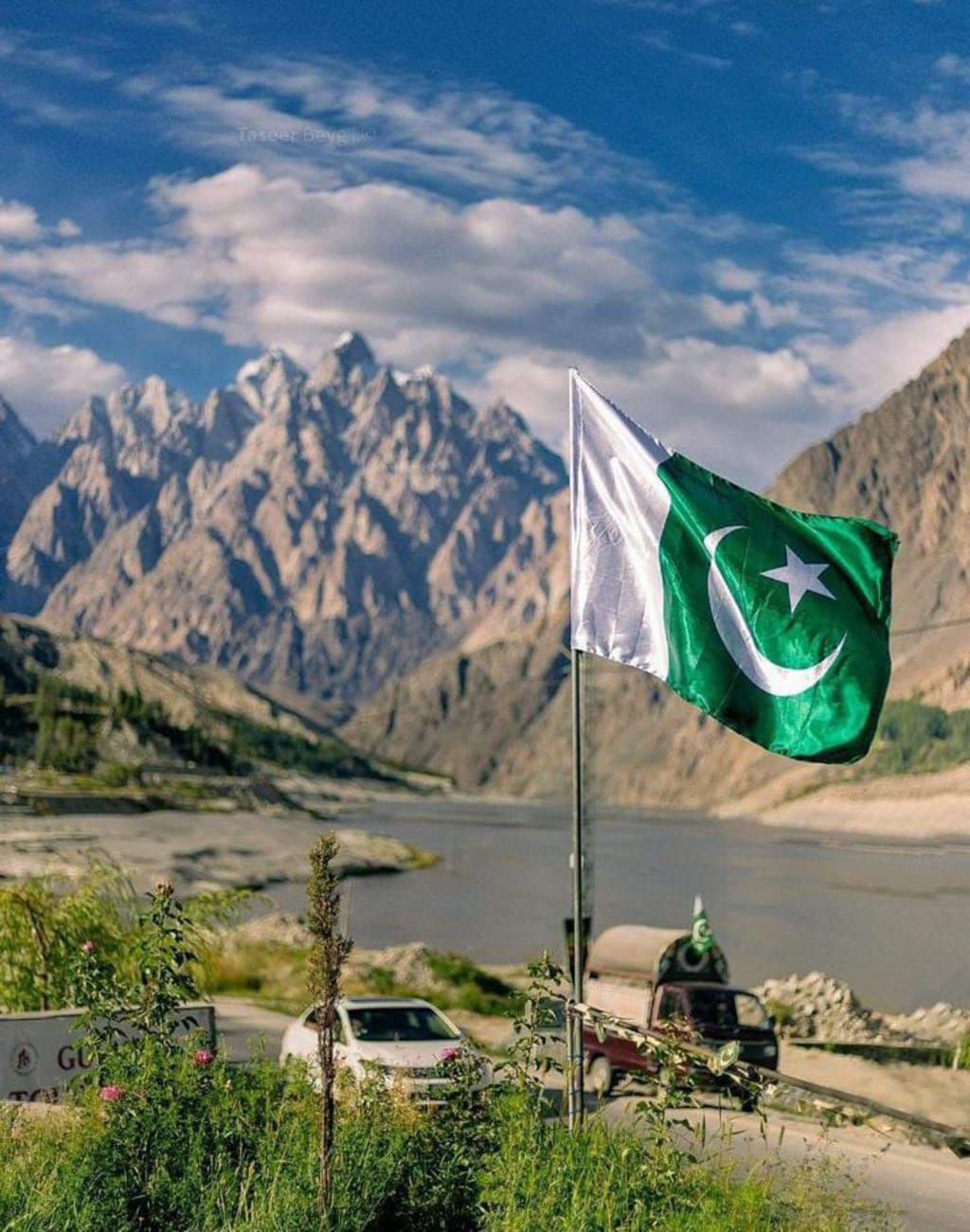
Pakistan, located in South Asia, is a cultural melting pot, spanning diverse cultures, languages, and landscapes. Pakistani people come from a captivating and notable culture, shaped by ancient civilizations, religion, and historical events. With a population exceeding 220 million, the people of Pakistan comprise the world's sixth-largest nation.
One of the most striking things about Pakistani people is their hospitality, which is deeply ingrained in their culture. Visitors are welcomed with open arms and are treated to lavish feasts and grand receptions. This hospitality is not limited to strangers; it is equally extended to family, friends, and neighbors. Pakistani people will go above and beyond to ensure that their guests feel comfortable and are well-fed.
Pakistani people are known for their strong family values. Tradition dictates that parents, especially the mothers, have an important role in shaping their children's lives. Children are expected to show utmost loyalty and respect to their elders and take care of them in their old age. The family unit is considered sacred and is the cornerstone of Pakistani society.
Pakistani people have a deep love for their country and a sense of pride in their heritage. Pakistani culture is a mix of influences from various civilizations, including the Indus Valley Civilization, the Mughal Empire, and Islamic traditions. Classical music, vibrant dance, intricate embroidery, and traditional attire like shalwar kameez are some of the most recognizable elements of Pakistani culture.
Despite the country's challenges, the Pakistani people have a strong sense of resilience and resourcefulness. They have overcome numerous obstacles, including natural disasters, terrorism, and political instability, with a steadfast determination to rebuild their country and make it a better place.
In conclusion, Pakistani people are a diverse and resilient group with warm hospitality and a strong sense of family values. They are proud of their rich cultural heritage and have overcome many challenges throughout their history. Overall, Pakistani people are an integral part of the South Asian region and make significant contributions to the world community through their arts, culture, and economic activities. Thanks to its historical, geographical and ethnic diversity, Pakistan’s culture is a melting pot of Indian, Persian, Afghan, Central Asian, South Asian and Western Asian influences. There are over 15 major ethnic groups in Pakistan, which differ in physical features, historical bloodlines, customs, dress, food and music. Some of these include Punjabis, Sindhis, Baloch, Pashtuns, Kashmiris, Hazaras, Makranis and Baltis, coming from regions as close to home as the Indus Valley or as far as Africa or Tibet. Other than ancient ethnic elements, the religious influence of Islam has also strongly shaped Pakistani culture since it first came to the region in AD 700.The official number of languages actively spoken in Pakistan is between 73 and 76. This means that within hours as you travel between the country’s districts, there are languages that other groups in different regions do not speak. The most popular languages, however, belong to the largest ethnic groups with their own modern and ancient literature. Most languages in Pakistan belong to the Indo-Iranian language group, including Urdu, the national language.If there is a country whose culture is starkly contrasted by its international image, it has to be Pakistan. Pakistanis all over the world often face the dilemma of explaining what their culture really entails, thanks to years of news-media exaggeration and agenda setting. Beyond democratic and economic disappointment dwells a world of Pakistani civil society that works resiliently against all odds to keep what matters most intact: the country’s vibrant culture. Let’s try to get to know Pakistan a little better.
Did you know that Culture Trip now offers premium small-group tours? From immersive and expansive Epic Trips, to compact but action-packed Mini Trips, they’re packed with authentic local experiences, exciting activities and one-off accommodations. Discover the full collection here.
Many different languages are spoken in Pakistan
The official number of languages actively spoken in Pakistan is between 73 and 76. This means that within hours as you travel between the country’s districts, there are languages that other groups in different regions do not speak. The most popular languages, however, belong to the largest ethnic groups with their own modern and ancient literature. Most languages in Pakistan belong to the Indo-Iranian language group, including Urdu, the national language.
The people are friendly, but gender segregation still exists
Due to Islamic and tribal influences, non-urban regions of Pakistan have varying levels of gender segregation, while big cities too have conservative expectations in terms of interactions between men and women. Couples usually don’t hug or kiss in public in a non-platonic way. Regardless of that, the people of Pakistan are helpful, friendly, approachable and humble.
If you like learning about new cultures first-hand, you’ll love our trips. Itineraries such as our nine-day Belize & Guatemala Epic Trip, which is stuffed with indigenous experiences such as attending a Mayan ceremony and learning about medicinal plants on a jungle trek.
Pakistanis love listening to – and making – music
Diverse culture has exposed Pakistani musicians to many different poetic forms and styles, along with languages and literature. Qawwali and Ghazal are the nation’s auditory treasures. Building on that, Pakistani TV shows, like Coke Studio, have amassed millions of fans internationally and locally, from non-Pakistanis to non-Urdu speakers. The nation has also produced legendary singers, like Nusrat Fateh Ali Khan and poets like Faiz Ahmed Faiz, who have left a tremendous influence on the culture and the collective conscience of the people. Contemporary musicians too play with modern styles and develop fusions in the Urdu language, of blues, funk, rock and jazz.
About the Creator
Aima Kiyani
Hey! I’m here to let you all know more and more about Pakistan and much more!
Keep reading
More stories from writers in Humans and other communities.
Autonomy Is The Real Privilege
Good morning, freedom-seekers! Today we’re gonna be looking at autonomy. A strange word, I know; one many would probably look at blankly and run away from on sight. We’re gonna figure out what it actually means, consider how it’s achieved, and decipher just how deeply most of us are tangled up in dependence without realising it.
By That ‘Freedom’ Guy6 days ago in Humans
The Path to Salvation
The late autumn evening air filled the monk's lungs, but it wasn't the season that chilled his bones. The heavy-handed presence of evil he had sensed upon entering the woods surrounding this mountain village had not bothered to conceal itself from him.
By Made in DNA4 days ago in Fiction



Comments
There are no comments for this story
Be the first to respond and start the conversation.