
One Simple Way to Improve Your Communications: Think First, Then Reply
Four questions to help you do that


Sometimes, things need immediate responses:
The smoke alarm goes off.
The car ahead of you slams on their brakes.
Someone at the table starts choking.
But most of the time, things benefit from a little pause and reflection before rushing into a response.
In our current always-on society, we want to comment immediately. Be the first one to like. Have the first response.
But it is better, sometimes, to take a moment to think.
Order your thoughts.
Ask, will this response help the person I’m responding to? Will it help the people who hear or see it?
Or will it just help me?
Will I feel seen, because I said something, regardless of its value? Will I feel important, because I was first to respond? Will I feel validated, because others will like or respond to what I said?
Remember, once you put something out there, it’s difficult to take it back.
Four questions to ask before responding
1 — What is the full story and greater context?
Often, our emotions are engaged by something someone says. In the heat of that emotion, we fire off our first response.
But we may only know one side of the story. Or just know the headline, without the details.
This is often how things are blown out of proportion on social media. People respond to a summation of a situation, missing the main point that was actually contrary to the summation.
According to LifeHack:
Too many people judge others before they’ve heard the whole story. It’s easy to jump to conclusions, get angry, and say things that may or may not be true.
If you automatically start criticizing and judging another person, they are going to get defensive. And when that happens, more negativity ensues, and the conversation (and relationship) can get ugly.
2 — Are you being triggered?
What you hear may have little or nothing to do with what the person actually said. Instead, it matches a scenario in your memory, and you react based on the emotions appropriate to that memory.
My husband and I run into this problem sometimes while driving. I act as navigator, while he drives. If he says anything critical of my navigation (even just a little bit), I bite his head off. Because to my ears, he sounds like my mother.
How do I know this? Because during one of these arguments, I once screamed at him, “You never listen to me, Mom!” And then was mortified, ashamed, and embarrassed.
If, instead of immediately reacting, you can take a moment to pause, you’ll save yourself similar shame and embarrassment. Respond to the actual person, not the person in your memory.
3 — Will your words be taken the way you mean them?
Before releasing your words into the world, stop and think how they will be received.
I once had the opportunity to sing with a member of the VonTrapp Family — the family from The Sound of Music. They run a lovely lodge in Vermont, and feature sing-a-longs in the evening. When I returned to my seat, the woman next to me told me I had a beautiful voice. I replied that I’d been taking voice lessons for years.
In my mind, I thought what I was saying was, “Thank you, but I had years of training. Any one of the people singing along would sound as good with that much training.”
A member of my family heard it differently, however. They elbowed me in the ribs and hissed, “Stop bragging.”
4 — Are you fully present?
Don’t try to multitask, answering emails while on the phone, or responding to people while thinking about something else. This is how mistakes happen.
Give the person you’re communicating with your full attention. If your mind wandered, paraphrase what they just said to make sure you got it correctly.
If this is not possible, because you’re responding via email or social media, you can reread what they said. If it’s still not clear, add a statement before your response to the effect of, “I think what you’re saying is…”
By being fully present to someone, you will be able to tune into the subtle signals they send. When I worked in customer service, this was one of the reasons I was so good at my job. I gave the customer my full attention, and could respond to their pain, rather than their problem.
For example, someone was enraged that he couldn’t print a presentation for his boss. Did he care about the software? No. He cared that he was going to look incompetent to his boss.
I offered to print it from my account, while I worked on the underlying issue. He stopped screaming immediately, and was instead pleasant and helpful.
What this means for you
If you pause before responding to ask yourself these questions, you let your rational brain recover control. You’ll be able to create a more thoughtful response, instead of firing back in the heat of emotion.
And it will most likely be a better response. Certainly, it will be a more well-received response.
Conclusion
If you’re not facing a life and death situation calling for immediate action, your response will benefit from some thought before you make it.
Four ways to think before responding are to ask yourself these questions:
- What is the full story and greater context?
- Are you being triggered?
- Will your words be taken the way you mean them?
- Are you fully present?
Give yourself the time and space to create a thoughtful response. It will probably be better than your immediate emotional reaction.
Ready to have a better tomorrow?
I’ve created a guide to help you increase your confidence and improve your life. If you follow these tips, you will level up your life very quickly!
About the Creator
Jennifer Dunne
Novelist turned blogger, sharing stories of hope, self-improvement, and productivity, as well as a bit of fantasy and whimsy. Visit me at: http://grftnd.jennifermdunne.com
Keep reading
More stories from Jennifer Dunne and writers in Humans and other communities.
A Historic Declaration
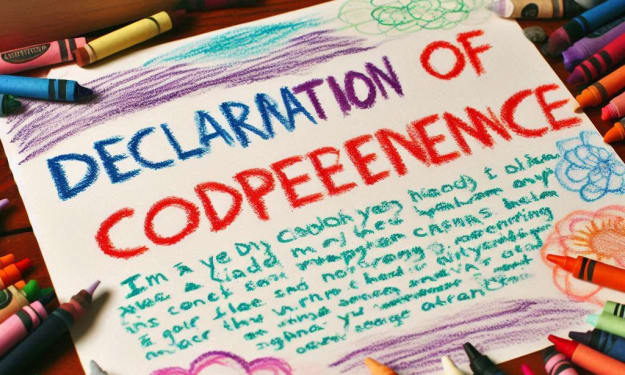
We the People of the Husbands of the United States of America, in Order to form a more perfect Union, and I mean you...with me...establish Justice, insure domestic Tranquility, provide for the common defence, promote the general Welfare, and secure the Blessings of Liberty to ourselves, after Puberty, do ordain and establish this Declaration of Co-Dependence.
By Gerard DiLeo7 days ago in Humans
Top 10 PayPig Websites and Apps That Actually Work in 2026
When exploring the modern landscape of financial domination, finding reliable PayPig Websites and Apps is the absolute most critical step for your overall success. The digital era has completely transformed how financial dominants and submissives connect, creating specialized environments designed specifically for this unique power dynamic. In the past, individuals had to rely on mainstream platforms that often misunderstood or actively discouraged financial domination connections. Today, the industry has matured significantly, offering dedicated spaces that prioritize safety, consent, and seamless transactions. Understanding which platforms currently dominate the market can save you countless hours of frustration and help you build a sustainable, lucrative presence in the community.
By Mark Hipster7 days ago in Humans
me, me, me
when i read back my poetry it screams “me, me, me” on my screen in bold letters and i can’t shut it up — most days, i cannot make any other words out; i want to throttle a thousand versions of the me gone by, i want to throw myself from a figurative balcony, i want to sink a sword into every pen i’ve held
By angela hepworth7 days ago in Poets



Comments
There are no comments for this story
Be the first to respond and start the conversation.