
One-Sided Relationships: A Tale of Unseen Sacrifices
The Hidden Cost of Loving Too Much

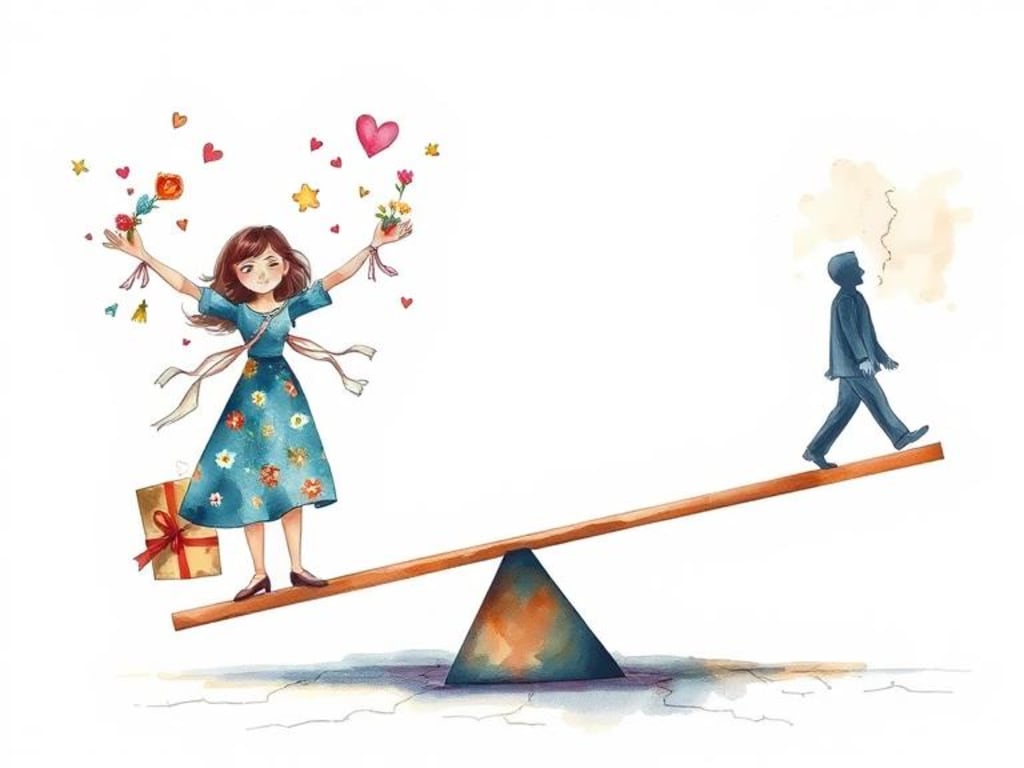
Relationships thrive on balance. Two people invest time, energy, and emotion, creating a bond that lifts both parties. But what happens when one person pours everything into the connection while the other merely takes? One-sided relationships emerge from this imbalance, leaving a trail of unseen sacrifices that weigh heavily on the giver. I explore this dynamic through stories, reflections, and truths—revealing the toll it takes and the courage it demands to break free.
I’ve lived this tale. I’ve watched friends live it too. One person bends over backward, adjusting their life to fit the other’s needs, while the receiver drifts along, offering crumbs of affection or acknowledgment. The giver sacrifices silently—time, dreams, even self-worth—hoping their effort sparks reciprocity. It rarely does. Instead, exhaustion creeps in, resentment festers, and the relationship becomes a mirror reflecting one person’s devotion and the other’s indifference.
Consider Sarah, a woman I know who spent years in a one-sided romance. She planned elaborate dates, remembered every anniversary, and dropped everything when her partner needed her. He, meanwhile, forgot her birthday twice, canceled plans without apology, and texted sporadically. Sarah convinced herself that her love would change him. She sacrificed her hobbies, her sleep, and her peace, believing effort equaled love. It didn’t. He stayed the same, and she dwindled—her light dimming under the weight of unreturned care.
This story repeats across friendships, families, and romances. One person carries the load while the other coasts. The giver justifies it: “They’re busy,” “They’re not good at showing love,” “I’m strong enough to handle it.” But strength shouldn’t mean suffering in silence. Sacrifice shouldn’t mean losing yourself. Yet, in one-sided relationships, that’s exactly what happens.
The Anatomy of Imbalance
Why do these relationships form? Sometimes, it starts with good intentions. You love someone deeply, so you give more to prove it. You call first, plan first, apologize first. They accept it, and a pattern sets in. Over time, they expect your effort without matching it. You become the pursuer; they become the pursued. The scales tip, and you don’t notice until you’re drowning in the effort.
Take Jake, a friend who adored his college buddy, Mike. Jake drove hours to visit Mike, helped him move apartments, and listened to his endless rants about work. Mike rarely returned the favor. When Jake needed support after a breakup, Mike brushed him off with a half-hearted “You’ll be fine.” Jake sacrificed his time and emotional energy, but Mike didn’t see it as a gift—he saw it as Jake’s role. The friendship tilted, and Jake carried the weight alone.
Personality plays a part too. Givers attract takers. Empathetic souls, eager to please, often pair with those who thrive on attention without giving it back. The giver feels fulfilled by nurturing; the taker feels entitled to receive. It’s a dance of imbalance, and the music never stops unless someone steps off the floor.
The Unseen Sacrifices
The sacrifices in one-sided relationships don’t announce themselves with fanfare. They whisper in missed opportunities, eroded confidence, and quiet tears. You cancel plans with friends to wait for a call that never comes. You push your goals aside to support theirs. You bite your tongue to keep the peace, even when they’re wrong. Each choice chips away at you, but you don’t see it—not at first.
I recall my own brush with this. I dated someone who rarely asked about my day. I’d share my triumphs—landing a promotion, finishing a project—and he’d nod, then pivot to his own complaints. I stopped celebrating myself. I sacrificed my voice, shrinking it to fit his disinterest. I didn’t notice how much I’d given up until I left, reclaiming the space I’d surrendered.
For others, the sacrifices cut deeper. Think of parents who pour everything into a child who never calls. Or friends who stand by someone who only reaches out in crisis. The giver adjusts their life—skipping vacations to save money for the other, staying up late to comfort them, sidelining their own needs. The taker accepts it without a second thought. The imbalance grows, and the giver’s world shrinks.
The Emotional Toll
Loving someone who doesn’t love you back—or doesn’t love you equally—drains you. You question your worth. “If I were better, they’d try harder,” you think. You chase their approval, doubling your efforts to bridge the gap. It never works. The gap widens, and you tumble into it, grappling with doubt and despair.
Sarah felt this keenly. She’d cry after another ignored text, wondering why she wasn’t enough. She sacrificed her self-esteem, tying it to his fleeting attention. When he finally ended things, she didn’t mourn the relationship—she mourned the version of herself she’d lost. The emotional toll lingered, a scar from years of unreciprocated love.
Jake faced it too. After years of one-sided friendship, he confronted Mike. “I’m always there for you, but where are you when I need you?” Mike shrugged, saying, “That’s just how I am.” Jake walked away, but the rejection stung. He’d sacrificed his trust in friendship, and rebuilding it took time.
The toll compounds when you stay too long. Resentment brews. You snap at small slights, tired of carrying the load. You withdraw, then feel guilty for it. The relationship becomes a cycle of hope and hurt, and you sacrifice your peace to keep it alive. But peace shouldn’t cost that much.
Why We Stay
If one-sided relationships hurt so much, why do we cling to them? Fear holds us tight. Fear of loneliness, fear of conflict, fear of admitting we misjudged someone. We convince ourselves it’s better to have a flawed connection than none at all. We stay because leaving means facing the void—and the truth that we deserve more.
Sarah stayed because she feared no one else would love her. Jake stayed because Mike was his oldest friend, and losing him felt like losing history. I stayed because I’d invested so much—time, tears, hope—that walking away seemed like defeat. We tie ourselves to the sunk cost, sacrificing our future to salvage the past.
Guilt binds us too. We feel responsible for the other person’s happiness. “If I leave, they’ll fall apart,” we think. We sacrifice our well-being to prop them up, ignoring that they rarely do the same. It’s a trap of our own making, and breaking free takes guts.
The Breaking Point
Every one-sided relationship has a tipping point. Something snaps—a forgotten promise, a careless word, a moment of clarity. You realize the sacrifices aren’t noble; they’re draining. You see the imbalance in stark relief, and you choose yourself.
For Sarah, it was the third missed birthday. She’d planned a dinner, bought a gift, waited. He didn’t show. She cried, then laughed—at herself, at the absurdity. She ended it the next day, reclaiming her time and her heart. Jake hit his limit when Mike bailed on a road trip they’d planned for months. He stopped calling, letting the friendship fade. I left when I caught myself apologizing for his silence. I walked away, and the air felt lighter.
Breaking free doesn’t always mean ending the relationship. Sometimes, it’s setting boundaries. You stop chasing. You demand reciprocity. You say, “I deserve effort too.” The other person either steps up or steps out. Either way, you win—because you stop sacrificing yourself.
Healing the Wounds
Leaving a one-sided relationship—or rebalancing it—doesn’t erase the scars. You mourn the effort you gave, the dreams you deferred. You rebuild trust, in yourself and others. Healing demands honesty: admitting you stayed too long, forgiving yourself for it, and vowing not to repeat it.
Sarah threw herself into painting, a passion she’d abandoned for her ex. Each stroke rebuilt her confidence. Jake found new friends who showed up when he needed them. I started writing again, reclaiming the voice I’d muted. We all carried wounds, but we turned them into strength.
Healing also means recognizing your worth. You don’t need to prove it through sacrifice. Love—whether romantic, platonic, or familial—should lift you, not drain you. You deserve someone who meets you halfway, who sees your effort and matches it. Anything less is a theft of your spirit.
A Call to Reflect
One-sided relationships teach us hard lessons. They show us where we overextend, where we settle, where we lose ourselves. They demand we ask: What am I sacrificing? Is it worth it? Am I seen? The answers guide us forward, away from imbalance and toward connection that honors both sides.
If you’re in one now, pause. Look at the scales. Do they tip toward you, or away? Do you feel valued, or drained? You don’t need to answer aloud—just to yourself. Then act. Stop pouring into a cup that never fills. Seek those who pour back. Life’s too short for unseen sacrifices.
Relationships aren’t meant to be burdens. They’re meant to be partnerships—two people walking side by side, not one dragging the other. When the balance shifts, so should you. Choose yourself. The right people will choose you back.
About the Creator
Great pleasure
An Author.
Keep reading
More stories from Great pleasure and writers in Humans and other communities.
When You’re the Giver and They’re Just Taking
We can sometimes find ourselves in relationships where the scales tip dramatically in one direction. If you’ve ever been in a situation where you’re constantly giving — whether it’s your time, energy, love, or resources — and the other person is simply taking without ever offering anything in return, you know how exhausting and disheartening it can feel.
By Great pleasure10 months ago in Humans



Comments
There are no comments for this story
Be the first to respond and start the conversation.