
Off the Battlefield
A soldier’s story of waking up—not from war, but from who he became in the name of it.

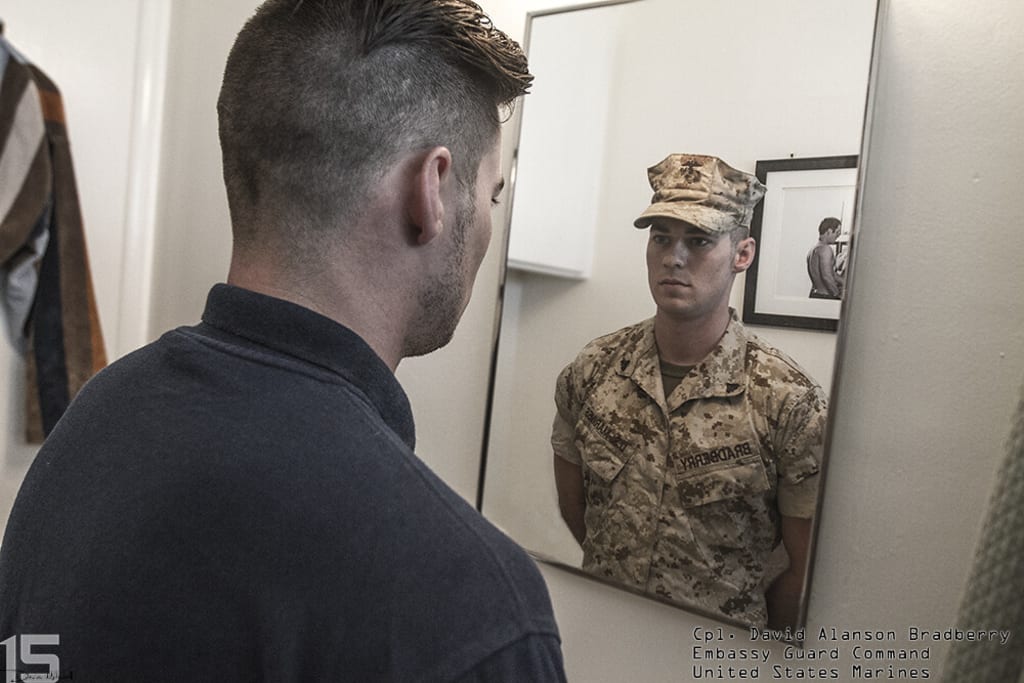
They called me a hero. Strangers in airports. Waitresses with kind eyes. Old men who shook my hand a little too hard, like they were passing down some unspoken torch.
“Thank you for your service.”
I used to smile. Numbly. Awkwardly. Like I didn’t know what to say—because eventually, I didn’t.
Not because I wasn’t grateful. Not because I wasn’t proud once. But because the words started feeling like a punch dressed up as a parade.
I didn’t see it at first. I joined young—hungry, broke, and ready to prove something. War looked like purpose. Camouflage felt like identity. And when I deployed, even in a support role, I wore my uniform like armor and my mission like gospel.
We were the good guys, right?
Then came the years. The deployments. The dead eyes of children I couldn’t save. The silence of villagers who’d lost too much to even glare. The moment I watched something get approved on paper that I knew—deep down—would haunt someone’s homeland for a lifetime.
And I realized… I wasn't always the good guy.
I wasn’t the villain, either—not in the comic book sense. But the truth is: it’s possible to cause harm while thinking you’re doing good. It’s possible to uphold a system that hands you medals while it buries other people’s futures.
That realization didn’t come easy. It cracked me open like a slow earthquake—quiet, steady, and permanent.
I was medically retired after years of giving my body to a machine that didn’t know how to give back. I came home to promises and pamphlets. The yellow ribbons had faded. The funding had dried up. The phone calls stopped.
I sat in VA waiting rooms next to men who couldn’t stop shaking. Women who looked thirty years older than they were. And it hit me—once you're no longer useful, the country you fought for doesn’t know what to do with you.
So I left.
I traveled. Not for escape, but for understanding. To see what else existed beyond the barracks, beyond the base, beyond the borders I was told to fear.
I saw children playing in rubble who still smiled wider than any kid back home. I sat in temples where the silence was louder than mortars. I met people who had lost everything to wars they never started—and they still offered me tea.
The guilt didn’t leave me. But it softened. Because guilt without action is just weight. And I wanted to turn mine into wings.
So I write now. I plant things. I teach. I show up for people I once ignored. I let myself cry when the anthem plays. I let myself say, “I don’t know,” when people ask if it was worth it.
I don’t blame the kids still enlisting. I don’t blame the ones chasing paychecks or purpose or a way out. I was them. And if I could speak to that version of myself, I wouldn’t shame him.
I’d just ask him to listen. To look closer. To remember that service without reflection can become something darker than war itself.
And to the next person who tells me, “Thank you for your service,” I might finally say something back.
Not out of guilt.
But because I’m finally serving something real.
Peace.
And maybe, if I live long enough, forgiveness too.
About the Creator
Aaron Parker
Aaron Parker is a veteran, father, and storyteller unpacking truth, pain, and rebirth. He writes from the edge—where loss becomes clarity, and solitude makes space for the soul to speak.
Keep reading
More stories from Aaron Parker and writers in Humans and other communities.
The Letter I Never Sent
Hey. I’m writing to you from the future—not the distant kind with flying cars and utopias, but the kind where you made it through everything you thought would destroy you. I’m not here to save you, because you’re going to do that yourself. But there are some things I wish you knew before the silence got too loud and the mirrors stopped being kind.
By Aaron Parker9 months ago in Humans
Whiskey At Dusk
Guess the whiskey was more important to you in the end, wasn’t it? It was more than the well-being of your friends; more vital than showing up to the places you promised you would and could come to; more critical of a matter than fulfilling your damn responsibilities and getting the press off your back.
By Snarky Lisaa day ago in Humans
How Social Energy Shapes Trends and Movements.
Social energy—the shared enthusiasm, passion, and momentum within a group or community—plays a critical role in shaping trends, movements, and cultural shifts. It is the force that motivates people to act, share ideas, and rally around common causes. Unlike individual effort alone, social energy multiplies impact by creating collective momentum that drives visibility, participation, and influence. From grassroots movements to viral online trends, understanding how social energy operates reveals why certain ideas gain traction while others fade.
By Wilson Igbasiabout 9 hours ago in Humans


Comments
There are no comments for this story
Be the first to respond and start the conversation.