


The Nature of Obsession: A Deep Dive into Its Impact on the Mind and Behavior
Obsession, a term that often carries negative connotations, is an intrinsic part of human psychology. It can manifest in various forms, ranging from an unhealthy preoccupation with thoughts to compulsive behaviors that dominate one’s life. This state of mental fixation can lead to profound consequences on an individual’s well-being, relationships, and even professional life. However, understanding the nature of obsession—its causes, manifestations, and impact—can offer valuable insights into how the mind works and how to deal with it effectively.
Defining Obsession
At its core, obsession refers to a persistent and uncontrollable preoccupation with a particular idea, object, or person. These thoughts are often intrusive and recurring, to the point where they may overpower the individual's ability to focus on other aspects of life. The term "obsession" is often used interchangeably with "fixation," but while both can suggest an intense focus, obsession implies a sense of irrationality or loss of control.
In the realm of mental health, obsession is most commonly associated with Obsessive-Compulsive Disorder (OCD). However, it can also occur in other conditions, such as anxiety disorders, eating disorders, and even in non-pathological cases, such as an intense preoccupation with a hobby, relationship, or career. The primary feature of an obsession is the inability to shake the thought, regardless of how much one tries to divert attention elsewhere.
The Psychology Behind Obsession
Psychologically speaking, obsession is a complex phenomenon that stems from various underlying factors. To understand why certain thoughts or behaviors become obsessive, we must look at the interplay between cognitive, emotional, and environmental factors.
Cognitive Factors: The human brain is wired to pay attention to things that are perceived as important or threatening. Obsessive thoughts often arise when the brain becomes overly fixated on a particular idea or concern. This fixation may stem from an inability to resolve an internal conflict or uncertainty. Once the brain latches onto a thought or idea, it reinforces the obsession by repeating the thought in an attempt to find a solution or answer, even though the solution may never come.
Emotional Factors: Emotions such as fear, anxiety, and guilt can fuel obsession. For example, someone who experiences anxiety about germs may obsessively wash their hands, even if there is no rational basis for their concern. The emotional intensity behind the obsession acts as a trigger, reinforcing the behavior through negative reinforcement—meaning the compulsive behavior temporarily alleviates the anxiety, which in turn makes the obsession stronger.
Environmental Factors: Certain life events or external stressors can increase the likelihood of developing obsessive thoughts. Traumatic experiences, prolonged stress, or a history of mental health issues in the family can make an individual more vulnerable to obsessions. The social environment, including the influence of peers or societal pressures, can also play a role in fostering fixations on appearance, success, or other external measures of validation.
The Manifestations of Obsession
Obsession can take many forms, and not all of them are immediately visible to others. For instance, some individuals may experience obsessive thoughts, while others may exhibit obsessive behaviors. Below are a few common manifestations of obsession:
Intrusive Thoughts: These are the hallmark of obsessive thinking. Individuals with obsessive tendencies may find themselves unable to control unwanted thoughts about a particular topic, whether it be a person, a situation, or an event. These thoughts can be distressing and repetitive, creating significant distress for the individual.
Compulsive Behaviors: While obsession typically refers to thoughts, compulsive behaviors often accompany obsessive thoughts. For example, a person who obsesses over cleanliness may engage in constant cleaning or handwashing. The compulsive behavior acts as a way to manage the anxiety caused by obsessive thoughts. However, these behaviors often fail to provide long-term relief, creating a vicious cycle of obsession and compulsion.
Preoccupation with a Specific Object or Person: In some cases, obsession manifests as an unhealthy attachment to a person or object. This can be seen in relationships where one person becomes excessively fixated on another, often to the point of stalking or controlling behaviors. Similarly, individuals may become obsessed with material objects or possessions, such as a specific brand or collection, and may invest an inordinate amount of time, energy, and money in acquiring or maintaining these things.
Perfectionism: A form of obsession that is particularly prevalent in high-achieving individuals is perfectionism. These individuals are often consumed with the idea that anything less than perfection is unacceptable. This mindset can lead to excessive attention to detail, an inability to delegate tasks, and a constant drive to improve, which can become overwhelming and counterproductive.
The Impact of Obsession
The consequences of obsession can be far-reaching, affecting both the individual experiencing it and those around them. The most significant effects can be categorized into mental, emotional, and social impacts.
Mental and Emotional Impact: Obsession often leads to heightened stress and anxiety. The constant bombardment of obsessive thoughts can create a state of mental exhaustion, leading to a diminished capacity to concentrate or think clearly. Over time, this can lead to the development of anxiety disorders, depression, or even full-blown obsessive-compulsive disorder. Additionally, the emotional toll of obsession can result in feelings of guilt, shame, or inadequacy, as individuals often recognize the irrationality of their thoughts but feel powerless to stop them.
Social Impact: Obsession can also strain relationships. When a person becomes fixated on a particular issue, object, or individual, they may isolate themselves from friends, family, or colleagues. This isolation is often exacerbated by the time and energy spent on obsessive behaviors, leaving little room for healthy social interactions. In extreme cases, obsession can lead to relationship breakdowns, as partners or friends may feel neglected or overwhelmed by the intensity of the obsession.
Physical Health Impact: While obsession is primarily a psychological issue, it can also have physical consequences. For instance, the compulsive behaviors associated with obsessive thinking, such as excessive cleaning or exercise, can lead to physical exhaustion, injury, or health problems. Additionally, the chronic stress caused by obsession can weaken the immune system, making individuals more susceptible to illness.
Overcoming Obsession
While obsession can be a challenging issue to manage, it is not insurmountable. Several strategies and therapeutic approaches can help individuals break free from the grip of obsession and regain control of their lives.
Cognitive Behavioral Therapy (CBT): CBT is a widely used therapeutic approach for treating obsession, especially in the context of OCD. CBT helps individuals identify and challenge irrational thoughts and beliefs, gradually learning to replace obsessive thinking patterns with healthier, more realistic ones.
Mindfulness and Relaxation Techniques: Practices such as mindfulness meditation and deep breathing exercises can help individuals gain better control over their thoughts and reduce anxiety. By learning to observe thoughts without judgment, individuals can create distance between themselves and their obsessions.
Medication: In some cases, medication may be prescribed to help manage obsessive thoughts and behaviors. Selective serotonin reuptake inhibitors (SSRIs) are commonly used to treat obsessive-compulsive disorder and related conditions. These medications work by altering the levels of serotonin in the brain, which can help regulate mood and reduce anxiety.
Support Systems: Building a strong support system of friends, family, or support groups can also play a crucial role in overcoming obsession. Talking openly about the challenges and seeking guidance from others who understand the experience can help individuals feel less isolated and more empowered to make changes.
Conclusion
Obsession, whether in the form of intrusive thoughts or compulsive behaviors, is a complex psychological phenomenon that can significantly impact an individual’s life. While the experience of obsession can be distressing, it is important to recognize that it is a manageable condition with the right strategies and support. By gaining a deeper understanding of the nature of obsession, individuals can begin to reclaim control over their thoughts and behaviors, ultimately leading to a healthier and more balanced life.
About the Creator
Ibok Gerard
Ibok Gerard is a wordsmith, dreamer, and adventurer. His writing explores the intersection of mystery and reality
Keep reading
More stories from Ibok Gerard and writers in Humans and other communities.
Passion
Passion is often described as a fire within, a force that propels us toward our deepest desires and fuels our energy even in the face of setbacks. It’s a word we hear often, but do we really understand what it means, or how to find it? The search for passion is something many people embark on during their lifetime, whether it's related to career, relationships, or hobbies. In the process, some find it early, while others might not realize it until later in life.
By Ibok Gerard11 months ago in Humans
Autonomy Is The Real Privilege
Good morning, freedom-seekers! Today we’re gonna be looking at autonomy. A strange word, I know; one many would probably look at blankly and run away from on sight. We’re gonna figure out what it actually means, consider how it’s achieved, and decipher just how deeply most of us are tangled up in dependence without realising it.
By That ‘Freedom’ Guy4 days ago in Humans
An Attempt to Break People’: Bucha Holds Out Amid Russia’s Weaponisation of Winter
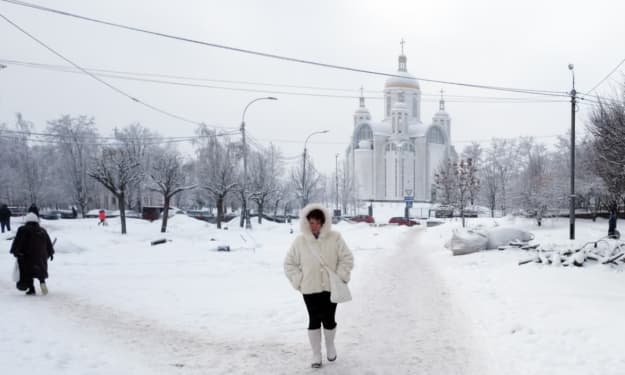
After four years of conflict, the city that became infamous in 2022 for the atrocities of Russian occupation is facing a different kind of battle. This time, the enemy is winter, weaponised by deliberate attacks on power grids, heating systems, and basic infrastructure. For residents, survival has become a daily struggle — and a test of resilience. Bucha’s Legacy of Survival Bucha is no stranger to suffering. During the early months of Russia’s invasion, the world was horrified by images of civilian massacres, abandoned homes, and streets lined with the evidence of violence. The city became a symbol of wartime atrocity. Now, though the guns have quieted somewhat, a new kind of pressure is emerging. Russian forces have deliberately targeted energy infrastructure, knowing that winter’s arrival would magnify the damage. Power plants, heating systems, and water facilities have been hit, leaving homes dark and cold, hospitals under strain, and schools struggling to function. For locals, this is not just an attack on infrastructure — it’s an attack on morale. It’s a calculated effort to make life unbearable, to test whether people will stay or flee, and to try to break the community from within. Life in the Dark Power outages have become a grim part of daily life. Residents report long stretches without electricity, traffic lights left dark, and homes turning into icy shells. Oleksandr Bartkov, owner of a local café, shares how daily business now depends on limited hours of electricity. “Of the eight or nine hours we usually operate, we might only have three or four hours of power,” he says. When a major strike occurred during a severe cold snap, Bartkov’s café stayed closed for days. Like many small businesses, they survive on generators — if they work — or close entirely. It’s not just businesses that suffer. Families huddle under blankets in freezing apartments, rationing food and water while the cold seeps into walls and floors. The winter is no longer just a season; it is a weapon, deployed against ordinary people. Weaponising Winter Officials describe these attacks as deliberate. By targeting energy infrastructure during the harshest months, Russian forces are not only cutting off electricity but also aiming to undermine the mental and physical resilience of communities like Bucha. Mayor Anatolii Fedoruk explains that even though Bucha’s electrical grid is relatively modern and distributed, the repeated strikes have severely strained its capacity. “Russia knew the severe frost was coming, and they wanted to hit the power plants,” Fedoruk says. This strategy is about more than freezing people’s homes. It’s psychological warfare, designed to make civilians feel vulnerable, unsafe, and powerless. It’s a chilling reminder that in modern conflict, energy systems can become as critical a battleground as any frontline. The Human Toll The effects on daily life are profound. In shelters, displaced families huddle in rooms warmed by generators or improvised heaters. Walls are thin, kitchens cold, and nights unbearably long. Vitalina Tsisar, a shelter manager, recalls nights when the generator failed and temperatures inside dropped near freezing. Children stayed in hats and coats, parents tried to keep spirits up, but the fear of the cold was constant. “It makes people afraid,” Tsisar says. “When it is this cold outside, you feel yourself freezing.” Hospitals and schools are also under pressure. With power and heating interrupted, critical services struggle to function. Even small inconveniences, like a broken refrigerator or a darkened hallway, become magnified threats in winter. Government Response and International Aid The Ukrainian government has declared a state of emergency, warning that energy reserves are dwindling and calling for international assistance. President Volodymyr Zelenskyy has stressed the need for preparedness and warned of the dangers of continued attacks. Experts describe the assault on infrastructure as part of a broader strategy — one that targets civilians indirectly to weaken resistance. Energy analyst Oleksandr Kharchenko puts it bluntly: “This is an attempt to break people.” International aid has provided some relief, from temporary shelters and heaters to emergency fuel for generators. But the scale of the attacks, combined with harsh winter conditions, makes the crisis ongoing and unpredictable. Resilience in the Cold Despite these enormous challenges, the people of Bucha are standing firm. History has taught them resilience. When Russian troops first occupied the city, they endured occupation, resistance, and ultimately liberation. Now, with winter turned into a weapon, the city is proving that its spirit is not so easily broken. Neighbors check on one another, communities share generators, and children still play in the snow, bundled in coats and hats. Streets may be dark, shops may be closed, and nights may be freezing, but life continues. The cold may freeze the city physically, but it cannot freeze the will of its people. A Message Beyond Bucha Bucha’s struggle is a stark reminder that war does not only involve guns and tanks. It can be fought in the silence of a blackout, the drop of a thermometer, and the slow creep of frost into homes. But it also shows the extraordinary human capacity to endure, adapt, and survive. In a winter weaponised against them, Bucha continues to hold out. And in doing so, the city sends a powerful message: oppression may try to break people, but resilience can shine even in the darkest, coldest hours.
By Muhammad Hassan7 days ago in Humans



Comments
There are no comments for this story
Be the first to respond and start the conversation.