
"Not My Problem: Trump's Withdrawal from Ukraine Diplomacy Raises Global Alarms"
After promising swift peace, Trump backs away from negotiations—leaving allies fractured, Ukraine exposed, and Putin empowered.

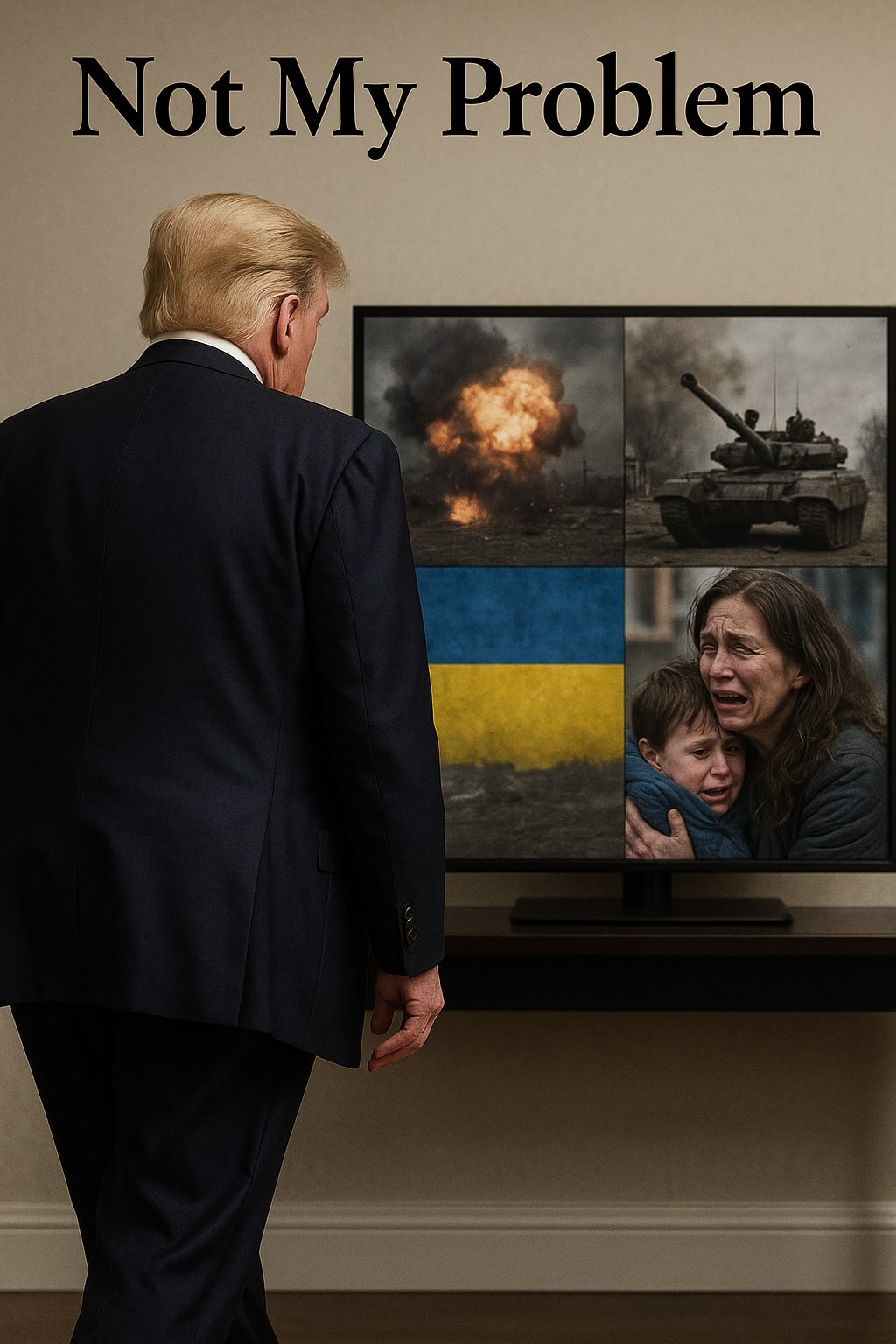
For months, President Trump has been threatening to simply walk away from the frustrating negotiations for a cease-fire between Russia and Ukraine.
After a phone call on Monday between Mr. Trump and President Vladimir V. Putin of Russia, that appears to be exactly what the American president is doing. The deeper question now is whether he is also abandoning America’s three-year-long project to support Ukraine, a nascent democracy that he has frequently blamed for being illegally invaded.
Mr. Trump told President Volodymyr Zelensky of Ukraine and other European leaders after his call with Mr. Putin that Russia and Ukraine would have to find a solution to the war themselves—just days after saying that only he and Mr. Putin had the power to broker a deal. And he backed away from his own threats to join a European pressure campaign that would include new sanctions on Russia, according to six officials who were familiar with the discussion. They spoke on condition of anonymity to describe a private conversation.
Their account sheds light on Mr. Trump’s decision to throw up his hands when it comes to a peace process that he had previously promised to resolve in just 24 hours. And, unless he again reverses course, Monday’s developments left Mr. Putin with exactly what he wanted: not only an end to American pressure, but the creation of a deep fissure inside the North Atlantic Treaty Organization, between the Americans and their traditional European allies, who say they are going ahead with sanctions anyway.
To many, Mr. Trump’s decision was foretold — first by his fiery, televised encounter with Mr. Zelensky in the Oval Office, then by the resignation of the American ambassador in Kyiv.
“The policy since the beginning of the Trump administration has been to put pressure on the victim, Ukraine, rather than the aggressor, Russia,” Bridget A. Brink, the former ambassador and a longtime Foreign Service officer, wrote after leaving Kyiv last month. “Peace at any price is not peace at all — it is appeasement.”
Critics argue that Mr. Trump’s stance risks legitimizing Russia’s actions and signals to other autocratic regimes that aggressive tactics may be tolerated or even rewarded. For Ukraine, which has endured years of territorial losses, civilian casualties, and economic devastation, the sudden shift in U.S. policy feels like a betrayal of promises made under the banner of democratic solidarity and mutual defense.
European leaders, particularly in Germany and France, have expressed growing frustration with the U.S. retreat from its leadership role. Some warn that this could mark a turning point in transatlantic relations, as confidence in America's reliability as a partner erodes. They insist they will continue supporting Ukraine both militarily and diplomatically, regardless of Washington’s posture.
Meanwhile, analysts caution that the vacuum left by the United States could embolden Mr. Putin to escalate the conflict or push for more concessions. The perception that the U.S. is stepping back may also encourage China and other strategic rivals to test the boundaries of international norms.
In the absence of a unified Western front, Ukraine faces a more uncertain and dangerous path. Without robust U.S. engagement, the prospect of a just and lasting peace becomes far more elusive.
Moreover, Trump’s disengagement could set a precedent that future administrations may struggle to reverse. Allies may begin forming alternative coalitions, and U.S. influence in global affairs could diminish significantly. America's retreat from a central geopolitical crisis could be interpreted not as pragmatism, but as abandonment.
Domestically, the decision is already fueling debate across the political spectrum. Some of Trump’s critics argue that his stance aligns too closely with Russian interests, while supporters claim that his “America First” policy demands a reduction in overseas entanglements. The growing divide over Ukraine policy reflects a deeper ideological rift about America's role in the world — one that is unlikely to heal quickly.
As the war grinds on, the implications of Trump’s pivot reverberate far beyond Eastern Europe. Whether history will view this moment as strategic realism or catastrophic neglect remains to be seen
About the Creator
Whispers of Yousaf
Where words breathe,
and emotions speak the truth.
I write about love, silence,
and the stories we’re too afraid to tell. ✨
Keep reading
More stories from Whispers of Yousaf and writers in Humans and other communities.
10 Best Sugar Daddy Dating Sites in Europe to Meet European Sugar Daddies (2026 Guide)
The Best Sugar Daddy Dating Sites in Europe to Meet European Sugar Daddies have become increasingly popular as modern relationships evolve and people look for mutually rewarding connections across different European countries. In recent years, sugar dating has grown into a well-known lifestyle where successful, generous men connect with attractive companions who appreciate mentorship, lifestyle upgrades, and meaningful companionship. Across cities such as Paris, London, Berlin, Milan, and Madrid, wealthy professionals are turning to specialized dating platforms to meet compatible partners who understand the dynamics of sugar relationships. These websites provide structured environments where expectations are clear, communication is open, and both individuals can explore connections that blend romance, lifestyle benefits, and emotional companionship.
By Mark Hipstera day ago in Humans
The First Rainbow Baby
Pitter-patter, pitter-patter. The rain fell in rhythmic splatters, slowly slowing, but still constant. Mira rolled onto her side pulling the blanket tight against her ears, but still she could hear chitter-chatter and scurrying feet of the creatures that refused to sleep in the lower decks.
By A. J. Schoenfeld3 days ago in Fiction


Comments (1)
Keep it up 💪