
News You Should Care About: Year-Long Study Locks Four Individuals Inside a Simulated Mars Habitat
NASA's Year-Long Mars Habitat Study Paves the Way for Successful Future Space Exploration
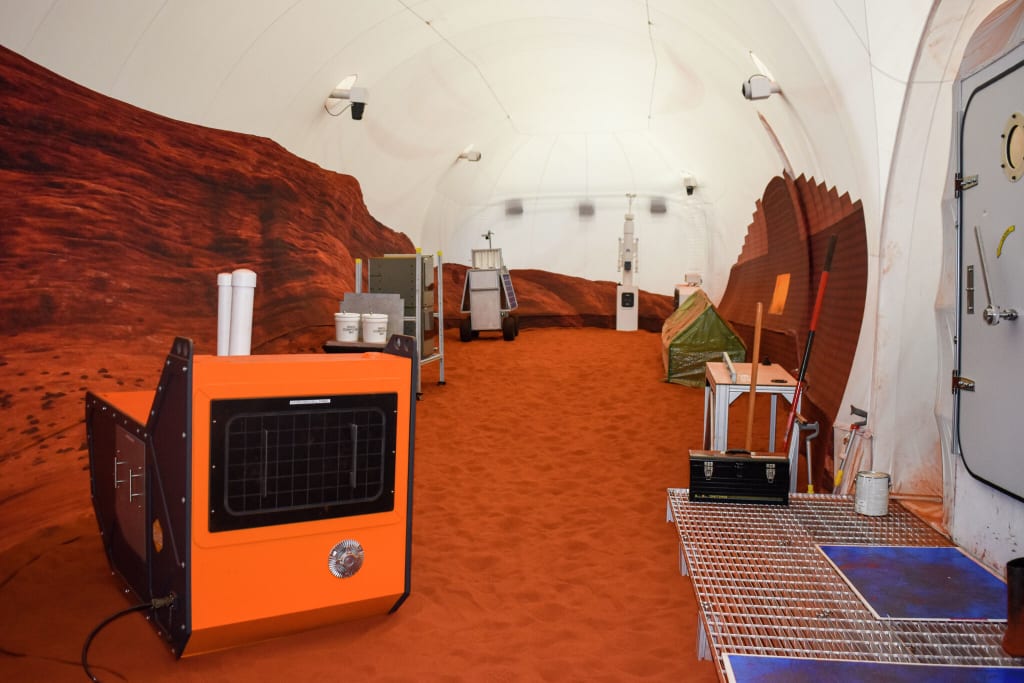
In an extraordinary endeavor aimed at advancing our understanding of long-duration space missions, NASA has embarked on a groundbreaking year-long study by confining four individuals inside a simulated Mars habitat. This unique experiment, known as the Mars Habitat Isolation Study, seeks to simulate the physical and psychological challenges that astronauts may encounter during extended space exploration missions. In this article, we explore the significance of this ambitious study, the conditions faced by the participants, the objectives of the research, and the potential implications for future space exploration.
Simulating Mars Conditions on Earth
To recreate the isolated and confined environment that astronauts would experience on a future manned mission to Mars, NASA has constructed a simulated habitat on Earth. This innovative facility mimics the conditions of a potential Mars base, including the limited living space, restricted communication with the outside world, and dependence on limited resources. The habitat provides a controlled setting for researchers to closely observe the physical and psychological responses of the participants to long-duration isolation.
Understanding the Physical and Psychological Challenges
The Mars Habitat Isolation Study aims to shed light on the various challenges astronauts may face during a mission to Mars. It focuses on assessing the impact of isolation, confinement, psychological stress, and other factors on the participants' mental health, cognitive abilities, sleep patterns, physical performance, and overall well-being. The study also explores the dynamics of group cohesion and the effectiveness of team collaboration under these extreme conditions.
Importance for Future Space Exploration
The insights gained from this year-long study have significant implications for future space exploration missions, particularly those involving long-duration travel and habitation on other planets. Understanding how individuals adapt to the physical and psychological demands of isolation and confinement will inform the development of effective countermeasures, protocols, and support systems to ensure the well-being and performance of astronauts during extended space missions.
Human Factors and Mission Success
Space agencies recognize that the success of future space missions depends not only on technological advancements but also on understanding the human factors involved. The Mars Habitat Isolation Study allows scientists to assess human resilience, performance, and the impact of isolation on decision-making processes. By gathering data on the physical and psychological challenges faced by the participants, researchers can enhance mission planning, crew selection, and astronaut training for future deep space missions.
Collaboration and Knowledge Sharing
The Mars Habitat Isolation Study serves as a collaborative effort, involving researchers, scientists, and engineers from various disciplines. It showcases the importance of interdisciplinary collaboration in space exploration research, bringing together experts in human physiology, psychology, engineering, and mission planning. The sharing of knowledge and data from this study will contribute to a broader understanding of the complex nature of long-duration space missions.
Preparing for Future Mars Missions
NASA's year-long study inside the simulated Mars habitat represents a crucial stepping stone towards future manned missions to Mars. As space agencies worldwide set their sights on exploring the red planet, the insights gained from this research will inform the design of spacecraft, habitats, and support systems necessary for the success and safety of astronauts undertaking these extraordinary journeys.
Inspiring the Next Generation
Beyond its scientific objectives, the Mars Habitat Isolation Study also aims to inspire and engage the public, particularly the younger generation, in the field of space exploration. By conducting such audacious experiments, NASA sparks curiosity and fosters interest in science, technology, engineering, and mathematics (STEM) disciplines, motivating future scientists and engineers to pursue careers in space exploration.
NASA's year-long Mars Habitat Isolation Study marks a significant milestone in our quest to explore the mysteries of Mars. By replicating the conditions astronauts may encounter during extended space missions, this groundbreaking research provides valuable insights into the physical and psychological challenges of isolation and confinement. As we unlock the complexities of human.
About the Creator
Keep reading
More stories from Viktor Selin and writers in Humans and other communities.
News You Should Care About: Taliban Imposes Ban on Hair and Beauty Salons in Afghanistan
The recent resurgence of the Taliban in Afghanistan has brought with it a wave of regressive policies that severely curtail the rights and freedoms of Afghan women. In a concerning move, the Taliban has issued an order to shut down all hair and beauty salons across the country, adding to the growing list of restrictions faced by women. This article explores the significance of this latest directive, its implications for women's autonomy and livelihoods, and the broader implications for gender equality in Afghanistan.
By Viktor Selin3 years ago in Humans
Kiefer Sutherland and the Weight of Time on Screen Alone
Some actors arrive loudly. Others arrive quietly and stay with you. Kiefer Sutherland belongs to the second kind. His presence does not rush into a scene. It settles, waits, and then slowly takes hold. Over decades, his face has carried fear, regret, loyalty, and exhaustion in ways that feel close to real life. Watching him is often less about spectacle and more about recognition. You see parts of people you know. Maybe even parts of yourself. This article explores Kiefer Sutherland not as a star, but as a human figure shaped by time, choices, and consequence. His work speaks to aging, responsibility, and the cost of standing alone when the world keeps asking more.
By Muqadas khan4 days ago in Humans




Comments
There are no comments for this story
Be the first to respond and start the conversation.