
Navy Captain Quotes the Law, MAGA Loses Mind
The Real Reason They’re Coming for Mark Kelly

Navy Captain Quotes the Law, MAGA Loses Mind
The Real Reason They’re Coming for Mark Kelly
Introduction: Why a Simple Truth Terrifies Them
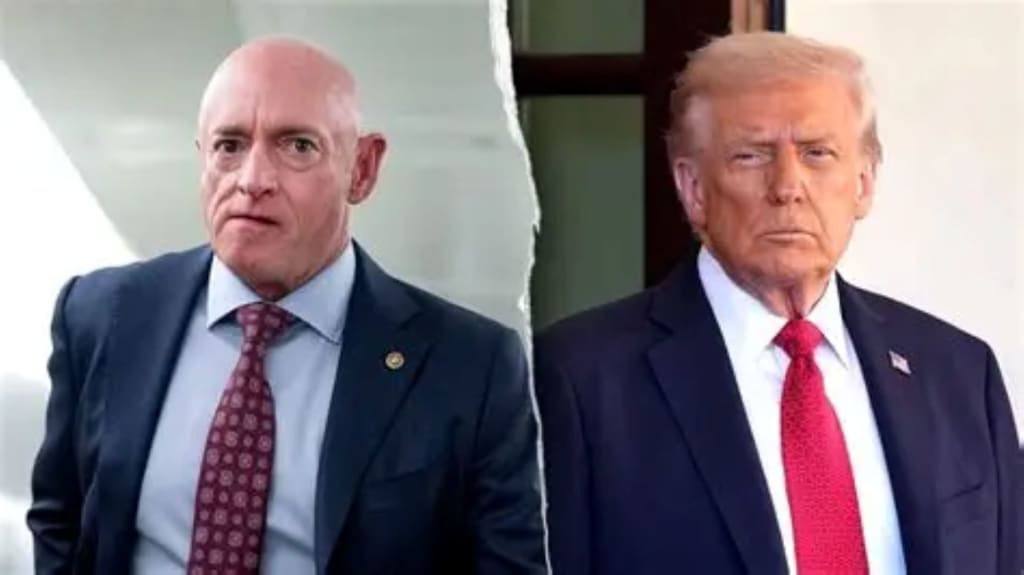
When Senator Mark Kelly reminded the military that they are obligated to refuse illegal orders, the backlash was immediate and ferocious. Within hours, Trump’s allies framed his statement as mutiny, sedition, even the collapse of civilization itself. The rhetoric was apocalyptic, designed to paint Kelly not as a senator quoting military law but as a traitor undermining the chain of command. Yet the reality is far simpler: Kelly quoted the law. And quoting the law is dangerous to Trump’s narrative, because it reminds the military — and the public — that their oath is to the Constitution, not to him.
This truth is not new. It is embedded in the Manual for Courts-Martial and the Law of Land Warfare, codified in military training, and reinforced by decades of precedent. Every recruit learns that obedience is not absolute; it is conditioned by legality. Soldiers are not automatons. They are bound by law, and the law requires them to refuse unlawful directives. That principle is the firewall between democracy and dictatorship.
Trump’s movement thrives on blurring that line. His allies insist that loyalty to him is loyalty to the nation, collapsing the distinction between personal allegiance and constitutional duty. Kelly’s statement punctured that illusion. By reminding the military that their oath is to the Constitution, Kelly exposed the fragility of Trump’s claim to absolute obedience.
The ferocity of the backlash reveals the stakes. If Kelly were wrong, his words would be dismissed as irrelevant. But because he is right, his words are dangerous. They remind the military that the law still exists, that the oath still means something, and that illegal orders remain illegal no matter who issues them. In a political climate where Trump openly demands unlawful actions — from seizing voting machines to defying court rulings — Kelly’s reminder is not just a legal technicality. It is a direct challenge to authoritarian power.
This is why Trump’s allies reacted with panic. They understand that once military law is quoted aloud, their narrative collapses. The fantasy of a military that salutes Trump unconditionally evaporates when confronted with the reality that soldiers are bound to the Constitution. Kelly’s statement did not create a crisis; it revealed one. It showed that Trump’s power depends not on law but on ignorance, and that the greatest threat to his narrative is the simple truth that the military must refuse illegal orders.
Section 1: The Architecture of Military Law
Military justice is built on one principle: illegal orders are void. This is not a matter of interpretation or political spin; it is the bedrock of American military law. The Manual for Courts-Martial (MCM) states unequivocally:
“A service member is obligated to disobey a clearly illegal order.”
— MCM, Part IV, ¶16(c)(2)(A)
The U.S. Army Law of Land Warfare Manual reinforces the same principle:
“An order which requires the commission of a crime… is a manifestly illegal order and must be disobeyed.”
— FM 27-10, ¶509
These rules are not obscure technicalities tucked away in dusty legal manuals. They are drilled into recruits from the very beginning of their service because they safeguard the republic against authoritarian misuse of military power. Every officer knows that obeying an unlawful order can itself be a crime. In fact, the refusal of illegal orders is one of the few obligations that supersedes the otherwise rigid chain of command.
The Chain of Command and Its Limits
The American military is built on hierarchy. Orders flow downward, obedience flows upward. This structure ensures discipline, cohesion, and effectiveness in combat. But the chain of command is not absolute. It is bounded by law. The Uniform Code of Military Justice (UCMJ) makes clear that obedience is conditioned by legality. A soldier who blindly follows an unlawful directive is not shielded from responsibility; they are complicit.
This distinction is critical. Without it, the military would be nothing more than an instrument of personal power, vulnerable to the whims of any leader willing to exploit its strength. By embedding the principle that illegal orders must be refused, military law ensures that the armed forces remain loyal to the Constitution, not to individuals.
Historical Foundations: Nuremberg and Beyond
The principle that illegal orders are void gained international prominence after World War II. At the Nuremberg Trials, Nazi officers attempted to defend themselves by claiming they were “just following orders.” The tribunal rejected this defense, establishing that obedience does not absolve responsibility when the orders themselves are criminal.
This precedent shaped modern military law worldwide, including in the United States. The MCM and FM 27-10 explicitly incorporate the lessons of Nuremberg: soldiers must refuse manifestly illegal orders, and failure to do so can result in prosecution. In other words, legality is not optional; it is the standard by which military obedience is judged.
Training and Enforcement
From the first day of basic training, recruits are taught that their oath is to the Constitution. Drill instructors emphasize that loyalty to the nation is not the same as loyalty to a commander. This distinction is reinforced through training scenarios, legal briefings, and repeated instruction.
For officers, the obligation is even greater. They are expected to recognize unlawful directives and prevent their execution. Military academies and officer training programs devote significant time to the study of military law, rules of engagement, and the limits of presidential authority. The message is clear: obedience is not blind. It is bounded by legality, and officers are accountable for their choices.
The Consequences of Obedience
Obeying an unlawful order is not a shield; it is a liability. Under the UCMJ, a service member who carries out an illegal directive can be charged with crimes ranging from assault to murder, depending on the nature of the order. The principle is stark: obedience is not a defense when the order itself is criminal.
This creates a dual obligation: soldiers must obey lawful orders, but they must refuse unlawful ones. The refusal is not optional; it is mandatory. Failure to refuse can result in prosecution, dishonorable discharge, or imprisonment. In extreme cases, it can even lead to charges of war crimes.
Safeguarding the Republic
The architecture of military law is designed to protect the republic from authoritarian misuse of power. By requiring soldiers to refuse unlawful directives, the law ensures that the military cannot be weaponized against the Constitution. This safeguard is essential in a democracy. It prevents the armed forces from becoming instruments of personal loyalty and ensures that their allegiance remains to the nation and its laws.
In practice, this means that no president, no general, and no commander can legally order the military to commit crimes. The law is explicit: illegal orders are void, and obedience to them is itself unlawful. This principle is the firewall that protects democracy from dictatorship.
Why This Matters Now
In the current political climate, this principle is more than theoretical. It is a direct challenge to Trump’s narrative of personal loyalty. By reminding the military that they are obligated to refuse illegal orders, Senator Mark Kelly reasserted the primacy of law over personality. His statement was not radical; it was a restatement of military doctrine. Yet it triggered panic because it undermines the illusion that the military exists to serve one man rather than the Constitution.
The architecture of military law is not just a set of rules. It is the foundation of democratic governance. It ensures that the armed forces remain loyal to the republic, not to individuals. And it is the principle that Trump’s allies fear most, because it reminds the military — and the public — that illegal orders are void, no matter who issues them.
Section 2: Selective Outrage and the Double Standard
The Pentagon has historically ignored retired officers who openly flirt with insurrectionist rhetoric. This pattern of selective enforcement reveals a troubling double standard: inflammatory calls to rebellion are tolerated, but calm reminders of legal obligations provoke fury.
Consider three prominent examples:
Michael Flynn: The former National Security Advisor, once a three-star general, publicly pledged allegiance to QAnon’s slogan “WWG1WGA” (“Where We Go One, We Go All”). This was not a harmless gesture. QAnon is a conspiracy movement that has repeatedly called for violent action against the government. Flynn’s embrace of its motto signaled sympathy for a movement that undermines democratic institutions. Yet despite the seriousness of this act, Flynn faced no UCMJ enforcement. His retirement shielded him from accountability, even though retired officers remain technically subject to military law.
Thomas McInerney: A retired Air Force lieutenant general, McInerney urged troops to “rise up” against the results of the 2020 election. This was a direct call for military insurrection, an attempt to mobilize armed forces against the constitutional transfer of power. Such rhetoric is far more destabilizing than Kelly’s reminder of legal obligations. Yet McInerney faced no consequences. His statements were dismissed as fringe, even though they carried the weight of a retired general’s authority.
Phil Waldron: A retired Army colonel, Waldron circulated the “1776 Returns” plan in state legislatures. This document outlined strategies for overturning the election, including mobilizing protests and pressuring officials to reject certified results. Waldron’s involvement in spreading this plan placed him at the center of efforts to subvert democracy. Yet again, no UCMJ enforcement followed.
These examples illustrate a consistent pattern: when retired officers promote insurrectionist rhetoric, the Pentagon looks the other way. But when Senator Mark Kelly cites the most basic fact of military law — that illegal orders must be refused — the reaction is apocalyptic.
Why the Double Standard Exists
The double standard is not about law; it is about politics. Flynn, McInerney, and Waldron aligned themselves with Trump’s narrative of personal loyalty and resistance to democratic institutions. Their rhetoric, though extreme, reinforced Trump’s claim to authority. Kelly’s statement, by contrast, undermines that claim. By reminding the military that their oath is to the Constitution, not to Trump, Kelly exposed the fragility of Trump’s narrative.
This is why the reaction to Kelly is so disproportionate. It is not outrage; it is panic. Trump’s allies understand that once military law is quoted aloud, their narrative collapses. The fantasy of unconditional obedience evaporates when confronted with the reality that soldiers are bound to refuse unlawful directives.
The Consequences of Selective Enforcement
Selective enforcement corrodes trust in military institutions. When insurrectionist rhetoric is tolerated but legal reminders are punished, the message is clear: loyalty to Trump is rewarded, loyalty to the Constitution is penalized. This inversion of values undermines the very foundation of civil-military relations.
It also creates dangerous precedents. If retired officers can openly call for insurrection without consequence, while sitting senators are attacked for quoting the law, the boundaries of acceptable discourse shift. The military becomes politicized, not by those who defend the law, but by those who undermine it.
Panic, Not Outrage
The ferocity of the backlash against Kelly reveals the true nature of the response. It is not genuine outrage at a breach of military discipline. It is panic at the exposure of a truth that threatens Trump’s narrative. Kelly’s statement did not destabilize the military; it destabilized the illusion of Trump’s authority.
By reminding the military of their legal obligations, Kelly reasserted the primacy of law over personality. This is what Trump’s allies fear most: the collapse of the fantasy that the military exists to serve one man rather than the Constitution.
The double standard is stark. Flynn, McInerney, and Waldron promoted insurrectionist rhetoric without consequence. Kelly quoted military law and triggered panic. This inversion of accountability reveals the fragility of Trump’s narrative and the desperation of his allies to suppress the truth. The backlash against Kelly is not about mutiny; it is about fear. Fear that once the law is quoted aloud, the illusion of unconditional obedience will collapse.
Section 3: Trump’s Record of Illegal Orders (2017–2021)
Trump’s presidency is littered with unlawful directives. These were not minor lapses or ambiguous policy disputes; they were clear violations of constitutional, statutory, and international law. Each incident demonstrates a pattern: Trump repeatedly attempted to use the military and federal agencies as personal instruments of power, disregarding the legal boundaries that safeguard democracy.
Shooting Migrants in the Legs
In 2019, reporting by the New York Times revealed that Trump suggested migrants crossing the southern border should be shot in the legs to slow them down. Advisers were stunned, recognizing immediately that such an order would constitute unlawful use of force. Shooting unarmed civilians attempting to cross a border is not only illegal under U.S. law but also a violation of international human rights standards. The idea was dismissed internally, but the fact that it was seriously proposed underscores Trump’s willingness to issue directives that would amount to criminal acts if carried out.
Firing on Protesters
During the George Floyd protests in 2020, Trump repeatedly urged advisers to deploy military force against demonstrators. According to Gen. Mark Milley, Trump told officials he wanted troops to “just shoot them”. CNN and Axios both reported that Trump pressed for extreme measures, including firing on civilian.. Such an order would have violated the Posse Comitatus Act, which restricts the use of federal military forces in domestic law enforcement, as well as constitutional protections for free speech and assembly. The military refused to comply, but the episode revealed Trump’s disregard for the legal limits on presidential power.
Border Patrol Pardons
Trump also told Border Patrol agents to break the law and promised pardons if they faced prosecution. This directive was extraordinary: it not only encouraged illegal conduct but also attempted to nullify accountability by offering blanket pardons in advance. Such promises undermine the rule of law by signaling to federal agents that they can commit crimes without consequence. The Constitution grants the president pardon power, but using it to pre-authorize illegal acts is itself unlawful, as it constitutes solicitation of crime.
Seizing Syrian Oil
Trump ordered the U.S. military to “take the oil” in Syria, a directive that violated Hague Convention IV, Article 55, which prohibits the exploitation of natural resources in occupied territories. International law is clear: occupying powers may administer resources but cannot seize them for personal or national gain. Trump’s order was not only illegal but also a war crime under the Law of Armed Conflict. Military officials quietly ignored the directive, but its issuance demonstrated Trump’s willingness to command forces to commit violations of international law.
Voting Machines
In the aftermath of the 2020 election, Trump demanded the seizure of voting machines. White House Counsel Pat Cipollone rejected the idea as “illegal”. Seizing voting machines without lawful authority would have violated both constitutional protections for state sovereignty and federal statutes governing elections. It would have amounted to an unlawful federal takeover of state election infrastructure. Cipollone’s refusal highlights how close the administration came to executing an illegal directive that would have undermined the electoral process itself.
Overturning the Election
Perhaps the most infamous directive was Trump’s pressure campaign on Vice President Mike Pence to reject certified electoral votes on January 6, 2021. The Jan. 6 Committee documented Trump’s repeated demands that Pence overturn the election. Such an action would have violated the Electoral Count Act and constituted conspiracy to defraud the United States under 18 U.S.C. §371. Pence refused, recognizing that the order was illegal. Trump’s insistence on this directive directly contributed to the insurrection at the Capitol, as his supporters acted on the belief that Pence had the authority to nullify lawful votes.
The Pattern of Illegality
Each of these directives violated constitutional, statutory, or international law. Taken together, they reveal a consistent pattern: Trump repeatedly attempted to use the military and federal agencies to carry out unlawful actions. His directives were not isolated incidents but part of a broader strategy to erode legal boundaries and consolidate personal power.
The refusal of military and legal officials to carry out these orders prevented catastrophic violations of law. But the fact that such orders were issued at all underscores the fragility of democratic safeguards when confronted with a president willing to disregard them.
Trump’s record from 2017 to 2021 demonstrates why Senator Mark Kelly’s reminder is so dangerous to his narrative. The principle that illegal orders must be refused is not abstract; it is directly relevant to Trump’s documented history of unlawful directives. By quoting the law, Kelly reminded the military — and the public — that obedience is conditioned by legality, and that Trump’s past behavior has already crossed those boundaries.
Section 4: Trump’s Current Illegal Directives (2025)
The pattern of unlawful directives did not end with Trump’s first term. It continues today, with new orders that stretch — and often shatter — the boundaries of constitutional, statutory, military, and international law. These are not policy disagreements or contested interpretations of executive authority. They are direct violations of established legal frameworks, designed to consolidate personal power at the expense of democratic institutions.
Citizen Data Seizures
Trump has ordered federal agencies to hand over protected U.S. citizen data to private actors, including technology firms aligned with his political agenda. This directive violates the Privacy Act (5 U.S.C. §552a), which prohibits unauthorized disclosure of personal records, as well as the Foreign Intelligence Surveillance Act (FISA) and the Fourth Amendment’s protections against unreasonable searches and seizures.
The danger here is twofold: first, it deputizes private corporations as intelligence services without legal authority; second, it erodes the fundamental principle that government surveillance must be subject to judicial oversight. By attempting to bypass these safeguards, Trump is effectively dismantling the legal architecture that protects citizens from arbitrary intrusion.
Ignoring Court Rulings
Trump has instructed officials to defy federal court orders, a directive that constitutes contempt under 18 U.S.C. §401. The rule of law depends on compliance with judicial decisions. When a president tells subordinates to ignore court rulings, he is not merely challenging policy; he is undermining the separation of powers.
This directive strikes at the heart of constitutional governance. Courts exist to check executive authority. Defying them is not strong leadership; it is lawlessness. Such behavior echoes authoritarian regimes where judicial independence is subordinated to executive will.
Political Surveillance
Trump has pressed military and intelligence agencies to collect “political intel” on journalists and opponents. This violates Executive Order 12333, which governs intelligence activities, as well as the Posse Comitatus Act, which prohibits the use of the military in domestic law enforcement.
Political surveillance is the hallmark of authoritarian states. In democracies, intelligence agencies are forbidden from targeting citizens for political purposes. Trump’s directive attempts to weaponize national security tools against domestic critics, eroding both press freedom and civil liberties.
Congressional Obstruction
Trump has ordered agencies to stonewall Congress, refusing to comply with subpoenas or provide testimony. This violates 2 U.S.C. §§192, 194 and 18 U.S.C. §1505, which criminalize obstruction of congressional proceedings.
Congressional oversight is a cornerstone of checks and balances. By instructing agencies to obstruct, Trump is not engaging in political maneuvering; he is committing unlawful defiance of constitutional authority. This directive undermines the legislative branch’s ability to hold the executive accountable.
Deportations Without Hearings
Trump has demanded deportations without due process, violating 8 U.S.C. §1229a, which guarantees immigration hearings, and 8 U.S.C. §1158, which protects asylum claims. Deportations without hearings are not merely administrative shortcuts; they are violations of constitutional due process rights.
Such directives echo past abuses where executive power was used to target vulnerable populations without legal recourse. They represent a direct assault on the principle that all individuals, regardless of status, are entitled to fair hearings under U.S. law.
Civilian Vessels
Trump told the Navy to “blow the boats out of the water,” a directive that violates multiple legal frameworks: the Law of Armed Conflict, UNCLOS Article 110, the Hague Regulations on civilians, UCMJ Article 118 (murder), and 18 U.S.C. §242 (civil rights violations).
There is no scenario in which a president can legally order the summary destruction of civilian vessels. Such an act would constitute murder under military and civilian law, as well as a war crime under international law. The only regimes where such orders are legal are dictatorships — precisely the model Trump envies.
State Sovereignty Violations
Trump has floated sending the Texas National Guard into Chicago without Illinois’ consent. This violates the Emergency Management Assistance Compact (EMAC) and fundamental principles of federalism. States retain sovereignty over their own territory, and a governor cannot legally invade another state with armed troops.
This directive is not strong leadership; it is attempted warlordism. It undermines the constitutional balance between state and federal authority, threatening to turn the National Guard into a tool of partisan aggression.
Section 5: Why Kelly’s Statement Matters
Kelly’s reminder is dangerous to Trump not because it is false, but because it is true. Truth, in this case, is more destabilizing than any partisan attack. By restating the most basic principle of military law — that illegal orders must be refused — Kelly reasserted the primacy of the Constitution over personality, of law over loyalty. His words cut directly against Trump’s narrative of personal command, exposing the fragility of a movement built on ignorance and fear.
The Oath: Constitution, Not Commander
Every service member swears an oath, but that oath is not to a president. It is to the Constitution of the United States. This distinction is fundamental. The military is not a personal guard for any leader; it is an institution bound to defend the republic. Kelly’s statement reminded troops of this reality. By reasserting that the oath is to the Constitution, he stripped away the illusion that Trump can command obedience simply by virtue of his office.
This matters because Trump’s rhetoric often blurs the line between loyalty to him and loyalty to the nation. He frames defiance of his directives as betrayal, even when those directives are unlawful. Kelly’s reminder punctures that illusion, re-centering the oath where it belongs: in the Constitution, not in a man.
Illegal Orders Remain Illegal
Kelly’s statement also reinforced a simple but powerful truth: illegal orders remain illegal, no matter who issues them. This principle is the backbone of military justice. It ensures that soldiers are not reduced to instruments of personal will. By reminding troops of this obligation, Kelly highlighted the firewall that protects democracy from authoritarian misuse of military power.
Trump’s history of unlawful directives — from ordering migrants to be shot to demanding the seizure of voting machines — makes this reminder especially urgent. Kelly’s words were not abstract; they were directly relevant to the documented record of Trump’s presidency. By quoting the law, Kelly reminded the military that obedience is conditioned by legality, and that Trump’s past behavior has already crossed those boundaries.
Exposing the Reliance on Ignorance
Perhaps most importantly, Kelly’s statement exposed Trump’s reliance on ignorance. Trump’s narrative depends on the public — and the military — forgetting the legal framework that restrains presidential power. He thrives on the illusion that his orders are absolute, that the chain of command is unconditional. Kelly shattered that illusion.
By quoting military law, Kelly reminded everyone that the chain of command is bounded by legality. Soldiers are not automatons; they are accountable for their actions. This reminder is dangerous to Trump because it undermines the foundation of his authority. His power depends not on law but on perception, and Kelly’s statement disrupted that perception by reasserting the truth.
Why the Panic?
The ferocity of the backlash against Kelly reveals the stakes. If Kelly were wrong, his words would have been dismissed as irrelevant. But because he is right, his words are dangerous. They remind the military that the law still exists, that the oath still means something, and that illegal orders remain illegal no matter who issues them.
Trump’s allies reacted with panic because they understand the implications. If the military remembers its legal obligations, Trump’s ability to command unlawful actions collapses. His narrative of personal loyalty evaporates, leaving only the Constitution. Kelly’s statement did not destabilize the military; it destabilized Trump’s illusion of authority.
The Broader Significance
Kelly’s intervention matters beyond the immediate controversy. It reasserts the principle that the military is bound to law, not to individuals. It reminds the public that democratic safeguards still exist, even in the face of authoritarian pressure. And it demonstrates the power of truth in a political climate dominated by misinformation.
By quoting the law, Kelly did more than defend military justice. He defended democracy itself. His statement was a reminder that the republic is not sustained by loyalty to leaders but by loyalty to the Constitution. In a time when Trump openly issues unlawful directives, that reminder is not just important; it is essential.
Kelly’s statement matters because it reasserts the primacy of law over personality, of the Constitution over command. It reminds the military — and the public — that illegal orders remain illegal, no matter who issues them. And it exposes Trump’s reliance on ignorance, revealing the fragility of a narrative built on illusion.
The backlash against Kelly is not about mutiny or sedition. It is about fear. Fear that once the law is quoted aloud, the illusion of unconditional obedience will collapse. Kelly’s reminder is dangerous to Trump not because it is false, but because it is true.
Section 6: Civil-Military Relations in Crisis
The Kelly controversy highlights a deeper crisis in civil-military relations. At its core, the dispute is not about one senator’s words but about the fragile balance between democratic governance and military power. Democracies depend on the military’s loyalty to law, not to individuals. When Trump demands personal loyalty, he undermines the very foundation of constitutional governance. Kelly’s statement is a reminder that the military’s role is to defend the republic, not to serve as a personal guard for a president.
The Principle of Civilian Control
Civilian control of the military is one of the cornerstones of American democracy. The Founders feared the rise of a standing army loyal to a single leader, recognizing that such a force could easily become a tool of tyranny. The Constitution therefore placed the military under civilian authority, but with clear boundaries: the president is commander-in-chief, yet the military’s ultimate loyalty is to the law and the Constitution.
This principle ensures that the armed forces cannot be weaponized against the people. It is the safeguard that prevents the military from becoming an instrument of authoritarian rule. When Trump demands personal loyalty, he attempts to invert this principle, transforming the military from a constitutional institution into a personal militia.
The Fragility of Civil-Military Relations
Civil-military relations are inherently fragile because they depend on trust. The public must trust that the military will defend the Constitution, not a leader. The military must trust that civilian leaders will respect legal boundaries. When either side breaks this trust, the balance collapses.
Trump’s repeated unlawful directives — from ordering migrants to be shot to demanding the seizure of voting machines — erode this trust. They place military officers in impossible positions: obey and commit crimes, or refuse and face political backlash. Kelly’s statement reminded the military that the law provides clarity in these moments. Illegal orders are void, and refusal is mandatory.
Historical Lessons
History offers stark lessons about the dangers of eroded civil-military relations.
In Nazi Germany, the military’s loyalty shifted from the constitution to Hitler personally, enabling atrocities on a massive scale.
In Chile (1973), the military’s loyalty to General Pinochet rather than constitutional governance led to a coup and decades of dictatorship.
In the United States during Watergate, military officers quietly resisted Nixon’s attempts to use the armed forces for domestic purposes, preserving democratic institutions.
These examples demonstrate the stakes. When the military’s loyalty shifts from law to individuals, democracy collapses. Kelly’s statement is a reminder that America must not repeat these mistakes.
The Role of the Military in a Democracy
The military’s role in a democracy is paradoxical: it wields immense power but must remain subordinate to law. Its legitimacy comes not from force but from restraint. Soldiers are trained to fight wars abroad, not to police citizens at home. Their oath binds them to the Constitution, ensuring that their power is used to defend the republic, not to undermine it.
Kelly’s statement reasserted this role. By reminding troops that illegal orders must be refused, he reinforced the boundary between military power and authoritarian misuse. His words were not radical; they were a restatement of the military’s constitutional role.
Trump’s Challenge to Civil-Military Norms
Trump’s demands for personal loyalty represent a direct challenge to civil-military norms. By insisting that the military obey him unconditionally, he attempts to erase the distinction between lawful and unlawful orders. This is not merely a violation of legal principles; it is an assault on the foundation of democratic governance.
Kelly’s statement exposed this assault. By quoting the law, he reminded the military that their loyalty is to the Constitution, not to Trump. This reminder is dangerous to Trump because it undermines his narrative of personal command. It reasserts the primacy of law over personality, of democracy over authoritarianism.
The Kelly controversy is not about mutiny or sedition. It is about the survival of civil-military relations in a democracy. By demanding personal loyalty, Trump undermines the foundation of constitutional governance. By reminding the military of their legal obligations, Kelly defended the republic.
The military’s role is not to serve as a personal guard for a president. It is to defend the Constitution, the law, and the people. Kelly’s statement matters because it reasserts this role at a moment when it is most threatened. In doing so, he reminded the nation that democracy depends not on loyalty to individuals but on loyalty to law.
Section 7: Historical Parallels
History is full of examples where refusal of illegal orders preserved democracy. These moments remind us that the strength of a republic lies not in blind obedience but in principled resistance to unlawful directives. Senator Mark Kelly’s statement situates him within this tradition, reaffirming that the military’s loyalty is to law, not to a man.
The Nuremberg Trials: “Just Following Orders” Is No Defense
After World War II, the Nuremberg Trials confronted the world with a chilling reality: millions of atrocities had been committed under the guise of obedience. Nazi officers argued that they were “just following orders,” claiming loyalty to their superiors absolved them of responsibility. The tribunal rejected this defense, establishing a precedent that reverberates to this day: obedience does not excuse criminality.
This principle became foundational to modern military law. It is why the Manual for Courts-Martial and the Law of Land Warfare explicitly require service members to refuse manifestly illegal orders. The lesson of Nuremberg is clear: loyalty to law must supersede loyalty to leaders, because blind obedience can enable tyranny and genocide.
Kelly’s reminder echoes this precedent. By stating that troops must refuse illegal orders, he reaffirmed the principle that saved democracy from repeating history’s darkest chapters.
Watergate-Era Resistance: Nixon’s Domestic Ambitions
During the Watergate scandal in the early 1970s, President Richard Nixon sought to use military forces domestically to shore up his crumbling authority. Reports surfaced that Nixon considered deploying troops to suppress dissent and secure his political survival. Military officers quietly resisted these attempts, recognizing that such orders would violate constitutional boundaries.
Their refusal preserved the balance of civil-military relations. By declining to obey unlawful directives, they ensured that the military remained loyal to the Constitution rather than to Nixon personally. This resistance helped prevent a constitutional crisis from spiraling into authoritarianism.
Kelly’s statement draws from this tradition. By reminding the military of their obligation to refuse illegal orders, he reinforces the principle that saved democracy during Watergate: the military must never become a tool of personal power.
Post-Vietnam Reforms: Codifying Limits on Presidential Power
The Vietnam War exposed the dangers of unchecked presidential authority in matters of war. Presidents had expanded military operations without congressional approval, leading to widespread abuses and erosion of democratic oversight. In response, Congress enacted reforms to codify limits on presidential use of force.
The War Powers Resolution of 1973 required presidents to seek congressional authorization for extended military engagements. These reforms reinforced the principle that military power must remain subject to law, not personal discretion. They were designed to prevent future presidents from unilaterally committing troops to unlawful or unauthorized conflicts.
Kelly’s statement fits squarely within this tradition. By reminding the military that their loyalty is to law, not to individuals, he echoes the reforms that sought to restrain presidential overreach after Vietnam. His words are not radical; they are consistent with decades of efforts to preserve democratic accountability in military affairs.
The Tradition of Refusal
Taken together, these historical examples form a clear tradition: refusal of illegal orders is essential to preserving democracy.
At Nuremberg, refusal was codified as a moral and legal obligation.
During Watergate, refusal prevented a president from weaponizing the military against citizens.
After Vietnam, reforms institutionalized refusal by limiting presidential authority.
Kelly’s statement situates him in this lineage. By reminding the military of their duty to law, he reaffirmed the principle that has preserved democracy in moments of crisis. His words are not an act of rebellion; they are an act of fidelity to the Constitution.
History teaches that democracies survive when the military refuses unlawful directives. Kelly’s statement is part of this tradition, reminding the military that their loyalty is to law, not to a man. In a time when Trump openly issues unlawful orders, Kelly’s reminder is not just relevant; it is essential. It reasserts the principle that has preserved democracy across generations: illegal orders are void, and obedience to them is itself unlawful.
Section 8: The Political Panic
The ferocity of the backlash against Senator Mark Kelly reveals something deeper than partisan outrage: it exposes Trump’s vulnerability. His movement depends on the illusion that the military will obey him unconditionally, that the chain of command is absolute, and that his word alone carries the force of law. Kelly shattered that illusion. By quoting military law, he reminded the armed forces — and the public — that illegal orders are still illegal, even when barked by a man with a motorcade and a podium.
The Illusion of Absolute Obedience
Trump’s political narrative rests on a simple but dangerous premise: that the military exists to serve him personally. His rallies, speeches, and directives often blur the line between loyalty to the Constitution and loyalty to Trump himself. This illusion is powerful because it suggests that the president’s authority is limitless, that soldiers must obey regardless of legality.
Kelly’s statement punctured this illusion. By citing the Manual for Courts-Martial and the Law of Land Warfare, he reminded everyone that obedience is conditioned by law. Soldiers are not automatons; they are accountable for their actions. Illegal orders are void, and carrying them out can itself be a crime. This reminder undermines Trump’s claim to unconditional obedience, exposing the fragility of his narrative.
Why the Backlash Was So Fierce
The backlash against Kelly was not proportional to his words. He did not call for rebellion, mutiny, or sedition. He simply restated military doctrine. Yet Trump’s allies reacted with apocalyptic rhetoric, framing his statement as a threat to civilization itself.
This disproportionate response reveals panic, not outrage. If Kelly were wrong, his words would have been dismissed as irrelevant. But because he was right, his words were dangerous. They reminded the military of their legal obligations, threatening Trump’s ability to command unlawful actions. The ferocity of the backlash reflects fear that the military might remember its duty to the Constitution rather than to Trump.
The Collapse of Narrative
Trump’s movement thrives on narrative: the story that he alone embodies the nation, that loyalty to him is loyalty to America, and that defiance of his directives is betrayal. Kelly’s statement collapsed this narrative. By quoting the law, he reminded the military — and the public — that loyalty to the Constitution is the true measure of patriotism.
This collapse is devastating to Trump’s authority. Without the illusion of unconditional obedience, his directives lose their force. His ability to command unlawful actions evaporates once the military remembers that illegal orders must be refused. Kelly’s words did not destabilize the military; they destabilized Trump’s narrative of personal command.
Panic as a Political Strategy
The backlash against Kelly also reveals how panic is weaponized as a political strategy. By framing his statement as mutiny, Trump’s allies attempt to intimidate others into silence. The goal is not to debate the law but to suppress it. By exaggerating the threat, they hope to prevent further reminders that the military’s loyalty is to the Constitution.
This strategy reflects desperation. It is easier to shout “sedition” than to confront the reality that Trump has repeatedly issued unlawful directives. Kelly’s statement forced that reality into the open, and panic was the only response available to those who depend on ignorance to sustain their narrative.
The ferocity of the backlash against Kelly reveals Trump’s vulnerability. His movement depends on the illusion of unconditional obedience, but Kelly shattered that illusion by quoting the law. His statement reminded the military — and the public — that illegal orders remain illegal, no matter who issues them.
The panic was not about mutiny; it was about truth. Truth is the greatest threat to Trump’s narrative, because once the law is quoted aloud, the illusion of absolute authority collapses. Kelly’s words matter because they reasserted the primacy of law over personality, reminding the nation that democracy depends not on loyalty to individuals but on loyalty to the Constitution.
Section 9: Conclusion – Truth as Resistance
The controversy surrounding Senator Mark Kelly is not about mutiny, sedition, or the collapse of military discipline. It is about truth. Kelly did not invent a radical doctrine or propose a dangerous theory. He quoted the law — the same law that has governed the military for generations, the same law that protects democracy from authoritarian misuse of power. And in doing so, he exposed the fragility of Donald Trump’s narrative of personal command.
Truth Versus Illusion
Trump’s movement depends on illusion: the illusion that the military will obey him unconditionally, that his word alone carries the force of law, and that loyalty to him is synonymous with loyalty to the nation. Kelly’s statement shattered that illusion. By reminding the military — and the public — that illegal orders remain illegal, he reasserted the primacy of law over personality, of the Constitution over command.
This is why the backlash was so ferocious. It was not outrage at sedition; it was panic at the collapse of a narrative. Once the law is quoted aloud, the illusion of absolute authority evaporates. Kelly’s words did not destabilize the military; they destabilized Trump’s claim to unconditional obedience.
The Power of Reminders
In times of political crisis, reminders matter. They anchor institutions to their foundations, reasserting principles that might otherwise be forgotten. Kelly’s statement reminded the military of their oath to the Constitution, their obligation to refuse unlawful directives, and their role as defenders of the republic rather than personal guards for a president.
Such reminders are not trivial. They are acts of resistance against authoritarianism. They reassert the boundaries of law at moments when those boundaries are under assault. Kelly’s words were not dangerous because they were false; they were dangerous because they were true.
Democracy’s Firewall
The refusal of illegal orders is democracy’s firewall. It is the principle that prevents the military from becoming an instrument of tyranny. History has shown that when this firewall collapses, democracies fall. From Nazi Germany to Pinochet’s Chile, blind obedience to unlawful directives has enabled dictatorship and atrocity.
Kelly’s statement reasserted this firewall. By quoting the law, he reminded the military that their loyalty is to the Constitution, not to Trump. This reminder is essential in a time when unlawful directives are not hypothetical but real, issued openly and repeatedly by a sitting president.
Truth as Resistance
In the end, Kelly’s statement matters because it embodies truth as resistance. It resists the illusion of absolute authority, reasserts the primacy of law, and defends the republic against authoritarian misuse of military power. It reminds the nation that democracy depends not on loyalty to individuals but on loyalty to the Constitution.
They are not coming for Mark Kelly because he lied. They are coming for him because he told the truth at the precise moment Trump needs the military to forget it. His words are dangerous not because they destabilize the military, but because they destabilize Trump’s narrative.
Truth is the greatest threat to authoritarianism. And in quoting the law, Kelly wielded truth as resistance — a reminder that illegal orders remain illegal, no matter who issues them, and that the oath is to the Constitution, not to a man.
Section 10: Call to Action – Defending the Constitution Together
The lesson of Senator Mark Kelly’s statement is clear: democracy survives when truth is spoken aloud, even in the face of intimidation. The military’s oath is to the Constitution, not to any individual. Illegal orders remain illegal, no matter who issues them.
But this reminder is not only for soldiers. It is for all of us. Citizens, lawmakers, journalists, and civic leaders share responsibility for defending the republic. Authoritarianism thrives on silence and ignorance; democracy thrives on vigilance and knowledge.
The call to action is simple yet profound:
Educate yourself and others about the principles of military law and constitutional governance.
Challenge narratives that equate loyalty to a leader with loyalty to the nation.
Support institutions and individuals who uphold the rule of law, even when it is politically inconvenient.
Remember that truth is resistance. Quoting the law is not sedition; it is patriotism.
Act as guardians of democracy by refusing to normalize unlawful directives, whether they come from presidents, generals, or any authority figure.
Kelly’s reminder is a spark. It is up to us to keep that spark alive, ensuring that the firewall of democracy — the refusal of illegal orders — remains strong. The republic depends not on loyalty to individuals but on loyalty to the Constitution. That truth must be defended, repeated, and lived, every day.
References
Manual for Courts-Martial (MCM), Part IV, ¶16(c)(2)(A).
U.S. Army Field Manual 27-10: The Law of Land Warfare, ¶509.
New York Times (2019). “Shoot migrants in the legs” directive. Link
CNN (2021). Milley’s account of Trump urging force against protesters. Link
Axios (2020). Trump’s demand for extreme military force against civilians. Link
Newsweek (2019). Trump promising pardons to Border Patrol agents.
Hague Convention IV (1907), Article 55.
Washington Post (2022). Pat Cipollone rejecting voting machine seizures as “illegal.”
U.S. House Select Committee to Investigate the January 6th Attack (2022). Final Report.
War Powers Resolution of 1973.
Posse Comitatus Act (18 U.S.C. §1385).
Privacy Act (5 U.S.C. §552a).
Foreign Intelligence Surveillance Act (FISA).
DoD Directive 3025.18: Defense Support of Civil Authorities.
Emergency Management Assistance Compact (EMAC).
United Nations Convention on the Law of the Sea (UNCLOS), Article 110.
Uniform Code of Military Justice (UCMJ), Article 118.
18 U.S.C. §242: Deprivation of rights under color of law.
18 U.S.C. §401: Contempt of court.
2 U.S.C. §§192, 194: Congressional contempt statutes.
18 U.S.C. §1505: Obstruction of congressional proceedings.
8 U.S.C. §1229a: Immigration hearings.
8 U.S.C. §1158: Asylum procedures.
About the Creator
Julie O'Hara - Author, Poet and Spiritual Warrior
Thank you for reading my work. Feel free to contact me with your thoughts or if you want to chat. [email protected]
Keep reading
More stories from Julie O'Hara - Author, Poet and Spiritual Warrior and writers in Humans and other communities.
Regret, Ego, and the Multiverse: From Shadow to Ascension
Regret, Ego, and the Multiverse: From Shadow to Ascension Regret is one of the most distinct and haunting emotions in human life. Unlike sadness, which arises from loss, or disappointment, which reflects unmet expectations, regret requires agency. It is the recognition that we had a choice, that another path was possible, and that we did not take it. This makes regret uniquely cognitive, tied to memory, imagination, and responsibility. It is not simply about what happened, but about what could have happened. In this way, regret functions as an emotional memory system, allowing us to revisit decisions, imagine alternatives, and prepare for wiser choices in the future.
By Julie O'Hara - Author, Poet and Spiritual Warrior2 months ago in Humans
What I Say vs What I Do
We all have attitudes, and psychology textbooks tell us that an attitude is defined by a "prevailing and consistent tendency to think, feel or act a certain way about something or someone in the world around us"( George, S. Kelly, B. Piferi,2023). Attitudes influence our behaviors, but can be altered by perception of the ability to change behaviors, which leads to the attitude being altered to accommodate the behavior. This leads to the question asked this week about how we say we would act and how we do act in situations.
By Colleen Waltersa day ago in Humans



Comments
There are no comments for this story
Be the first to respond and start the conversation.