
"Navigating Morality in a Changing World: The Challenges and Opportunities of Modern Ethics"
Morals in Modern World

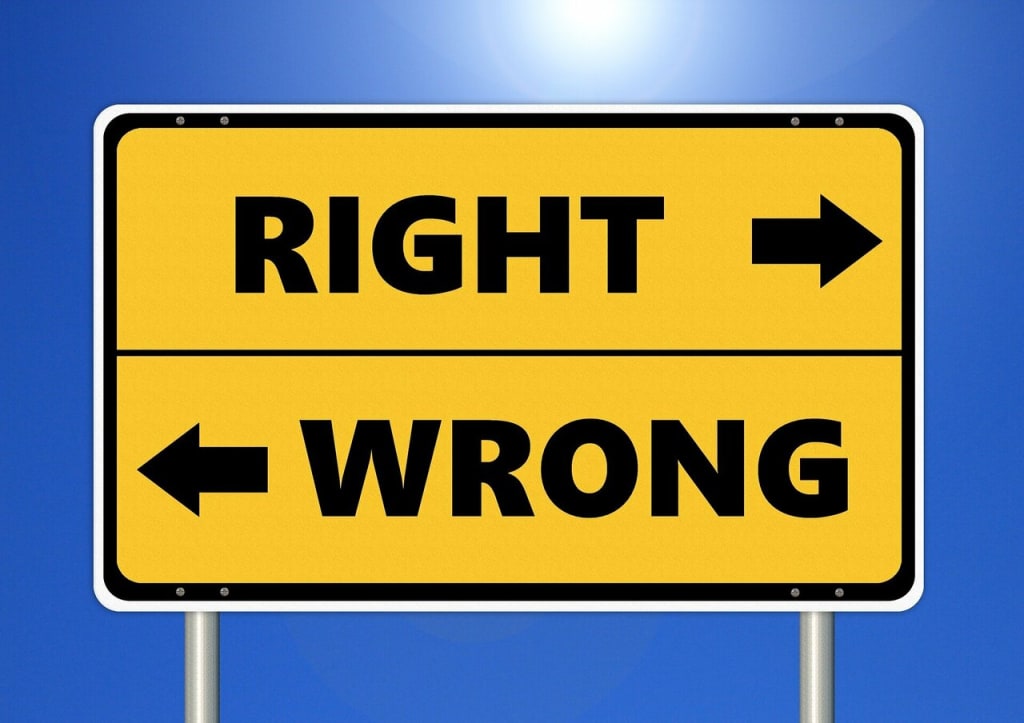
Morals in the modern world are often shaped by a complex interplay of cultural, social, and individual factors. The rapid pace of technological, political, and social change in recent years has brought about new moral dilemmas and challenges that were not previously imaginable.
Challenges to Morality in Modern World
One of the main challenges of modern morals is the diversity of per;spectives and values. With increasing globalization and cultural exchange, people are exposed to a wide variety of moral viewpoints, which can lead to confusion, conflict, and a sense of moral relativism. In addition, the rapid pace of change and the complex nature of modern problems can make it difficult to determine what is right or wrong, good or bad.
The rise of new technologies also raises moral questions. Artificial intelligence, genetic engineering, and biotechnology are all advancing rapidly and have the potential to change our lives in profound ways. However, they also raise important ethical questions about the nature of humanity, the meaning of life, and the limits of science and technology.
The internet and social media have also had a profound impact on modern morality, connecting people from all over the world and enabling the rapid spread of information and ideas. On the one hand, this can be a positive force for social good, promoting greater understanding and cooperation among people of different cultures and backgrounds. On the other hand, it also has its downsides, such as cyberbullying, online harassment and the spread of misinformation.
Insight to Moral Implication of Modernization
Another aspect to consider is the moral implications of economic, political and environmental issues. The growing wealth inequality, poverty, environmental degradation and conflicts are all complex problems with moral dimensions. They require us to think about the moral implications of our economic and political systems, as well as our individual actions and choices.
In light of these challenges, it is important for society to have ongoing, open, and respectful dialogues about morality and its role in our personal and collective lives. These conversations can help to foster greater understanding and empathy among people of different backgrounds and perspectives, and to find common ground in our shared humanity. It's also important to recognize that morality is not something that can be definitively answered or imposed by one group, but it's a ongoing process of reflection, discussion and refinement.
In conclusion, morality in the modern world is a complex and dynamic concept that is shaped by a wide variety of factors. It is important for individuals and society as a whole to actively engage in ongoing dialogues about morality, in order to better understand the moral dilemmas and challenges that we face and to find ways to live in a way that is consistent with our overall moral values and principles.
Common Good Morals in World
Good morals refer to the principles or rules that govern human behavior and determine what is right or wrong, good or bad. Some common examples of good morals include:
- Honesty: being truthful and straightforward in one's words and actions
- Fairness: treating others equitably and without bias
- Respect: treating others with dignity and courtesy
- Responsibility: being accountable for one's actions and decisions
- Empathy: understanding and sharing the feelings of others
- Compassion: showing concern and care for others, especially those who are suffering
- Gratitude: being thankful for what one has and expressing appreciation to others
- Forgiveness: letting go of resentment and anger towards those who have wronged us
- Integrity: being true to oneself and one's values, and doing the right thing even when no one is watching
It's important to note that these principles can be expressed differently across cultures and societies, but the underlying principle will be the same. Moreover, these principles are not just relevant in personal conduct, but also in professional and societal interactions. For example, a honest and fair business person can create trust and respect with clients and colleagues, A politician with integrity will create a more just and honest society, while a teacher with empathy can create a more inclusive and understanding learning environment.
It is also worth noting that while these are all considered good morals, they may be balanced against other moral considerations. For example, honesty may be balanced against the need to protect someone's privacy, or fairness may be balanced against the need to punish someone for a wrongdoing. As with most aspects of morality, the concept of "good" morals, is context dependent and a subject to ongoing discussion and refinement
About the Creator
Keep reading
More stories from Hafiz Suboor and writers in Humans and other communities.
"Beyond Black and White: Uncovering the Gray Area of Morality"
Morality refers to a set of principles or rules that govern human behavior, determining what is right or wrong, good or bad. The concept of morality is central to many philosophical, religious, and cultural traditions, and it plays a crucial role in shaping our personal values and the way we interact with others.
By Hafiz Suboor3 years ago in Humans
The Archivist of the Invisible: How Bill Luster’s Notebooks Became the Conscience of a Courtroom
The untold true story of Bill Luster, the reporter whose meticulous archiving of witness statements and police notes helped overturn wrongful convictions in the Midwest when the legal system had moved on.
By Frank Massey 7 days ago in Humans


Comments (1)
nicely written