
NATO’s Core Clauses: Understanding Article 4 and Article 5
How NATO’s most critical articles shape collective security, crisis response, and the future of global defense.

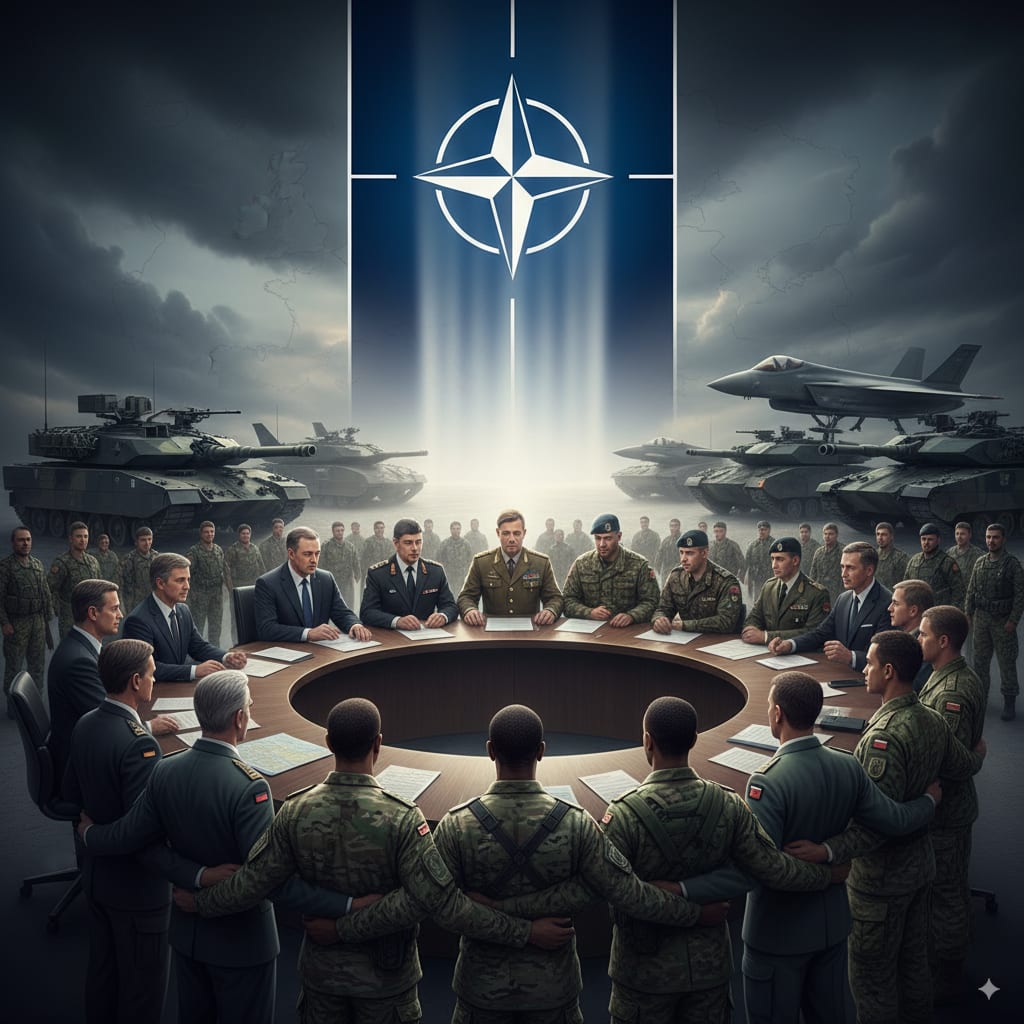
NATO’s Core Clauses: Understanding Article 4 and Article 5
Since its founding in 1949, the North Atlantic Treaty Organization (NATO) has been the backbone of Western security. Its strength lies not only in the military power of its member states but also in the legal framework that binds them together. Two clauses of the NATO Treaty—Article 4 and Article 5—stand at the heart of this framework. They are the cornerstones of collective security, ensuring that no member stands alone in times of crisis or attack.
Article 4: Consultation in Times of Threat
Article 4 is often described as NATO’s “early warning mechanism.” It states that whenever a member feels its security, political independence, or territorial integrity is under threat, it can call for consultations with other allies.
This doesn’t mean automatic military action. Instead, it opens the door to urgent discussions, intelligence sharing, and potential coordination of responses. Article 4 allows NATO to act before a threat escalates into an outright attack.
Historical Use of Article 4:
Turkey (2003, Iraq War): Turkey invoked Article 4 to discuss possible spillover threats from Iraq. NATO responded by sending surveillance planes and defense systems to help protect Turkish territory.
Eastern Europe (2014, Ukraine Crisis): After Russia’s annexation of Crimea, Poland and the Baltic states triggered Article 4 consultations, leading to greater NATO presence in Eastern Europe.
Turkey (2022, Ukraine War fallout): Turkey again requested consultations as Russia’s war in Ukraine raised regional instability.
These examples show that Article 4 is about prevention, unity, and reassurance. It ensures that allies listen to each other before crises spiral out of control.
Article 5: The Collective Defense Clause
If Article 4 is the consultation tool, Article 5 is NATO’s shield. It states that an armed attack against one NATO member “shall be considered an attack against them all.”
This principle of collective defense is NATO’s strongest deterrent. Any potential aggressor knows that attacking one ally will trigger a response from 31 countries. However, the form of response is flexible—each member decides how to contribute, whether through military force, logistics, or political support.
The Only Invocation of Article 5:
Remarkably, Article 5 has only been used once in NATO history—after the September 11, 2001 terrorist attacks on the United States. Within 24 hours, NATO declared the attacks an assault on all members. NATO forces soon deployed AWACS surveillance planes to patrol American skies and later joined military operations in Afghanistan.
Although Article 5 has not been frequently invoked, its deterrent effect is enormous. For decades, it has kept potential aggressors from directly attacking NATO members, especially in Europe.
The Balance Between Article 4 and 5
Together, Articles 4 and 5 form a continuum of defense. Article 4 is the diplomatic stage—an opportunity to prevent escalation and reinforce solidarity. Article 5 is the ultimate guarantee—collective military action if prevention fails.
For smaller NATO states like the Baltic countries, Article 4 provides reassurance that their concerns will be heard. For larger states like the United States or the United Kingdom, Article 5 ensures that allies will stand beside them in moments of crisis.
Modern Challenges
The rise of cyber warfare, hybrid threats, and terrorism complicates how NATO applies Articles 4 and 5. What counts as an “armed attack” in the digital age? If a NATO state suffers a crippling cyberattack, does Article 5 apply?
NATO has already declared that cyberattacks could trigger Article 5 if they cause significant damage, but much depends on political will. Similarly, disinformation campaigns and economic coercion often fall into a gray zone better suited for Article 4 consultations than Article 5 responses.
Why They Matter Today
With tensions rising between NATO and Russia, especially after the war in Ukraine, Articles 4 and 5 are more relevant than ever. Eastern European states rely heavily on Article 4 consultations to raise awareness of Russian troop movements or hybrid threats. At the same time, Article 5 stands as the ultimate deterrent, ensuring that no NATO member is left vulnerable.
The strength of these articles lies not in how often they are used but in the trust they symbolize. NATO works because its members believe that consultation will happen in crises and that defense will follow if deterrence fails.
Conclusion
NATO’s Articles 4 and 5 represent two sides of the same coin: diplomatic consultation and collective defense. Article 4 ensures unity in the face of threats, while Article 5 guarantees that aggression against one is met with the strength of all.
As global challenges evolve—from conventional warfare to cyber threats—these clauses remain NATO’s anchor. They not only protect members but also project stability worldwide, reminding both allies and adversaries that NATO is more than an alliance—it is a promise of solidarity.
About the Creator
Wings of Time
I'm Wings of Time—a storyteller from Swat, Pakistan. I write immersive, researched tales of war, aviation, and history that bring the past roaring back to life
Keep reading
More stories from Wings of Time and writers in Humans and other communities.
U.S. Aircraft Aid Pakistan’s Flood Victims
Wings of Hope: U.S. Aircraft Aid Pakistan’s Flood Victims A Lifeline in Crisis When disaster strikes, the quickest help often comes from beyond borders. Pakistan’s recent floods were among the worst in its history—millions were displaced, villages wiped away, farmland destroyed, and critical infrastructure swept aside. In this desperate situation, the United States extended a helping hand by sending aircraft and logistical support for relief operations. This timely intervention not only saved lives but also highlighted the strength of international solidarity in moments of tragedy.
By Wings of Time 4 months ago in Humans
Overkill
Love, love, love. We love everything. We love our dogs, our cats, our homes. We love our cars, our new snowboard, this new book. Love. The word used to mean something. One did not use that word for mundane things. It was revered and used in beautify longing poetic verse. Some of the most prolific writers, wrote sonnets, lyrics, odes, to the emotion of love, once saved and cherished for a one and only. Now it’s used like the word like, but a little stronger.
By Alexandra Grant4 days ago in Humans
Ludacris and Nelly draw backlash over bookings at MAGA-coded music festival
Ludacris and Nelly headlining a mostly right-wing event is good for them. It’s also great for the genre of hip hop. The two rap veterans have showcased their talents on other stages. Why can’t they perform for mostly MAGA folks and grab that bag?
By Skyler Saunders4 days ago in Beat


Comments
There are no comments for this story
Be the first to respond and start the conversation.