
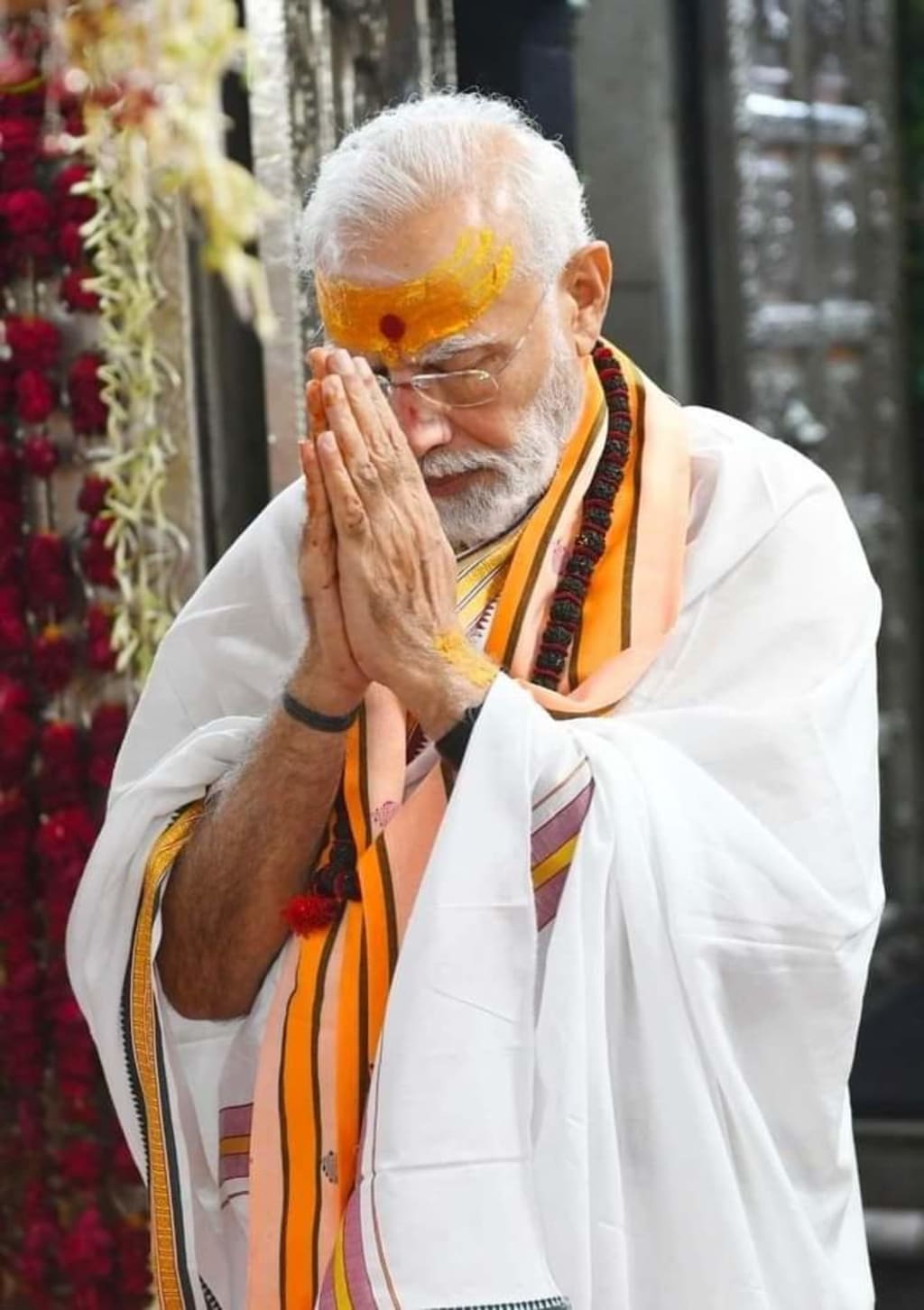
Narendra Modi is an Indian politician who has been a prominent figure in Indian politics for several years. Born on September 17, 1950, in Vadnagar, Gujarat, he is known for his charismatic leadership and effective governance. Modi has been associated with the Bharatiya Janata Party (BJP), a right-wing political party in India, and has held various roles within the party before becoming the Prime Minister of India.
Modi's political journey began in the early 1970s when he joined the Rashtriya Swayamsevak Sangh (RSS), a right-wing Hindu nationalist organization. He worked as a volunteer for the RSS and later became a full-time pracharak (organizer). His dedication and organizational skills soon caught the attention of senior leaders within the BJP, and he was given opportunities to contribute to the party's growth.
In 2001, Narendra Modi became the Chief Minister of Gujarat, a state in western India. During his tenure, he focused on infrastructure development, attracting investment, and promoting Gujarat as an investment-friendly destination. His leadership was often praised for its effectiveness in bringing about economic growth in the state.
However, Modi's tenure as Chief Minister was not without controversy. In 2002, Gujarat witnessed communal riots that resulted in widespread violence and loss of lives. Critics accused the state government of not doing enough to prevent the riots and criticized Modi's handling of the situation. The incident continued to be a topic of debate and a point of contention in Indian politics.
Despite the criticism, Modi's popularity within the BJP grew, and in 2013, he was declared the party's prime ministerial candidate for the 2014 general elections. During the election campaign, he projected himself as a leader capable of delivering decisive and efficient governance. His campaign, focused on economic development and a promise of "Achhe Din" (Good Days), struck a chord with many Indians who were looking for a change.
In the 2014 Lok Sabha elections, the BJP, under Modi's leadership, secured a historic victory, winning a majority on its own. Narendra Modi was sworn in as the 14th Prime Minister of India on May 26, 2014. His government set out to implement various initiatives, including "Make in India" to boost manufacturing, "Digital India" to promote technology adoption, and "Swachh Bharat" to improve sanitation and cleanliness.
During his first term as Prime Minister, Modi's government focused on economic reforms and initiatives to enhance India's global standing. The Goods and Services Tax (GST), one of the most significant tax reforms in India's history, was introduced during this period. Modi also engaged in numerous diplomatic efforts to strengthen India's ties with other nations and promote its interests on the international stage.
In 2019, Narendra Modi led the BJP to another resounding victory in the general elections, securing a second term as Prime Minister. His government continued to work on the initiatives started during his first term and introduced new schemes to address various social and economic challenges.
One of the notable projects launched during his second term was the Ayushman Bharat scheme, which aimed to provide health insurance coverage to millions of vulnerable Indians. The government also initiated the construction of the Ram Temple in Ayodhya, a long-standing demand of Hindu groups that had been a subject of legal and political dispute for decades.
Throughout his tenure as Prime Minister, Narendra Modi's leadership style and policies have sparked both admiration and criticism. Supporters praise his commitment to development and his efforts to improve India's global standing, while critics raise concerns about issues like religious polarization and freedom of speech.
As my knowledge is limited to September 2021, I cannot provide information on events or developments related to Narendra Modi after that date. To get the most up-to-date information, I recommend consulting reliable news sources or official government websites.
About the Creator
Keep reading
More stories from PAVAN LAHANE and writers in Humans and other communities.


Comments
There are no comments for this story
Be the first to respond and start the conversation.