
Mystical Tomb of an Ancient Pharaoh
A stunning digital artwork depicting a serene ancient Egyptian burial chamber inspired by Tutankhamun’s tomb. The golden sarcophagus sits at the center of a richly decorated room, surrounded by hieroglyphics and colorful frescoes. The space glows with warm golden light, showcasing ceremonial artifacts such as vases, chests, and intricate treasures. This artwork captures the mystery and splendor of ancient Egyptian heritage, offering a timeless and enchanting view of its burial traditions.

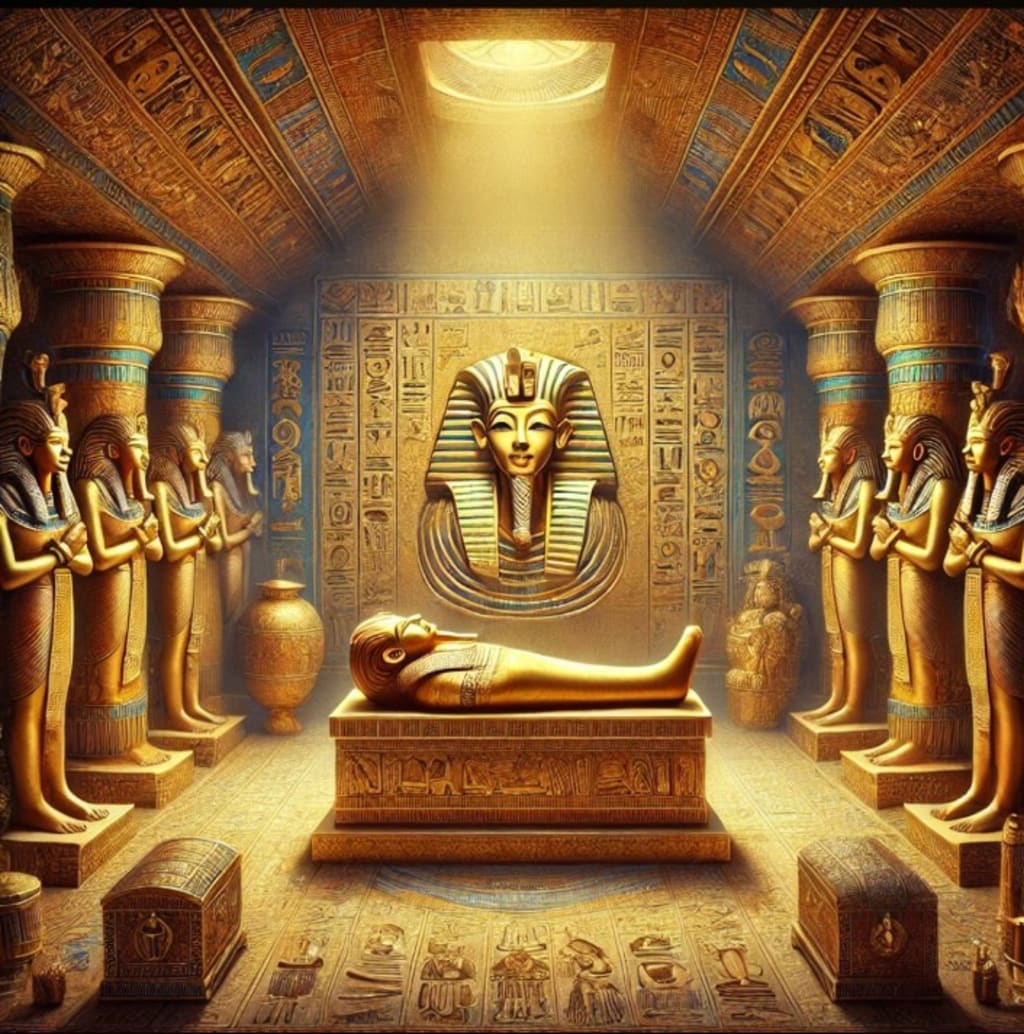
Tutankhamun: The Golden King of Ancient Egypt
Tutankhamun, one of the most renowned figures of ancient Egypt, has captured the imagination of millions due to his enigmatic life and the spectacular treasures buried with him. Though he ruled for a short period during the 18th Dynasty, his legacy transcends time, symbolizing the splendor and mystery of the ancient world. This article delves into the life of Tutankhamun, the incredible discovery of his tomb, and the cultural significance that continues to surround him.
A Young Ruler
Tutankhamun ascended the throne of Egypt as a child, around the age of 8 or 9. He ruled during the New Kingdom, a period of wealth and cultural achievement for Egypt. His reign, though brief, marked a time of transition as Egypt recovered from the tumultuous religious reforms of his predecessor. Tutankhamun is often associated with the restoration of traditional Egyptian culture and religious practices, earning him a revered place in history.
The Discovery That Shook the World
Tutankhamun's fame skyrocketed in the modern era with the discovery of his tomb in 1922 by British archaeologist Howard Carter. The tomb, located in the Valley of the Kings, was remarkable for being nearly intact, a rare find given the rampant tomb raiding of ancient Egyptian burial sites. The discovery unveiled over 5,000 artifacts, each a masterpiece that provided unparalleled insight into the art, culture, and daily life of ancient Egypt.
Among the most iconic items found was the golden death mask of Tutankhamun, a symbol of his divine status and eternal journey. Other treasures included ornate chariots, jewelry, ceremonial beds, and everyday items like board games, offering a glimpse into the opulent lifestyle of the pharaohs.
The Significance of the Burial Practices
Ancient Egyptians believed in the afterlife and the need to prepare for it meticulously. Tutankhamun's tomb reflects this belief system, with every item serving a purpose in his journey to the afterlife. The walls of the burial chamber were adorned with vibrant paintings depicting scenes from the "Book of the Dead," a guide to navigating the afterlife.
The treasures found in the tomb also highlight the incredible craftsmanship of ancient Egyptian artisans. From the intricate goldsmithing of jewelry to the vibrant hues of painted objects, each artifact stands as a testament to the advanced skills and artistic vision of the time.
The Mysteries Surrounding His Death
Tutankhamun's death remains one of the great mysteries of ancient history. He passed away at around 18 or 19 years old, and theories about the cause range from genetic disorders to injuries sustained in an accident. Modern studies, including CT scans and DNA analysis, suggest that he may have suffered from multiple health issues, including a bone disease and malaria, which could have contributed to his untimely demise.
The abruptness of his death is reflected in the hasty construction of his tomb. Unlike the grand tombs of other pharaohs, Tutankhamun's burial site is relatively modest, leading experts to believe it was initially intended for someone else.
Cultural and Historical Impact
The discovery of Tutankhamun's tomb was not just an archaeological milestone; it also had a profound impact on popular culture and the field of Egyptology. The "curse of the pharaohs," a myth perpetuated by the deaths of individuals connected to the tomb's excavation, added an aura of mystery and intrigue.
In the decades since its discovery, the treasures of Tutankhamun have been displayed in exhibitions worldwide, drawing millions of visitors and reigniting interest in ancient Egyptian civilization. The boy king has become a global icon, representing the richness of Egypt's heritage and the allure of its ancient past.
Legacy and Lessons
Tutankhamun's life, though short, offers a window into the complexities of ancient Egyptian society. His tomb serves as a time capsule, preserving the artistry, beliefs, and daily life of a civilization that thrived thousands of years ago. For modern audiences, his story is a reminder of the enduring human fascination with legacy, mortality, and the mysteries of the ancient world.
In conclusion, Tutankhamun is more than just a historical figure; he is a symbol of the timeless allure of ancient Egypt. His treasures, tomb, and legacy continue to inspire awe and curiosity, ensuring that his story will be told for generations to come.
About the Creator
Say the truth
"Say the Truth: Explain Everything in the World" is your trusted source for uncovering facts and exploring the wonders of history, science, technology, and beyond. We simplify complex ideas and reveal truths to inspire curiosity .
Keep reading
More stories from Say the truth and writers in Humans and other communities.
"Black Rock: The Financial Powerhouse of the Future"
The Acceleration of Black Rock: A All-around Advance Powerhouse in 2024 In the activating apple of accounts and investment, few names bell as effectively as Black Rock. As of 2024, Black Rock stands alpine as a all-around leader, abstraction banking strategies, allegorical economies, and influencing accumulated governance. This blog delves into the company's arresting journey, its awe-inspiring achievements, and its abstruse appulse on the all-around economy, authoritative it a acute apprehend for anyone agog on compassionate avant-garde finance.
By Say the truth about a year ago in Humans



Comments
There are no comments for this story
Be the first to respond and start the conversation.