
My Childhood Was Measured in Silences
The quiet that raised me, shaped me, and never let me forget
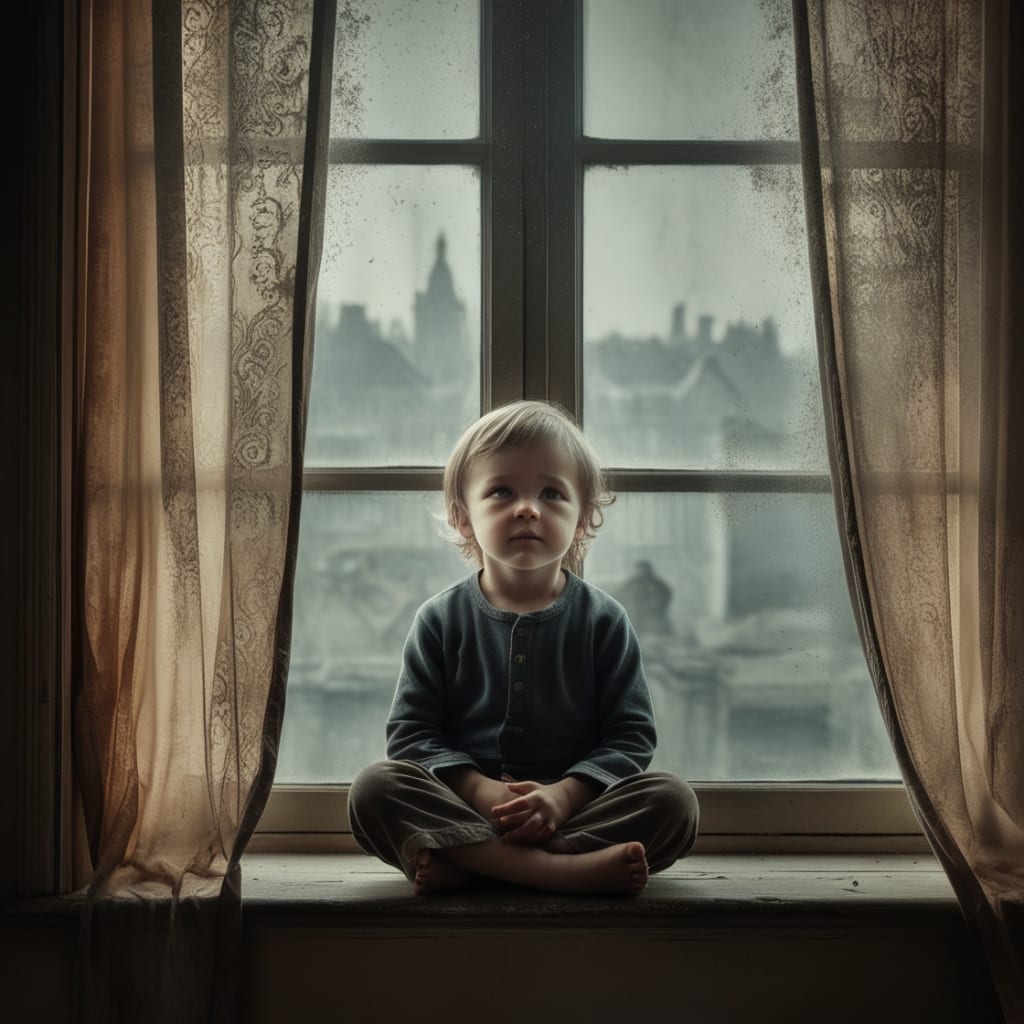
Some children remember the songs their mothers sang. Others recall bedtime stories, sibling laughter, kitchen chaos.
I remember silence.
Not the peaceful kind. Not the hush of contentment after a long day. Mine was the kind of silence that seeps into walls, that hangs in the air like fog, dense and unspoken.
A silence that meant something had happened, or was about to.
Our home wasn’t loud with rage or joy. It wasn’t loud at all. The TV murmured in the background most days, tuned to something no one was watching. The clatter of dishes was the most consistent soundtrack of our lives. Conversations were short, functional.
Pass the salt.
Is your homework done?
Bedtime.
I was five the first time I understood that silence had a temperature. It could be cold, like the kitchen after my father left for work, or hot and stinging, like when my parents argued in whispers, careful to keep their voices just below the doorframe.
I pressed my ear to that door anyway. The silence after those fights always lasted longer than the fights themselves.
At school, I envied noisy kids. The ones who laughed from their bellies. Who ran wild across playgrounds and told loud jokes and got scolded for being too much.
I was never too much.
I was quiet. Obedient. A shadow that passed without notice.
At parent-teacher meetings, the word "reserved" showed up on every report.
“She’s quiet,” they’d say, smiling like that was a virtue.
No one asked why.
Our family photo albums are filled with stiff smiles. You’d think we were content. Maybe we were. But between the snapshots were the long stretches of nothing. The way we’d sit at dinner with only forks speaking. The way birthdays came and went without candles or songs.
Once, I asked for a party. Just once.
My mother’s silence was the answer.
When my grandmother died, I watched my mother cry behind a closed bathroom door. It was the only time I heard her sob. She emerged ten minutes later, dry-eyed, composed, and wordless.
We didn’t talk about grief. Or love. Or loneliness.
We didn't talk.
Instead, I learned to read people like I read books—looking for clues, interpreting pauses. I could tell my father was upset by the way he placed his keys on the counter.
I knew my mother was hurting when she cleaned the same spot twice.
They never said it. But I knew.
As I grew older, I started filling notebooks with words I couldn’t say. Poems. Letters to no one. Dialogues I dreamed of having.
In my room, I talked to the air. Practicing the voice I didn’t get to use.
And then, at sixteen, I met someone whose house sounded like music. A friend whose family argued over dinner, laughed in the living room, hugged without occasion. I didn’t know what to do with all that noise. It overwhelmed me.
And then, quietly, I began to crave it.
It took years to unlearn the idea that silence meant safety. That speaking was dangerous. That emotions were best hidden.
I still hesitate sometimes when someone asks, “How are you really?”
I still flinch when I hear someone yell—even in joy.
But I’ve learned to let my voice stretch. I’ve learned to say things like “I miss you” and “That hurt” and “I need this.”
Small phrases. But huge battles won.
Now, in my own home, I keep the windows open. I play music while I cook. I hum when I clean. Sometimes I dance barefoot on the tiles, just because I can.
I talk to my plants. I talk to myself.
I don’t fear my own voice anymore.
My parents are older now. We still sit in silence, sometimes. But occasionally, I speak first. I ask questions. I offer stories. And slowly, slowly, they’re learning to respond.
My mother told me she liked my writing once. That was it. But it felt like thunder.
Some people remember their childhoods in birthday parties, summer trips, bedtime kisses.
I remember mine in the quiet between those things.
The moments where nothing was said—but everything was felt.
The silence didn’t break me.
It shaped me.
And now, I choose what I fill it with.
About the Creator
Keep reading
More stories from Abuzar khan and writers in Humans and other communities.
A Different Kind of Freedom: Reflections on Women’s Day
Every year on the 8th of March, the world fills with slogans about women. Social media lights up with bright posters, companies post polished messages, and speeches echo the same familiar phrase: “Celebrate women’s freedom.”
By Aarsh Malik6 days ago in Humans



Comments
There are no comments for this story
Be the first to respond and start the conversation.