
Grandma’s Kitchen Was My First Safe Place
In the scent of cinnamon and the sound of sizzling onions, I found safety, love, and a sense of home.
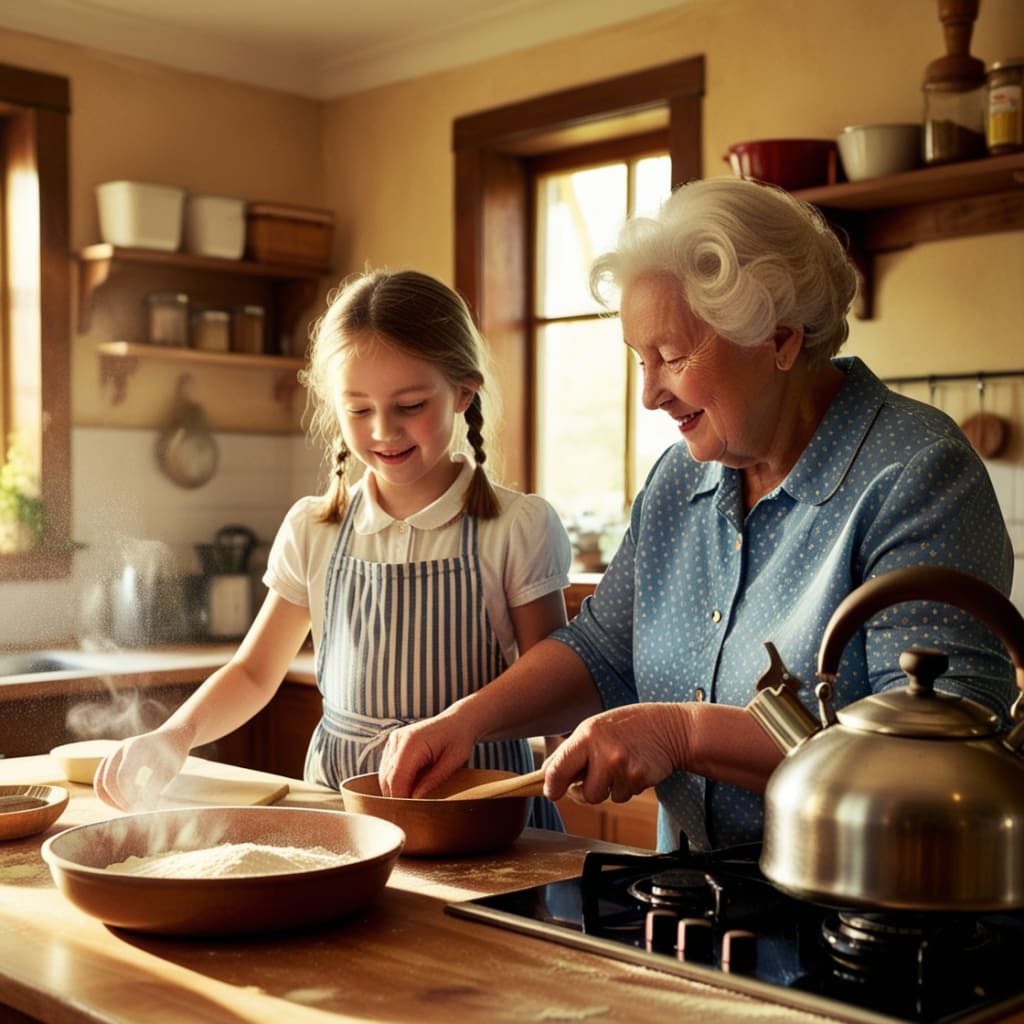
There was a certain rhythm to Grandma’s kitchen. It wasn't just about the clatter of pans or the hiss of onions meeting hot oil. It was the heartbeat of my childhood — a place where the world outside could not touch me.
I was seven when I first moved in with Grandma. My parents were going through a rough divorce, and the yelling became too loud for my small ears to bear. Grandma’s house, with its faded wallpaper and creaky floors, became my refuge.
Every morning, I would wake to the aroma of something warm and welcoming. Sometimes it was cinnamon rolls rising in the oven. Other days, it was paratha sizzling in a pan. But every day, without fail, it smelled like love.
“Come help me, sweetheart,” she would say, her voice soft like the butter she spread on bread.
I didn’t know much about cooking back then, but I knew how to stir. I knew how to laugh when flour flew into the air. I knew how to listen when Grandma told me stories — about her youth, about Grandpa, about the war, about hope.
That kitchen became more than a place to eat. It became a place where my worries melted. When kids at school teased me for my stutter, Grandma’s kitchen told me I spoke just fine. When I cried after failing a test, the sweet scent of her apple pie told me I was still enough.
One day, I asked her why she cooked so much.
“Because feeding someone is the easiest way to show you love them,” she said. “Especially when words fall short.”
As I grew older, I realized how much she was carrying. A bad knee, a broken heart from years ago, a loneliness she never spoke about. Yet she never let those burdens spill into the kitchen. That room remained untouched by the world’s pain.
When I turned thirteen, I made her pancakes for the first time. Burnt edges, lumpy batter, and far too much syrup — but she ate every bite with joy in her eyes. That morning, I realized she had given me something far more powerful than recipes. She had given me confidence.
Years passed. I moved out for college, and the visits became less frequent. But every time I came home, the kitchen was still the same. Her hands had grown slower, her stories shorter, but the warmth never left.
And then came the day I found her sitting quietly, staring out the kitchen window, not remembering how to boil tea.
Alzheimer’s.
The woman who remembered every pinch of spice and every crack in my voice had started to forget. Slowly, painfully, she drifted from me. First, it was names. Then faces. And finally, one day, the kitchen.
That morning, I stood in her kitchen alone, trying to recreate her favorite dish — aloo gosht. I failed miserably. The flavor was off. The texture wrong. But when I brought it to her, she smiled faintly and said, “Smells like home.”
Tears spilled down my cheeks.
She didn’t remember the recipe. Or the stories. Or even that I was her granddaughter. But some part of her still remembered love — the kind cooked into meals and stirred into soups.
Now, Grandma’s kitchen is mine. After she passed, I moved into her house. I kept the same curtains, the same spice rack, the same stories hanging in the air. I cook for others now — for neighbors, for friends, for a future family I hope to have.
And every time someone smiles and says, “This tastes like love,” I know she’s with me
About the Creator
Keep reading
More stories from Abuzar khan and writers in Humans and other communities.
The 6:17 to Somewhere New
Marc hadn’t taken the 6:17 PM train in nearly two years. That train used to be his daily escape—his rhythm, his ritual—until one day it quietly became his cage. Back when he worked in the glass-and-steel tower downtown, Marc believed in rhythms. Wake up. Coffee. Commute. Keyboard clatter. Lunch break. More clatter. Train home. Repeat. The predictability gave him purpose, or at least the illusion of it.
By Abuzar khan7 months ago in Humans
The Process of Strategic Planning: A Step-by-Step Guide That Actually Works
Strategic planning isn’t just a corporate buzzword—it’s the backbone of long-term success for any business, startup, or even personal brand. Without a clear strategy, you’re not moving forward; you’re just staying busy.
By M Yawer Yousaf6 days ago in Humans
Miss Persephone's Manual to a Seemingly Ordinary Life
Miss Persephone was found at the dining table, her blue eyes swollen, her tears arriving and retreating like the tides of the ocean. Earlier that day, her family had visited her in the retirement home where she had lived for eight years. It was her eightieth birthday.
By Imola Tótha day ago in Fiction



Comments
There are no comments for this story
Be the first to respond and start the conversation.