
Muhammad Yunus Returns: A Nation Reborn Under the Guidance of a Nobel Laureate
Curriculum Vitae of Nobel Peace Laureate Professor Muhammad Yunus, Founder of Grameen Bank, Dhaka, Bangladesh.

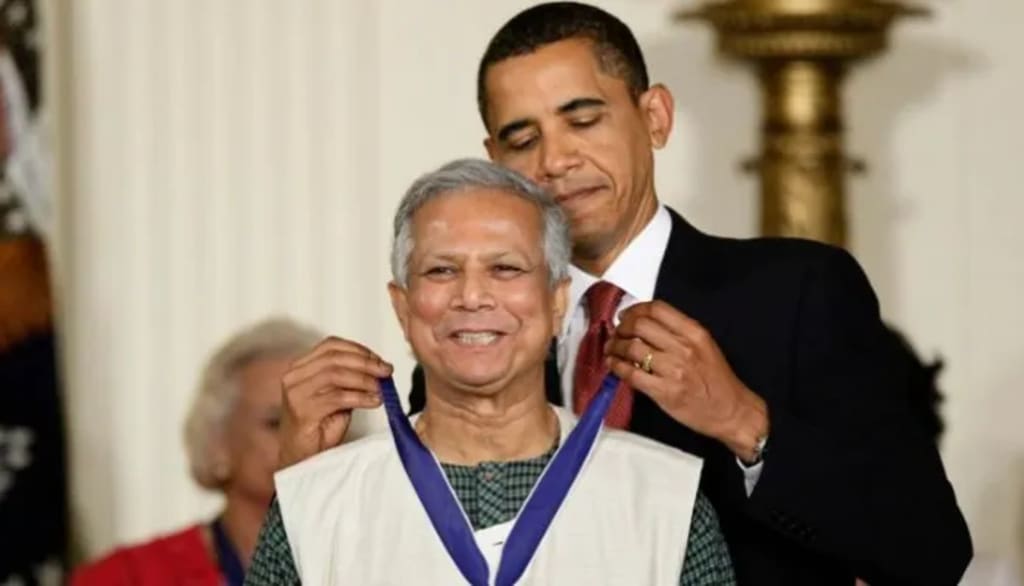
In a moment that has stirred both national pride and global interest, Bangladesh is undergoing a historic transformation. The nation was at a crossroads after a student-led uprising overthrew the authoritarian prime minister last year. In a decisive and symbolic act, the people turned to one of their most celebrated sons—Nobel Peace Prize laureate Muhammad Yunus—to help chart a path toward democracy, justice, and a renewed national identity.
Yunus, a world-renowned economist and social entrepreneur, is no stranger to leading with purpose. He established the Grameen Bank a decade earlier, establishing microfinance as a global industry. His belief was simple yet revolutionary: if the poor—particularly women—were given access to small loans, they could lift themselves out of poverty and reshape their communities. Grameen Bank empowered millions of families under his leadership, with an astonishing 97% female loan recipients. These were lifelines as well as transactions. Yunus’s work earned him the Nobel Peace Prize in 2006, and his ideas became a global movement. But beyond his accolades and influence abroad, Yunus has always remained deeply connected to the soul of Bangladesh. He has now stepped forward once more in the midst of his nation's need—not as an academic or banker, but as a leader tasked with repairing a broken system and restoring a nation's democratic spirit. The uprising that led to the regime’s fall was driven by Bangladesh’s youth, particularly university students who refused to accept censorship, corruption, and repression as the norm. Their protests, fueled by social media and a groundswell of civic support, became impossible to ignore. What began as a local demonstration quickly morphed into a national movement. Peaceful yet powerful, these students called not only for the resignation of a dictator, but for a reimagining of what Bangladesh could be.
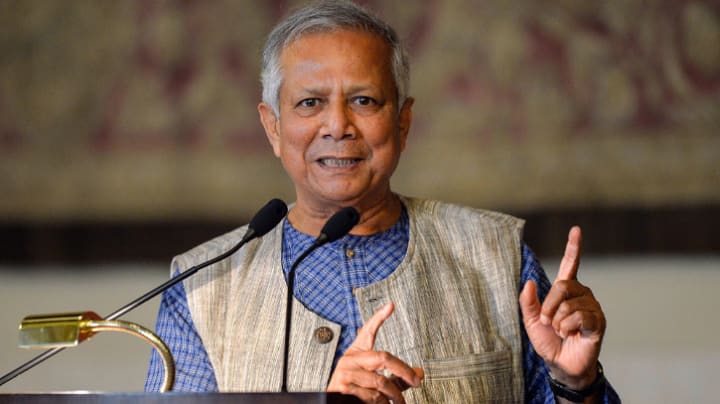
Yunus answered their call, and his presence alone gave the fragile transition a sense of legitimacy and hope. In his first public address after assuming a leadership role in the interim government, Yunus acknowledged the courage of the youth and vowed to build a future where their voices would no longer be silenced.
“This is not just about politics,” Yunus declared. “This is about dignity, equality, and the right of every citizen to live without fear. Bangladesh ought to have its future shaped by the people, not by those in power. Under Yunus’s guidance, the transitional administration has begun to implement sweeping reforms. Independent media outlets, previously banned or censored, are back on air. As a result of the release of political prisoners, new investigations into past violations of human rights are underway. He has also prioritized collaboration with international watchdogs and democratic allies, ensuring that transparency and accountability remain at the forefront of the rebuilding process.
But Yunus is not doing this alone. He has created a transitional advisory council composed of educators, civil society leaders, economists, and youth representatives. This inclusive approach reflects his deep-rooted belief in participatory governance and grassroots empowerment—principles that fueled his earlier success with microfinance and are now shaping his political philosophy.
People from all over the world have rallied around him. Hillary Clinton recently praised Yunus's leadership after working with him when he brought the Grameen model to Arkansas. “I have seen firsthand the transformative power of Muhammad Yunus’s vision,” she said. He has changed people's lives, established communities, and inspired a generation. Now, he is helping to rebuild a nation.”
The road ahead will not be easy. Institutions, public trust, and the economy have all been severely damaged by decades of authoritarianism. However, under Yunus's leadership, hope has become a reality. It is alive in the streets of Dhaka, in the eyes of students who once protested for change, and in the quiet resilience of everyday citizens who now believe their voices matter.
Muhammad Yunus has always held the belief that poverty, like injustice, is a human-made construct rather than something that will always happen. In addition, he is now empowering an entire nation to reclaim its democracy, just as he did in the past by providing the poor with the means to escape their economic despair. "We must build a new Bangladesh—not just free in name, but free in reality," he said. a place where everyone can dream without fear, opportunity is shared, and justice reigns supreme. The world stands by as Bangladesh emerges from oppression's ashes, not only in solidarity but also in admiration of a nation reborn under the quiet but unwavering leadership of one of its greatest sons ever.
About the Creator
Putul
Storyteller by craft, writer by choice. Putul specializes in creating content that informs and sparks thought, one article at a time.
Minnesota and Illinois Invoke the 10th Amendment in Lawsuits to Block Federal Agents in Their Cities — Here’s Why That Matters
States Push Back Against Federal Enforcement Minnesota and Illinois have launched high-profile lawsuits invoking the 10th Amendment of the US Constitution in an effort to block or limit the actions of federal agents—particularly immigration enforcement officers—operating within their cities. The legal challenges mark a significant escalation in the long-running conflict between state governments and Washington over who has the authority to enforce immigration laws and how far federal power can reach.
By Aarif Lashari4 days ago in Humans
How to Succeed at the Benson Directory®
Congratulations and welcome to the Benson Directory® employee #22391! As our newest call handler, you will have the privilege of speaking with dozens of unique and interesting people on a daily basis as well as the opportunity to earn bonuses for high performance. Contained within this handbook you will find a set of ease to follow instructions designed to help you settle in to your new role and begin paving the way to success.
By S. A. Crawford2 days ago in Fiction




Comments
There are no comments for this story
Be the first to respond and start the conversation.