
Misunderstanding
A friendship destroyed by a father’s anger and a single tragic moment.

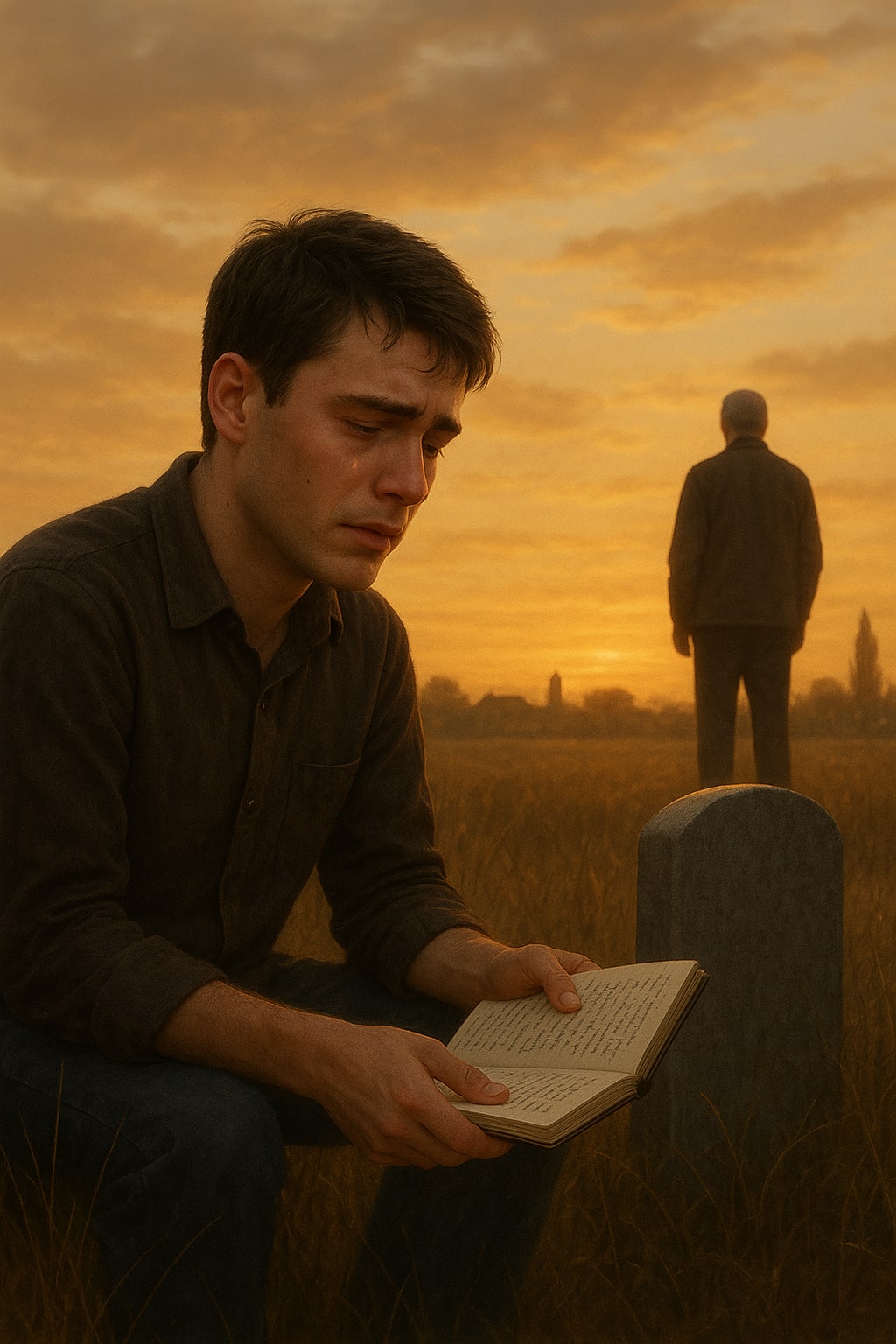
Today, when I sat beside Hassan’s grave, my eyes filled with tears, and my cheeks burned with emotion. I prayed for his soul, and then for a moment, I drifted so deep into memories that I forgot where I was.
Every word Hassan ever spoke, every joke, every laugh, his school days, our college life, and our playtime together—all flashed before me like scenes on a screen.
As I sat there, my friend Shahab placed a comforting hand on my shoulder. I smiled sadly through my tears and stood up to leave. But as I walked away, I couldn’t help looking back again and again, waving to a friend who would never wave back.
Childhood Companions
Hassan and I grew up together in Kharpoos. I was just eight days older than him. We lived on the same street, played in the same gardens, and even grew melons together.
When we were old enough to know right from wrong, we both joined the local government school and studied side by side until twelfth grade.
Every moment of my past is written with his name in it.
But alas—kindness and goodness rarely last forever.
Due to my family’s poverty, I couldn’t continue my studies. Hassan, however, got admission to Islamia College Peshawar. Despite his busy schedule and hostel life, our friendship never weakened. Whenever he returned home during breaks, he would spend most of his time with me. He often took my Pashto ghazals to college, showed them to professors and students, and proudly told me how much they appreciated my work.
He had even invited me to attend university poetry recitals several times, but fate and circumstances always kept me away.
The Ties of Love
My cousin Aliya, my maternal uncle’s daughter, was deeply fond of Hassan, and he shared the same affection for her. They often exchanged gifts through me.
Whenever Hassan brought gifts from the city, he would hand me a package and say softly,
“Take this to her… she’ll remember it later.”
Life seemed peaceful, almost perfect. But behind the smiles, a storm was quietly forming.
A Father’s Hardness
Hassan’s father, Uncle Nowruz, was a hardworking farmer—strong in body but harder in nature.
He had spent his entire life plowing the land, and years of toil had carved stubbornness into his soul.
He never smiled, never joked, and rarely showed affection.
Hassan often apologized to me for his father’s harshness, but I would reassure him,
“He’s still your father, my friend. Maybe he’s strict, but his words come from care.”
Still, Hassan’s home was not a place of peace. He stayed longer and longer at the hostel to escape the heavy silence of his father’s house.
The Night of the Wedding
A few days after his exams ended, there was a wedding in our village—our friend Salman’s. Hassan and I decided to organize a poetry recital that night. I invited several poets from nearby areas and prepared the stage with great excitement.
But Hassan seemed unusually quiet that day.
When I asked what was wrong, he sighed and said,
“Father doesn’t want me to go out tonight.”
Still, I could tell he longed to come. So I went to Uncle Nowruz myself and asked for his permission.
He frowned and said coldly,
“Poetry? That’s work for idle men. Hassan has been working all day—he needs rest, not foolishness.”
I couldn’t argue with him, so I left. Hassan looked disappointed but didn’t complain.
When the poetry recital began after the evening prayer, I noticed a familiar face among the crowd. It was Hassan—smiling, confident, his eyes bright with excitement.
He whispered to me,
“Don’t tell father I came.”
Then he went on stage and recited his poem.
The audience clapped. His words were powerful, filled with life and hope. For a brief moment, it felt like nothing could ever go wrong.
The recital ended past midnight. The guests began to leave. I stayed back to clean the hall while Hassan went home.
A Night of Tragedy
Moments later, the lights in the village flickered and went out.
Suddenly, I heard a faint noise from the direction of Hassan’s house—but I didn’t pay much attention. It was, after all, a wedding night.
Minutes later, my younger brother ran toward me, breathless and trembling.
“Khal Lala! Come quick—Hassan!”
I ran as fast as I could.
When I entered his house, I froze. Hassan was lying on the floor, covered in blood. His father’s two-barrel gun lay nearby.
Uncle Nowruz was screaming,
“Someone help! What have I done?”
The scene was unbearable.
Hassan’s body was still warm. He had been shot—mistaken for an intruder trying to sneak in through the courtyard wall.
Later, Uncle Nowruz told the police,
“I heard a sound on the wall. I thought it was a thief. I fired in fear… but it was my own son.”
The Weight of Misunderstanding
And now, years later, I sit by Hassan’s grave, still haunted by that night.
A father’s fear.
A friend’s silence.
A single misunderstanding that took a life—and broke a dozen hearts.
Moral:
Never let anger or assumptions decide your actions. One misunderstanding can destroy what love built in a lifetime.
About the Creator
Keep reading
More stories from shahkar jalal and writers in Humans and other communities.
The Human Heart of Sahl
Although Sahl’s family was full of ignorance and bad morals, Sahl stood out from the rest. He possessed a unique character, positive thinking, and a constant desire to benefit others. His other siblings were often taken to foreign wars. Wherever his brothers went, their names were known. Their hobbies — dogs, chickens, pigeons, and guns — had become a part of their lives.
By shahkar jalal4 months ago in Humans



Comments
There are no comments for this story
Be the first to respond and start the conversation.