
Missouri death row inmate Marcellus Williams was executed despite concerns over his innocence
Missouri executes a man for the 1998 killing of a woman despite her family’s calls to spare his life.

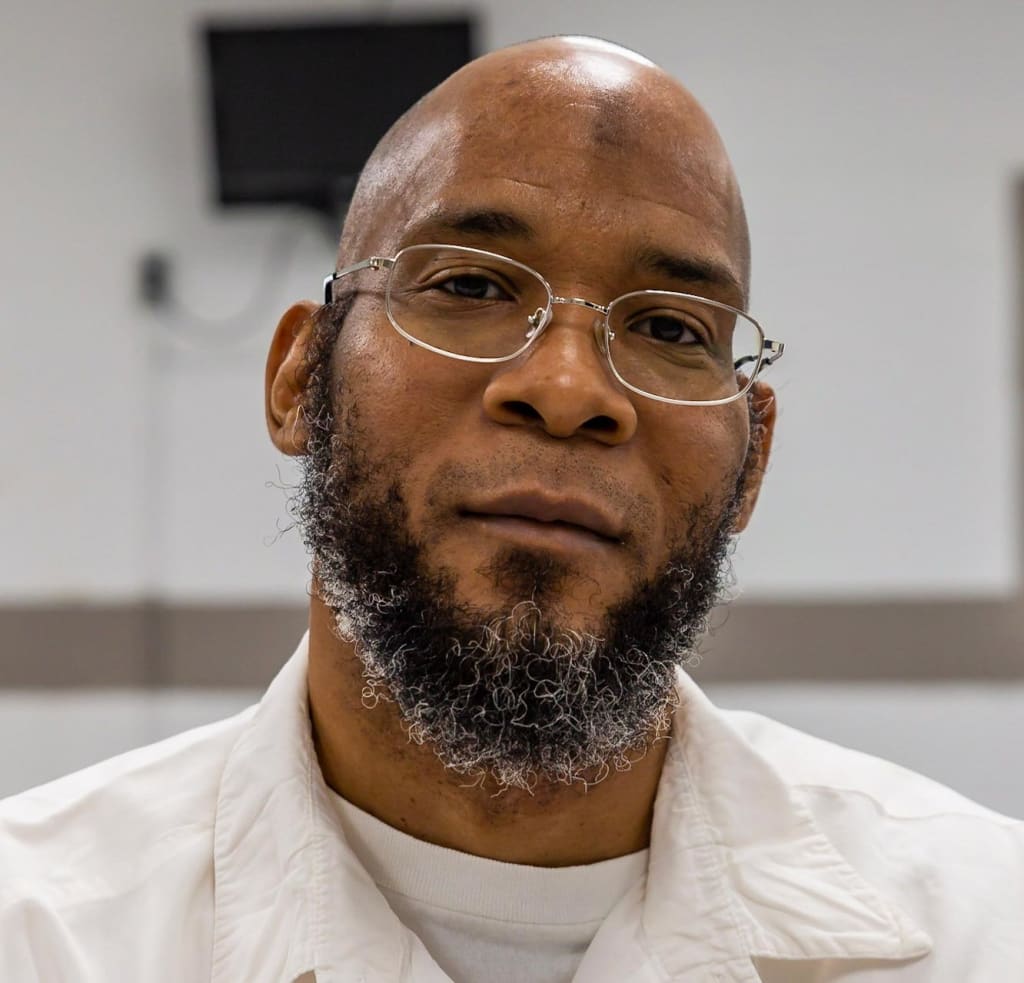
Marcellus Williams, a Missouri death row inmate, was executed on Tuesday, despite mounting concerns about his innocence from his legal team, a prosecutor in the case, and even the victim’s family. Williams, 55, had been convicted of the 1998 murder of Lisha Gayle, a former reporter for the *St. Louis Post-Dispatch*, and sentenced to death. However, new DNA evidence and growing doubt over his guilt led to widespread calls for clemency, all of which were ignored by the state in the final days leading up to his execution.
Williams’s final words were, “All praise be to Allah in every situation!!!” His Imam, Jalahii Kacem, visited him earlier in the day, and both Kacem and Williams’s son, Marcellus Williams Jr., were present in the execution room as officials administered a lethal injection at 6:10 p.m. CT. His last meal, served at 10:53 a.m., included chicken wings and tater tots. Williams’s death marked Missouri’s third execution of the year and the 15th in the U.S. It was part of a series of five executions scheduled across the country within a single week, beginning with Freddie Owens in South Carolina. Not long after Williams, Texas inmate Travis Mullis was also executed for the murder of his infant son.
In the days leading up to Williams’s death, his legal team and advocates delivered more than a million petitions to Missouri Governor Mike Parson, urging him to halt the execution. Among those who campaigned against Williams’s execution were high-profile figures such as British entrepreneur Richard Branson and U.S. Representative Cori Bush, a Democrat from Missouri. Despite these efforts, both Governor Parson and the Missouri Supreme Court declined to intervene, even as Williams’s clemency petition revealed that the family of the victim, Lisha Gayle, wanted his sentence commuted to life without parole.
In a last-ditch effort to save his life, Williams’s attorneys filed two emergency requests with the U.S. Supreme Court on Monday, highlighting new DNA evidence that they argued proved Williams’s innocence. Both requests were denied. However, three justices—Ketanji Brown Jackson, Elena Kagan, and Sonia Sotomayor—dissented from the second request, which specifically focused on DNA findings and statements from a prosecutor’s office indicating Williams may have been wrongfully convicted.
Williams’s legal team pointed to DNA evidence found on the murder weapon, a butcher knife, which did not match Williams. Instead, the DNA belonged to an unknown male profile, raising serious questions about whether Williams had committed the crime. Despite this, the courts refused to grant a hearing on the new evidence. In his ruling, St. Louis County Circuit Judge Bruce Hilton wrote, “There is no basis for a court to find that Williams is innocent, and no court has made such a finding. Williams is guilty of first-degree murder and has been sentenced to death.”
The complexity of Williams’s case deepened when officials from the prosecutor’s office filed a motion to vacate his conviction based on the new DNA findings. Initially, a trial judge approved the motion, seemingly opening the door for Williams’s sentence to be reconsidered. However, Missouri Attorney General Andrew Bailey challenged the decision, sending the case back to the same trial judge, who reversed his initial ruling, clearing the way for Williams’s execution.
Williams’s attorneys and supporters argued that the evidence presented during his trial was insufficient and that he was wrongfully convicted. His defense team described him as “a caring and loving father,” and his family and friends asserted that his execution would have a devastating impact on those who loved him. In his final interview before the execution, Williams Jr. expressed his intention to stand by his father’s side until the very end, saying, “I’m going to stand there firm and show my dad he’s not alone.”
The case drew even more attention when it was revealed that Missouri Governor Eric Greitens had previously granted Williams a stay of execution in 2017. At the time, Greitens also appointed a board of inquiry to review the case and make a recommendation on whether Williams should receive clemency. However, after Governor Parson was elected, he dissolved the board and lifted the stay in 2023, leading to the final scheduled execution.
Lisha Gayle’s murder was a brutal crime, and during the trial, prosecutors painted a picture of a violent home invasion. They argued that Williams broke into Gayle’s home while she was in the shower, found a large butcher knife, and stabbed her 43 times when she came downstairs. Prosecutors alleged that after killing Gayle, Williams stole her purse and laptop before fleeing the scene. Despite the conviction, the new DNA evidence on the murder weapon did not match Williams, casting doubt on the prosecution's narrative.
Williams’s execution was the third attempt by the Missouri Department of Corrections to carry out the death sentence. In 2015, the state Supreme Court halted the execution to allow for further DNA testing. The second attempt in 2017 was interrupted by Governor Greitens’s stay. Yet despite the years of legal battles and growing uncertainty around his guilt, Missouri ultimately moved forward with the execution, a decision that many believe should never have been made.
In her statement following Williams’s execution, his attorney, Tricia Rojo Bushnell, condemned the decision, saying, “Tonight, we all bear witness to Missouri’s grotesque exercise of state power. Let it not be in vain. This should never happen, and we must not let it continue.
About the Creator
Ade
I'm Ade. I am a passionate storyteller with a flair for creating enchanting tales that captivate young minds with a background in education and a heart full of creativity. You're welcome to my world full of adventures.
Autonomy Is The Real Privilege
Good morning, freedom-seekers! Today we’re gonna be looking at autonomy. A strange word, I know; one many would probably look at blankly and run away from on sight. We’re gonna figure out what it actually means, consider how it’s achieved, and decipher just how deeply most of us are tangled up in dependence without realising it.
By That ‘Freedom’ Guyabout 14 hours ago in Humans
Dr. Martin Luther King Jr. Day
Introduction Dr. Martin Luther King Jr. Day is a special holiday celebrated in the United States. It honors the life and work of Dr. Martin Luther King Jr., a great leader who fought for freedom, equality, and justice. This day reminds people to treat everyone with respect and kindness, no matter their skin color, religion, or background. Dr. King believed in peace and non-violence, and his message is still important today.
By Farhan Sayeda day ago in Humans




Comments
There are no comments for this story
Be the first to respond and start the conversation.