
"Mental Math Mastery"
Unlock the Power of Numbers in Your Mind

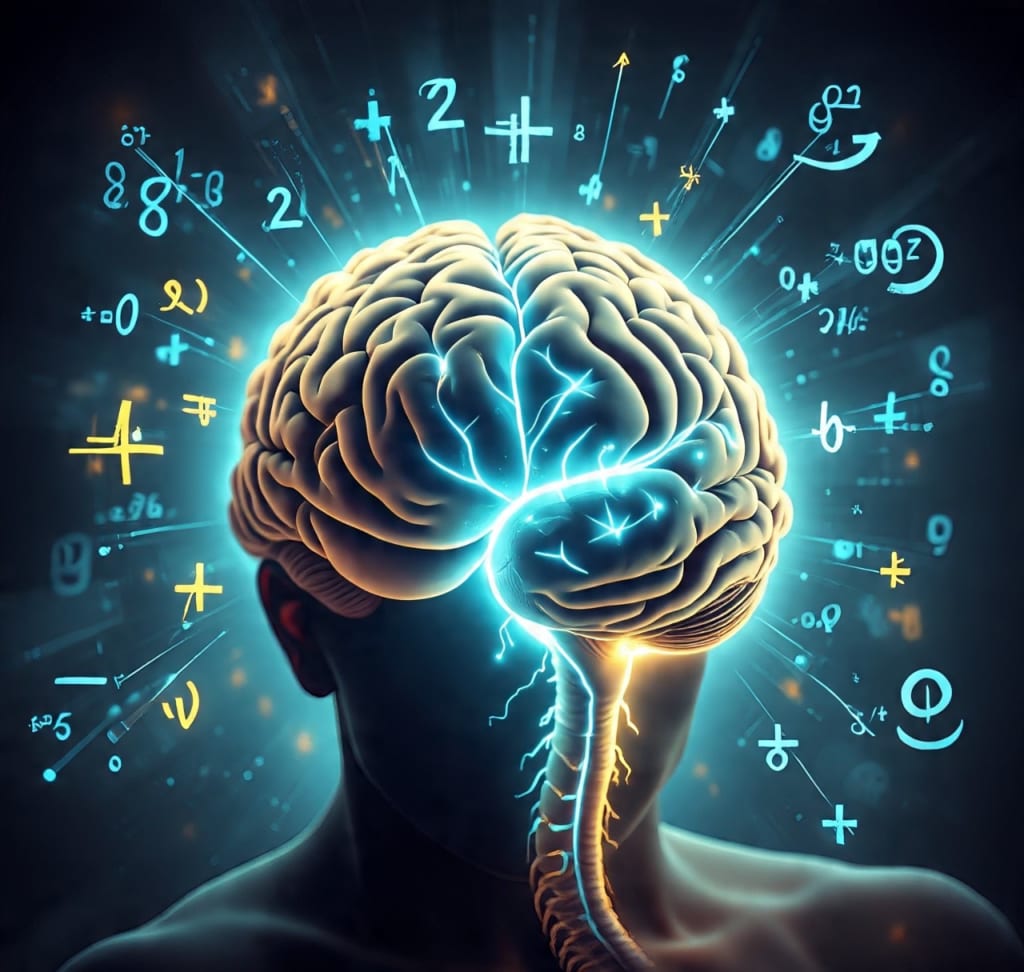
Mathematics is often seen as a subject of rules, formulas, and memorization. But behind the numbers lies a powerful tool that can sharpen the mind, boost confidence, and even improve daily life: mental math. Mastering mental math is not about showing off fancy tricks—it’s about training the brain to think faster, work smarter, and stay sharp in every situation.
Why Mental Math Matters
In the age of calculators, apps, and artificial intelligence, some people wonder, “Why should I learn mental math?” The answer is simple: mental math keeps the brain active and flexible. Just like physical exercise strengthens muscles, solving problems in your head strengthens memory, focus, and creativity.
Imagine you are at a shop, and the cashier tells you your total bill is 725 rupees. You give 1,000 rupees. Without waiting for the machine, you instantly know your change is 275. That speed doesn’t just save time—it also builds confidence. Mental math is not about avoiding technology, but about keeping your mind trained and independent.
Benefits of Mental Math
Sharper Thinking – Quick calculations improve overall decision-making. The brain learns to process information rapidly.
Memory Boost – Remembering numbers, steps, and patterns trains your memory muscles.
Confidence in Daily Life – From checking bills to planning budgets, mental math makes everyday life smoother.
Academic Success – For students, mental math builds a strong foundation that makes advanced topics easier.
Brain Health – Studies show that mental exercises like math may reduce the risk of memory loss with age.
Simple Mental Math Techniques
The beauty of mental math is that it often uses shortcuts instead of long formulas. Here are a few examples:
Multiplying by 5: Half the number and add a zero. Example: 68 × 5 → Half of 68 is 34 → Add zero → 340.
Subtracting from 1000: Subtract each digit from 9, except the last digit from 10. Example: 1000 – 674 = 326.
Square Ending in 5: Multiply the first digit(s) by the next higher digit, then add 25. Example: 35² → 3 × 4 = 12 → Add 25 → 1225.
These tricks are not just shortcuts—they are mental workouts that train the brain to see patterns.
How to Practice Mental Math
Like any skill, practice is the secret to mastery. Here are some easy ways to start:
Daily Challenges: Try to calculate bills, discounts, or totals without using a calculator.
Flash Cards: Write simple multiplication or addition problems and solve them quickly.
Math Games: Sudoku, number puzzles, and apps can make practice fun.
Teach Others: Explaining tricks to friends or students strengthens your own understanding.
Start small. Even solving 5–10 problems a day can make a big difference over time.
The Mindset of a Mental Math Master
Mental math is not about speed alone—it’s about clarity and confidence. At first, mistakes may feel discouraging, but every error is a lesson. The key is consistency. With daily practice, the brain becomes faster, and soon, what once felt impossible becomes natural.
Think of it as building a “mental gym.” Just as athletes train their bodies, you can train your mind. With time, calculations will feel effortless, and you’ll notice sharper focus in other areas of life too.
Final Thoughts
“Mental Math Mastery” is more than a skill—it’s a mindset. It is about believing in the power of your brain and training it to perform beyond expectations. Whether you are a student aiming for better grades, a professional handling numbers, or simply someone who wants to keep the mind sharp, mental math is your secret weapon.
Remember: calculators can give answers, but they cannot give confidence. With practice, patience, and persistence, you can truly train your mind to think like a human calculator.
About the Creator
aadam khan
I am publishing different stories
Keep reading
More stories from aadam khan and writers in Humans and other communities.
The Black of My Eyes
Our eyes are often called the windows to the soul. But what about the black of my eyes—the pupils, the deep, dark center that sees and absorbs the world? This tiny circle is where everything begins: light, vision, emotion. It’s more than just a biological feature. To me, the black of my eyes holds stories, secrets, and strength.
By aadam khan6 months ago in Humans
Early Kundalini Symptoms People Mistake for Anxiety.
Kundalini awakening is a powerful spiritual process in which dormant energy at the base of the spine rises through the chakras, activating higher consciousness and spiritual growth. The early stages of this awakening can produce sensations and symptoms that resemble anxiety, leading many people to misinterpret their experiences as a mental health concern. Understanding the differences between Kundalini energy and anxiety can help you navigate the process with clarity, safety, and self-awareness.
By Wilson Igbasiabout 7 hours ago in Humans
📢 Raise Your Voice Thread: 01/08/2026
Our “Raise Your Voice Threads” are hosted most alternating Thursdays at 12PM ET to offer creators more avenues to uncover exceptional stories on Vocal. As we are continuously searching for fresh creators and inspiring stories, this thread provides an opportunity to exchange and discuss the stories that have moved and motivated us on Vocal.
By Raise Your Voice by Vocal4 days ago in Resources



Comments
There are no comments for this story
Be the first to respond and start the conversation.