
Me, My Mother, and the Blacktop Between Us
These Bygone Diaries

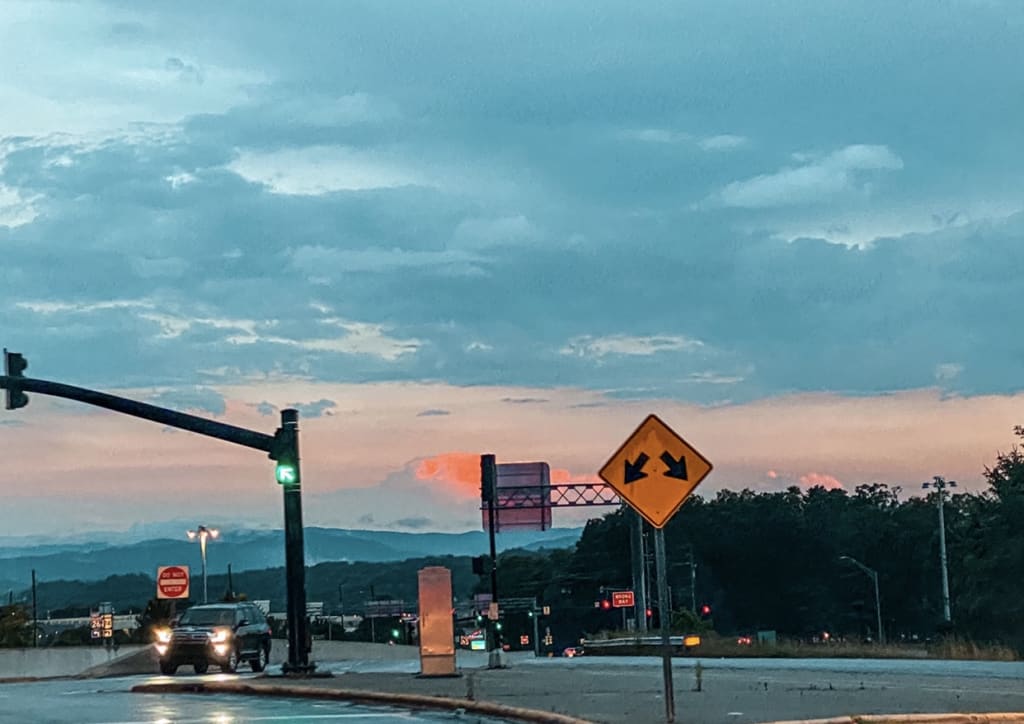
The leaving comes back to me easier—always hovering on the edges of my peripheral, like a stray dog that follows my taillights home in the dark. Mangey and probably floating in flees, but blinking wide, wet eyes up at me. I’ve never had the heart to turn it away with any sort of finality.
I was raised by a collector of the disenchanted and misplaced.
Eighteen crept up on me faster and slower than everyone had always said it would. Like I was simultaneously running to and away from it. That part is hazy now; all the years spent growing up and fighting it and winning some and losing most.
But eighteen I remember with perfect clarity. It was the year I ran away, without anyone seeing it quite like that. I think my mother probably knew different, but she’s always been quiet in those moments. Moments where I find myself at a crossroads, at that mystical fork in the road that the poets can’t seem to stop writing about. Where one word might alter my course, my loud, fire starter of a mother is silent as a grave.
It is a gift and a curse to be allowed the freedom to choose your own fate. I understand that better now.
The day I left home was dizzying. I remember that she held me tight, clutching me like an infant to her breast, and I felt her shudder with a lifelong grief. I was always going to leave and she‘d known it the entire time. That morning, barefoot in the morning dew, she found herself speared on the double edged sword of motherhood.
One word from me could have eased the aching, but my jaw was wired shut with all of the things I thought I knew about her and about myself.
Instead, I shifted from one foot to the other, flesh prickling with impatience and a vague sense of foreboding. The storm that came rolling in over the horizon was mere coincidence. My arms attempted to cling to her as I pulled away, but I wrestled them into submission, curling my fingers into fists until my bitten nails dug into my palms.
I rushed through goodbyes. Ignoring the water pooling in her eyes that had always been so different from mine, and drove away. Pretended that the pit growing in my stomach was anticipation and not nausea. After all, this is all I could ever remember wanting.
Towards the end of my adolescence, a time spent mostly locked in my room, a self-imposed exile, escape was my white whale. I knew I wouldn’t find it in the blowing blades of grass that sang just outside my window.
Or maybe, I just didn’t want to find it there, so close to her front porch with the little handprints that scar the concrete to this day.
Every dragging mile pulled that umbilical tether tighter until it shivered once, and then snapped in two like the rubber bands I used to crack against my wrists. My sternum stung with it, red blooming from the rebounding impact, and I wondered if my mother felt it too; if she was four hundred miles behind me, hunched over in the overgrown garden we planted together, with a hand pressed against a matching bruise.
A dark part of me, the bitter, jaded woman that had been clawing at the fraying edges of my girlhood, was pleased. Finally, distance. And with that distance a certain freedom that previously had only existed in between one red light and the next.
I don’t remember sleeping that first night in my apartment. The city screamed at me from every direction, setting my teeth on edge. So different from the cicada song and wind-chiming of my childhood bedroom. The neighbors were laughing, and the smell of smoke crept in like the unseen burglar.
I couldn’t remember if I’d locked the deadbolt.
And my mother was not sleeping one floor below me with a bed full of dogs.
When I walked to the kitchen at three a.m, I didn’t tip-toe over the weak spots on the floor that would rattle her ceiling. I didn’t slide my door open one inch at a time, silencing the scream of a hinge she’d told me over and over again to grease.
I ate ice cream straight from the container, a different brand from the one my mother kept in her house, and I let tears drip into it. To cry felt like I was already failing, and I wanted so badly to call her. To wake her up just to hear her tell me I should be sleeping.
But I was a woman now. And in my mind, women didn’t crack so easily. She never had. So, I ate my ice cream on the kitchenette floor and cried until I thought I would go blind.
I didn’t, but it felt like a near thing.
When she called me the next day, I told her everything was fine and yes, I was happy. And it wasn’t totally a lie. The city looked different in the sunlight, with all its shadowed corners brushed away, and I wanted to taste every inch of it.
All we didn’t say stretched out in the silence, climbing telephone lines hand over hand like it could bridge the gap before one of us hung up. I think it might have been me.
It was always me.
[In a different universe, one that haunts my dreams more often than I’d like to admit— I never left. The years turn over and over and I stand next to her in the kitchen, in the garden, down by the pond. She tells me her secrets and I tell her mine. Our elbows brush, smiles meeting as she presses her sun-marked cheek to mine. We have all the time in the world.]
About the Creator
Catherine Rose
Twenty-three year old aspiring author, dog mom, and tea enthusiast. Food blogger, bartender, and occasional peer editor. Part-time unintentional comedian.
Reader insights
Nice work
Very well written. Keep up the good work!
Top insight
Heartfelt and relatable
The story invoked strong personal emotions
Keep reading
More stories from Catherine Rose and writers in Humans and other communities.
Medusa & the Forever Quarantine
When quarantine comes down, Medusa almost doesn’t notice. Nothing has changed for her really. Her entire life has been a form of self-imposed lockdown. Involuntary in the major, a blessing in the minor. In her apartment, behind three deadbolts and the latched chain, she can harm no one and no one can harm her.
By Catherine Rose4 years ago in Fiction
Lost and Alone in the French Alps
Looking back, I can trace some of my life’s biggest adventures to a simple action from my sister. She’d introduced me to Tommy (a very long time ago), a colleague of hers, who had overshared his penchant for Italian-looking women, and I ticked that box.
By Chantal Christie Weiss20 days ago in Humans


Comments
There are no comments for this story
Be the first to respond and start the conversation.