
Little Black Book
My late submission for Little Black Book Challenge

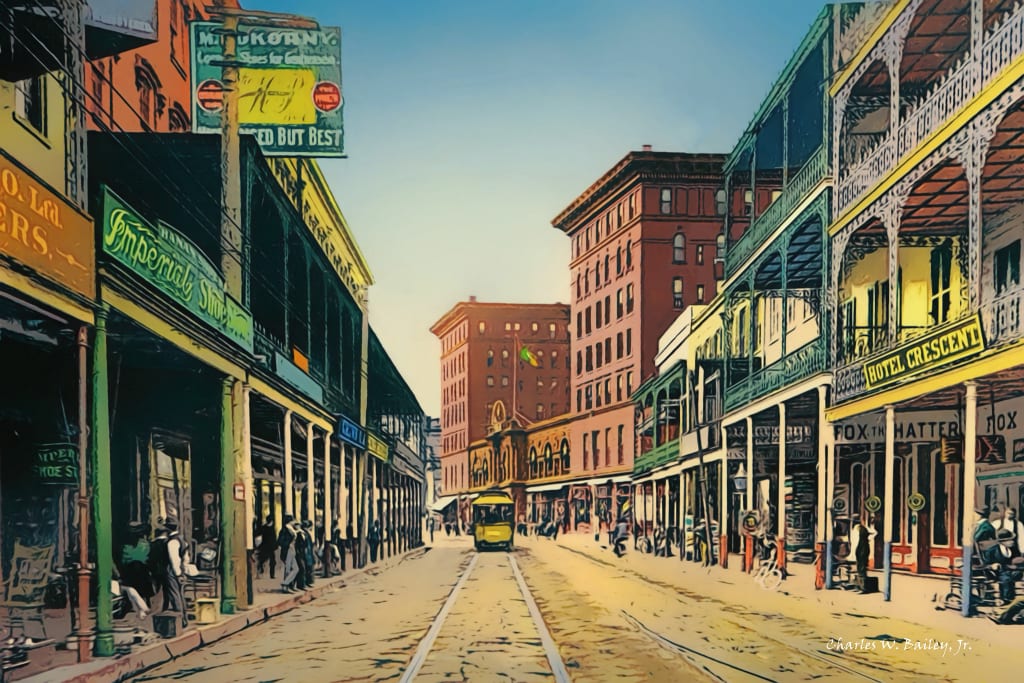
The warm, balmy mornings of New Orleans had always been Cecile’s favorite. The sun was barely peeking over the horizon but was already bringing heat to the humid air. Sweat clung to the curly strands of hair along her temple, but she relished the heavy warmth against her skin.
The sickly sweet smell of rotten bananas from the docks hung heavy in the air of Jackson Square. The lilting notes of soft jazz drifted through the air from a street musician nearby.
Cecile brought the fresh loaves of bread she was carrying to her nose and inhaled. Monsieur Hughes had passed ten days ago, but she still brought his favorite loaves to the house to appease the vultures who had settled there shortly after the tragedy.
By the time she’d reached the shaded refuge on St. Charles Avenue with its imposing Victorian houses, the pit in Cecile’s stomach had deepened. Hughes had been a dream to work for, but his children, the vultures, were a different story.
As she stepped through the oak doors of Monsieur Hughes’ house, she gasped. The entryway was in disarray, tables overturned, drawers pulled out, papers strewn all over the floor. Monsieur Hughes’ scarab-topped walking cane and silken top hat lay in the corner like discarded junk. Further into the house, she spotted Hughes’ three adult children in the study to the right. They stood huddled over a desk, their heads bent and voices low and frantic.
Cecile cleared her throat. Hughes’ eldest daughter, Eliza, looked up with a toss of golden hair.
“Ah, Cecile, darling.” Her British accent was clipped and tight, so unlike the soft cadence her late friend had adopted once he’d settled here in retirement. “Your things are over here, dear.” She waved a hand to a side table then turned back to her siblings.
So, they must have made the mess themselves. Lookin’ for more money, no doubt.
Cecile walked to the side table and glanced at her “inheritance.” She hadn’t been present for the reading of Monsieur Hughes’ will, but the lawyer had informed her afterwards that she’d been left a few notebooks and a token of appreciation.
Cecile headed to the kitchen to drop off the bread.
“Oh, Cecile,” Lionel Hughes’ nasally voice stopped her, “Cook has abandoned us. How about some of that famous Southern iced tea?” He smiled patronizingly and twirled his wiry goatee. Monsieur Hughes’ onyx signet ring glinted across the pinky of its new wearer.
Cecile clenched her teeth but smiled warmly as she turned to face him with a nod. “Of course, Monsieur.”
Monsieur Hughes hadn’t left her with a letter of recommendation for future employment, so her prospects lay in the hands of these spoiled fools. Obviously, Annie the Cook, with years of experience - and recommendations - had not needed to stay.
As Cecile returned a few minutes later from the kitchen with a tray of iced tea and slices of freshly buttered bread, she paused when she overheard Lionel’s raised voice.
“I cannot believe this! Utter rubbish!”
“Lionel, keep your voice down,” snarled Eliza angrily. “It’s got to be here somewhere.”
“He did this on purpose. To punish us.” The third voice belonged to the youngest son, Albert. “Why else would he not tell us all the money was gone?”
Cecile blinked. All the money gone? Hughes hadn’t mentioned anything like that to her.
“It’s not gone, Bertie,” Eliza snapped. “Look at the books. He withdrew it all from the bank several years ago. Old man must have gone mad. Stashed it in the house somewhere. We just need to find it.”
“You think Cecile would know anything about it?” Albert asked.
“The maid?” sneered Eliza. “Father might have been mad, but he wasn’t a fool. Even he knew not to discuss such things with the Help.”
Cecile felt her cheeks burn. She started forward with the tray again, walking so her shoes clacked loudly against the wooden floors.
When she reached the study, the three were back to studying the books in silence. She set down the tray and was heading out when Lionel stopped her once again.
“Cecile, I wouldn’t guess you’d know if Father kept any spirits tucked away somewhere around here, would you?”
Cecile turned around, frowning. “No, Monsieur, your father always followed the laws, whether he agreed with ‘em or not.”
“Utter crock,” dismissed Lionel angrily. “I’d kill for a brandy.” He studied her shrewdly for a moment. “You wouldn’t know of a place where I might acquire some alcohol, would you?”
“Of course not, sir,” said Cecile firmly. “Will that be all?”
“Yes, thank you,” Eliza quipped dismissively.
Cecile went back to the entryway and began picking up the items strewn across the floor. Many of them were Hughes’ own finds when he used to travel the world as an archeologist.
She hadn’t been there long when Eliza passed by the entryway, rubbing her temples.
“Oh, don’t worry about this rubbish,” she said, pausing when she saw Cecile. “Someone’s coming this afternoon to appraise it all. Hopefully we’ll be able to sell most of it.”
Cecile lowered her eyes quickly to hide her horror. Her thoughts went to Hughes, to memories of his gnarled fingers brushing over his treasures brought back from Egypt, Tibet, Bolivia, everywhere it seemed. His soft voice as he would tell her the tales of how he discovered them, what the inscriptions meant. These items were his greatest joys, his most prized possessions. Her eyes burned at the thought of them being sold.
Cecile turned instead to the side table where her inheritance sat. She picked up the small package, wrapped in brown paper and tied with string. It looked to have been already opened and hastily rewrapped. She frowned. Those fools in the next room must’ve thought that Hughes might have left her with the missing money and peeked. Cecile was more of a companion to him than any of those three in there, and she wouldn’t put it past him to do something like that.
She quickly unwrapped the paper and pulled out a small ivory comb, encrusted with a jade stone. Pretty, but its distinct lack of gold would have established it worthless in the eyes of his children.
But to Cecile, it was priceless. She’d often admired this comb and it touched her that Hughes had thought to give it to her. She tucked it into her dark curls, feeling the tears come again. She swore that she’d cried more for that man this past week than all three of his children combined.
The appraiser, Mr. Brown, soon arrived with a team of men and a wide smile. He was a funny little man, squat, bald, and bespectacled, with keen blue eyes that missed nothing.
It took the men hours to go through everything, even with Cecile’s help, and to load it all into a cart outside. At the end, it totalled to just over $7,000, which somehow appeared to be a disappointment to the three children.
As Cecile was showing Mr. Brown out, his eyes caught the comb tucked in her hair.
“What’s this?” he asked suddenly, stopping to peer closer.
Cecile took it out so he could examine it better, explaining that Monsieur Hughes had left it for her in his will.
“Very pretty,” he said, studying it closely with his piercing eyes. “Egyptian?”
“I believe so,” said Cecile proudly.
“This is a rare gift,” Mr. Brown said to Cecile, handing it back to her. “You’re very lucky Mr. Hughes was so generous. You wouldn’t be interested in selling it by any chance, would you?”
“Is it worth anything?”
“Not much,” he said slowly. “I’d say about twenty dollars.”
Cecile blinked. Twenty dollars was more than she’d expected, more than she’d ever had before in her life.
But as she ran her finger over the smooth ivory, she shook her head, slipping it back into her curls. “It has sentimental value,” she explained, before letting him out.
The sun had set by the time Cecile had finished cleaning. The three Hughes were scattered throughout the house, rummaging through desks and bookshelves. She found Lionel first.
“I’m heading out, Monsieur,” she said in the doorway of the library.
He waved dismissively without looking up. “Good night, Cecile.”
“Monsieur,” she began tentatively, “is there any way I could have Louis drive me home tonight? It’s dark out, you see, and Monsieur Hughes always allowed me to take the car on days I left after dark. The streets aren’t safe - ”
“We had to sell the car,” Lionel interrupted, still not looking up. “Sorry, you’ll have to walk.”
Cecile bit her lip. “Alright, thank you, Monsieur.”
On her way out, she grabbed the notebooks and tucked them into her bag, positioning her hat on her head to hide the glinting comb.
Walking home would take close to an hour, so she set a quick pace. The streets were well lit and busy close by Hughes’s house, but as she approached the Vieux Carré, the streets became dimmer and emptier.
Passing by Jackson Square, she saw several painters set up, trying to capture some of the magic the streetlamps created as they glinted off the wet pavement. A small band played jazz music nearby, drowning out the soft calls of the ladies of the night who ambled around the hedges, looking for clients.
When Cecile neared the street to her house, she noticed footsteps close behind her. The area was poorly lit and nearly deserted, except for a few drunks loitering at the end of the street. The footsteps were beginning to gain, and Cecile quickened her pace. She was nearly to her apartment when a voice called out behind her.
“Cecile.”
She turned around, surprised. A man stood just out of sight in the shadows behind her. He was a short man, and for a moment Cecile thought it was Mr. Brown until she noticed the silhouette of a cane and the considerably smaller waistline. Whoever he was, the man waited for her to speak.
“Who are you?”
The man held out a booklet, black and leather-bound, like Hughes’ other notebooks. A ring glinted in the lamplight.
“It was missing from your collection,” the voice whispered.
“Who are you?” she asked again, but the figure merely shook the book at her. Tentatively, she reached out and took it.
“Read with care,” the figure rasped, then turned away.
Cecile rushed to the nearest streetlamp and squinted at the notebook. A leather strip stuck out of the pages like a bookmark. She opened the notebook to the marked page and was surprised to see Hughes’ handwriting with a sketch of an ivory comb. The handwriting was rushed and scribbled. She squinted in the dim light at the words, able to make out her own name. Sweet, he’d made a note to leave it for her.
But no, it wasn’t a note for him, but a note for her.
Cecile,
Mind the comb. I purchased it in Cairo a few years back - it was entombed alongside one of Nefertiti’s handmaidens. It should fetch at least $20,000, should you choose to sell it. It would buy a grand estate or pay for an education, though what you do with it is entirely your choice.
Though I cannot put a price on our friendship, thank you.
Love,
John Hughes
Cecile looked up with damp eyes to thank the stranger, but he’d already passed from the glow of the street lamp. Although she couldn’t see him, she heard the echo of his fading footsteps and the clack of his cane on the cobblestones. Drying a tear from her cheek, she slowly turned, praying she’d see him again.
About the Creator
Keep reading
More stories from writers in Humans and other communities.
The CEO of Everything
They say "jack of all trades, master of none," but they forgot to mention the part where the jack of all trades is also the camera woman, the makeup artist, and the person currently yelling at a tangled Wii microphone cable in a her own bathroom while recording herself singing and trying to make it look realistic and professional. (As professional as you can make it with nothing but a cell phone camera and a mic that doesn't work)
By Sara Wilson6 days ago in Humans
Who am I?
I’m in a crowd of people, all I hear is noise surrounding me. Words echo like rolling thunder. Facial expression are vast like waves in the ocean. Im battling to drown out the chaos. This is me, and this is what daily life looks like for me. I am a woman, daughter, sister, mother, partner, friend, confidant, and every single title a woman can carry in a world that we need to be identified in with a word. Do I know who I am? Do these words that describe me, make me who I am? Or do the opinions and perception of others and maybe one. Make me who I am?
By Deana Cabisona day ago in Humans
📢 Raise Your Voice Thread: 01/22/2026
Our “Raise Your Voice Threads” are hosted most alternating Thursdays at 12PM ET to offer creators more avenues to uncover exceptional stories on Vocal. As we are continuously searching for fresh creators and inspiring stories, this thread provides an opportunity to exchange and discuss the stories that have moved and motivated us on Vocal.
By Raise Your Voice by Vocala day ago in Resources



Comments
There are no comments for this story
Be the first to respond and start the conversation.