
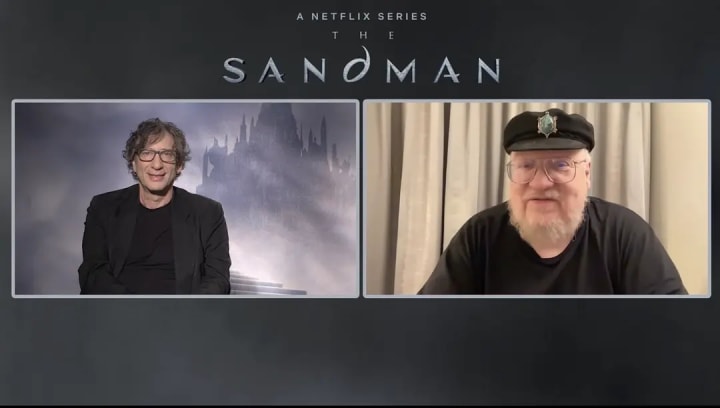
In a special promotional video for The Sandman, Netflix featured Martin as an interview guest who spent half an hour talking to Neil Gaiman. It's fascinating to watch two cool old men talk to each other: they have the same understanding, they can relate to each other, Martin gets to the point, Gaiman gets to the point. That's because their relationship dates back to 1987, when Gaiman, then a young man, was thrown cold water by Martin over Sandman.
The following is the interview part of the content of the listening record collation, we can see the creator greatly their own heart course and behind the thinking
The Crossover between Game of Thrones and Sandman
With Martin praising the Sandman pilot episode he just watched, Gaiman credits Game of Thrones for inspiring him, and...
Cover:... We've also got Charles Dance, who, if I remember correctly, was shot in the toilet with a crossbow.
Martin: That's right, but the way you treated him was just as rough...
Gaiman: I admit, poor Charles -- but from what I hear he gets paid well...
Martin: He's closing in on Sean Bean as fast as he can get his lunch. We also killed Sean Bean, you haven't, please make sure to show him and die in future episodes...
Gaiman :(nods and agrees)... It's a proud tradition we haven't carried on yet, but we did deliver a lot of packed lunches in the first season.
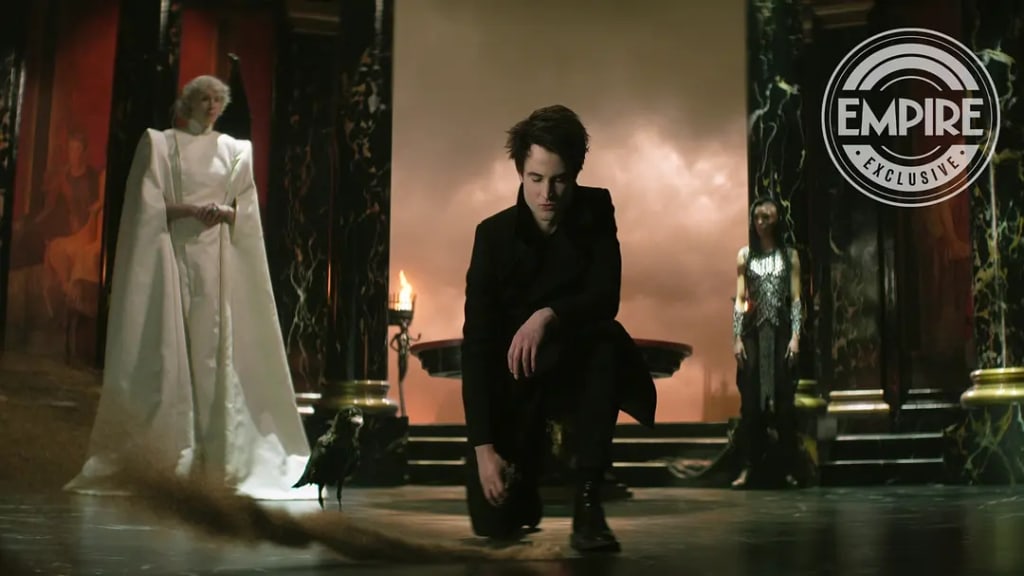
Martin: And Gwendoline Christie, our Brienne of Tarth, who you made into Lucifer.
Gaiman: She's a great actress in a lot of ways, but one of the things I especially admire about her is that she's a nerd: she was 15 years old and she was 6 '9 ", she loves books, she loves fantasy stories, she's a "Got" cast member who's read the books, she's serious about the show... She came for the role of Lucifer, which was clearly hers.
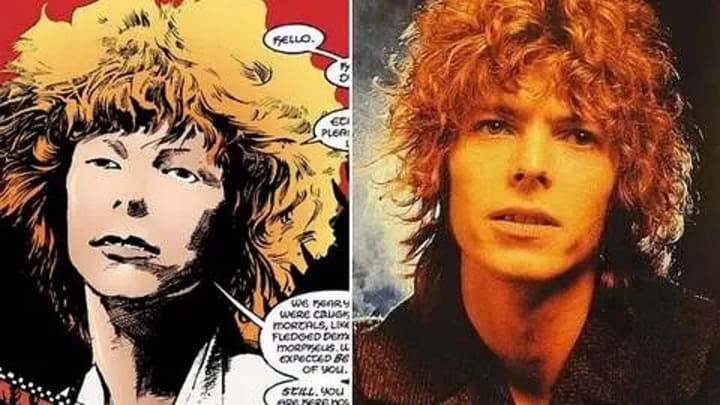
The Sandman portrays Lucifer as a fallen angel, but he's an angel first and foremost. The picture I sent to Sam Keith and Mike Dringenberg (both Sandman comics artists) as a reference for Lucifer was a folk-era David Bowie with perm hair -- a Junky angel, bad and beautiful. Gwendoland plays this, as well as arrogance and monarchism. And not only did Tom's Morpheus look like a dwarf when he was next to her, but we also "cheated" by giving her big wings, which made her height jump to 2.3m.
I said to Gwendoline the other day: George has never let me forget, and it's thanks to him that I have Sandman.
Martin :(laughing) yeah, it wasn't the best decision I've ever made as an editor. You pitched Sandman for my Wild Cards series, and I turned him down, and then you took him to DC, and now everything -- comics, TV shows, awards... If I hadn't rejected you in a parallel universe or dream world, you'd probably have written ten Wild Cards by now...
Gaiman: I've made like four thousand dollars on Sandman so far...
Martin: Calm down, it's probably six thousand now...
Omit two people a narrative, how to know each other on various occasions, Martin from Gaiman's idol to become friends through...
The origin of the Sandman universe
Martin: I'd be interested to know how you convinced DC to adopt your Sandman. Sandman himself is a DC historical figure, I think he was a member of the Justice Society? Wearing a World War II-style gas mask, carrying a tranquilizer gun or something... So do you say to them, "I'm going to reboot this character" or... ? Because obviously your Sandman is nothing like the Sandman of the Golden Age, but you have connected them.
Cover: A previous version of the Sandman, created by Joe Simon and Jack Kirby, appeared in four issues from the early '70s (check it was five), but the character was not very successful. He operated in the Dream Dome, a child's Dream, There were two Brute and Glob villains working together, like Lobster Man, Doctor Spider... His limitations are relatively large.
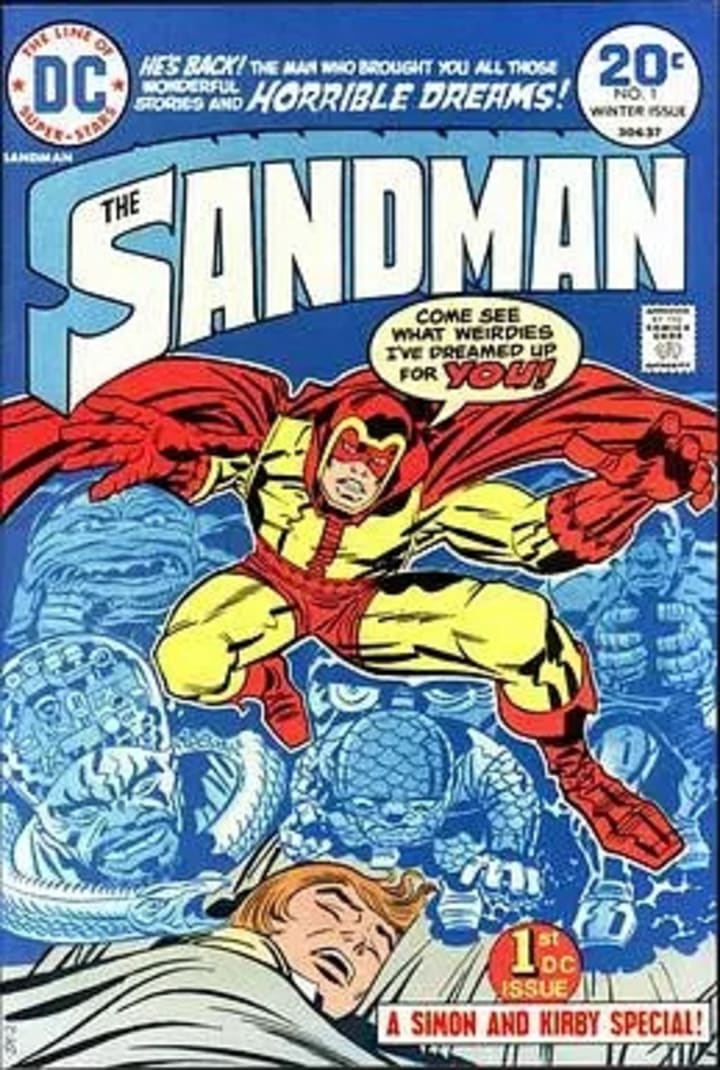
I've been fascinated by the idea of "living in a dream" since I was seven years old when I read the first Doctor Strange by Steve Ditko, in which the main character has a nightmare...
Martin: That's right. He's Doctor Strange's first enemy number one. Then came Baron Mordo and Dormammu. But Nightmare was the primary villain in the early Doctor Strange stories.
Gaiman: That's right. Probably from then on I was deeply infatuated with "dream".
I remember having dinner with then-DC president Jenette Kahn and Karen Berger, who would later become the Sandman series' editor-in-chief, to discuss the comic I was working on for them, Black Orchids (a collection of concepts that were incorporated into the Sandman series after they were not adopted). In between, I mentioned Sandman -- I don't even remember selling the idea to them -- just that I was interested in creating something around the idea of people living in dreams. A few months later, Karen Berger called me to tell me that they had decided to launch a monthly comic that I would create to promote Black Orchid. Which character did I want to write about? I went through a series of names, but they were all taken, and finally she said, "What about the Sandman you mentioned earlier?" I said, "Oh, sure.
Then came what was probably the greatest blessing in disguise of my life -- it was October '87, and there was a hurricane in England that happened once in 7,000 years, and there was a massive power cut, and I couldn't work at all, so I spent a week just thinking, or I would have sat down and written an outline and sent it off. A week later the power came back on, and I turned on my computer and started writing. If it hadn't happened, I wouldn't have been able to write something so deep and interesting and intricate. DC endorsed this storyline, which served as the outline for the opening volume Preludes and Nocturnes, and for the first six episodes of the series.
Martin: Are you a dreamer? Do you remember the dreams you had? Did nightmares scare you when you were a kid?
Gaiman: I had nightmares as a child, as a teenager and into my early 20s, and then I started writing "Sandman." The problem was, when I had a bad dream, I would wake up excited, and I made sure I had a pen and paper next to my bed so I could write it down while it was hot. This went on for 18 months, after which the nightmares left me and almost never came back. I have a personal theory that whoever sent me this nightmare must have been very disappointed with my response -- shouldn't that be a distraction all day? Why is he dancing around with excitement? !
I never borrow plots from my dreams, but I borrow images -- I need to insert a scary scene in The Sandman, and it happens to be this, so here it is! I like that.
Martin: I used to have very vivid dreams and then wake up and forget them very quickly. I feel like I'm wasting great stories and inspiration, so I try to keep paper money next to my bed to keep track. One day I woke up and found something written on a piece of paper. It said "Purple boots"... (Laughter) And then I gave up. I guess you have a much better memory for dreams than I do.
Gaiman: For me, just images are enough. I never expect a dream story to have any meaning, but I would love to steal a dream picture of being chased around a castle by a monster with a spaghetti head. This is useful to me.
Martin: You started with Sandman, and then you expanded to include other Endless people, making Sandman not just a lonely figure, but a family. How did these characters come about? At what stage do they enter the Sandman story?
Gaiman: I knew from the beginning that there would be a place for them, and I even wrote them down from the very beginning. My original intention was to present things in my comics that were unprecedented in comics in general (I wanted to write things in my comic that I didn't see in Comics), to incorporate things that I admired about the author. Roger Zelazny, who was very important to me in writing Sandman.
Martin: That's right. He was a mutual friend of ours and one of the greatest science-fiction writers of all time (The Amber Chronicles, winner of three Nebula Awards and six Hugo Awards). He lived in Santa Fe, New Mexico, and I became a close friend of him when I moved there, and he was like a mentor to me. He is brilliant.
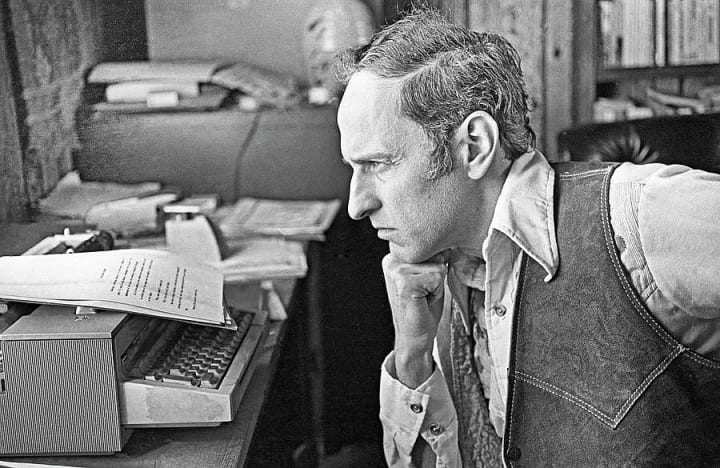
Gaiman: Even before I met him, when I was young, I was very influenced by him. I remember thinking: I have to write a for DC comics, at least to some extent, like a super hero of the story, I never wrote a super hero, and also don't want to actually do so, but I remember the thrill of "the king of light" to me, including Roger absorbed some aspect of the Hindu gods character creation, they give a person feels a bit similar to the super hero. I thought, why don't I do it like this, and take my own favorite elements, like the familial relationships that I love in the Amperes, and translate them into my own content -- they're gods, even stronger than gods, so they both have infinite power, and then they're a family -- and I don't think I've seen anything like that in comics.
I remember the first time I met Roger was at a convention in Dallas, and I was sitting with him at a book signing, and I gave him, very humbly, a copy of Sandman, and I said, I stole it from you. That's when we became friends.
About death
Martin: I know Roger likes Sandman. He tragically died young in 1995, and you flew in to attend his funeral. I think it was Jane Linskold, also a very talented writer, who said of Roger: She wanted When Death came for Roger, it was your Death, to take him away, and he would have liked it, because he liked your version of death.
Gaiman: Coincidentally, I had a much more serious conversation with Kirby Howell-Baptiste, who plays Death, than the usual writer-cast exchange, and I said to her, You know, Kirby, for the last 35 years, people have been telling me that you created death to help me come to terms with the deaths of my children, parents, siblings, friends, and loved ones, and that thinking about your death has allowed me to reconcile with my grief. I am now giving you the opportunity. From now on, anyone who has seen The Sandman and seen you as Death will tell you that when my loved one dies, I imagine it is a death like you who takes him away.
Martin: I think of you before, in a conference about the funny jokes, about your friend Sir Terry prairie deed (masterpiece "dish the universe", "good one million" co-author), once he by plane, the plane on the appearance of a lady the Cosplay is your death, he is not, if I would have scared the urine.
Gaiman: I think the most interesting thing about this story is that people did die on this plane... If I were on this plane, I'd take at least a second to think: Really? How is that possible?
About the TV Series
Martin: Tell us about the development of the show. Like me, you've been lucky enough to have a number of films made for the screen, but I feel like you're more involved than ever, right?
Gaiman: Absolutely. For more than three decades, The Sandman's cinematography has failed, with good and bad projects falling by the wayside because any attempt to cram 3,000 pages of comics into a two-hour film is frankly doomed to failure. If you cut a lot to make a movie, it's not Sandman anymore, or it's like someone grabbed you by the lapel and said, "Let me tell you everything that's important about Sandman right now as fast as I can." (Gaiman speaks really fast, figuratively.)
After all of these failures, David Goyer (" sandman "producer & one of writers, including Nolan's batman, numerous superhero writers) find I said, now is the age of television, you just to finish a good one million TV adaptation - I worked as a producer, writing the script for terry, he is gone, But make me promise to do it before I die -- David said, so you know what to do, people can trust you. Then he went to Warner Bros. and said: What do you think about working with Neil to make a Sandman for streaming TV? They thought it was a great idea. After we pitched, they said, "We have the exclusive advantage of having Gaiman in the chair, which none of the previous adaptations had."
Luckily, because I was personally involved, Allan Heinberg (another producer and writer of The Sandman, Sex and the City, Grey's Anatomy) was on board. He is not only a veteran writer of comics, movies and TV series, but also the world's number one Sandman fan. When we met, I said, "Nice to meet you." He said, "Actually, we met back in 1996 at the Four Colors Images Gallery, where you signed my Brief Lives." It's something he's always wanted to do as a fan.
Martin: What's it like when the three of you work together?
Gaiman: After Netflix bought the project from Warner, they came to my house in Woodstock, and we spent two days together talking about what we were going to do for Season 1, taking notes here and there but mostly just brainstorming, and then we wrote the first episode together. It was very simple. There were 60 pages. David wrote the first 20, Allan wrote the middle 20, and I wrote the last 20.
With this pilot episode to set the tone, Allan would get a team of writers together, and sometimes he would call me and say: The writers said this, what do you think? I said: No, because of this and that, why not change this way can achieve the same effect? He said: Ah thank you, that's what I want to tell them! I finally have you to tell me what to say. Allan and I found that we were surprisingly on the same page about what Sandman should look like, what works, and what changes need to be made to make it a movie. Because comics are comics, they're all pictures, but you can't shoot television with six pictures on 24 pages. There's something you have to keep consistent.
For example, the story of the restaurant in Episode 5, we completely rewrote the story because there was no narrator and there was no structure needed, and there were maybe five or six lines of dialogue in the whole episode that were my original words, and then in episode 6, the other way around, there were maybe five or six lines that were not my original words. The key point is not whether it is true to the original, but whether the spirit of the original is still there, with this, the adaptation is valid.
Martin: I'm a comic book veteran myself. I think Sandman, Watchman and The Dark Knight are the best graphic novels in existence. While the other two films have finite possibilities, Sandman is more open-ended. It's not a limited series, is it? You can keep developing the series for 20 years.
Gaiman: I don't think it's 20 years, but it can go on for a long time. The Sandman is 3,000 pages long. The first season covers the first 400 pages. There are still 2,600 left.
Martin: You enjoy the process and you're going to stay with it.
Gaiman: I'd be happy to, as long as I have Allan Heinberg holding the line and David Goyer at the back. And one of the lovely things, at San Diego ComicCon, I had the opportunity to meet the entire cast for the first time, and it was like a big gathering of friends, I saw some of the tension between the characters actually taking place in the actors -- Mason Alexander Park seemed to be gently teasing Tom Sturridge. Isn't that how desire and the God of gently teasing interact? Then there's the towering, shimmering Gwendoline, moving through the crowd like a king with a sly grin, like a fallen angel who hasn't hit bottom yet. It was a real relationship that made me very happy, and I felt like I had to stick with it, that these people deserved a chance to get back together.
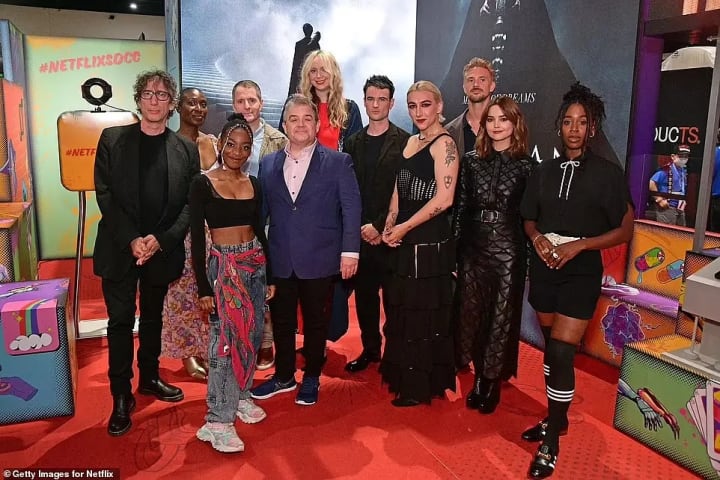
About the Creator
JOKER
I thought my life was a tragedy. But now I realize it was a comedy
My First Time Skiing and I Got Lost, Alone, in the French Alps
Looking back, I can trace some of my life’s biggest adventures to a simple action from my sister. She’d introduced me to Tommy (a very long time ago), a colleague of hers, who had overshared his penchant for Italian-looking women, and I ticked that box.
By Chantal Christie Weiss2 days ago in Humans


Comments
There are no comments for this story
Be the first to respond and start the conversation.