
Letters Across the Sea
They fell in love through words—before they ever met

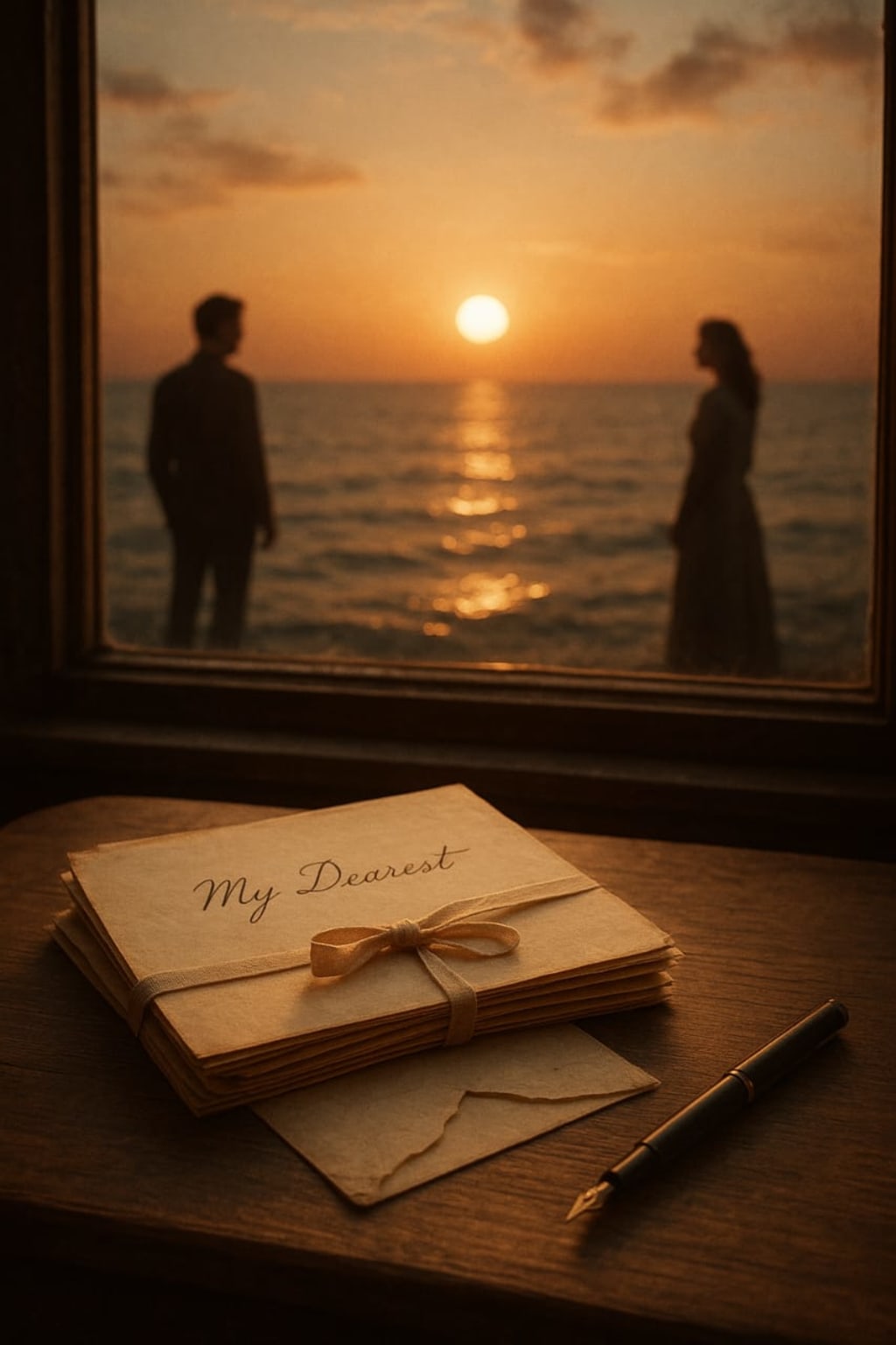
It began with a classroom assignment neither of them wanted.
In a small town in Maine, Ellie sat in her 11th-grade English class staring at the board:
"Pen Pal Program – Cultural Exchange. Write at least once a week for 3 months."
She groaned. It felt outdated, pointless. But it was for a grade.
Thousands of miles away in coastal Japan, Haruki received the same instructions from his English teacher. He wasn’t excited either. His English was rusty, and he had never written a personal letter to anyone in his life—let alone someone halfway across the world.
Still, they wrote.
Her first letter was short, polite, and formal:
"Hello. My name is Ellie. I like books, rainy weather, and dogs. I live near the sea, though it’s too cold to swim in most of the year. How about you?"
His reply took two weeks. The handwriting was careful, the grammar slightly broken but endearing."Dear Ellie, I also live by the sea. But my sea is warm. I like to walk and listen to the waves. I am not very good at English, but I hope this is okay."
She smiled when she read it.
Over the next few weeks, something unexpected happened. The letters grew longer. They told each other about their towns, their families, their favorite foods. Ellie learned that Haruki loved calligraphy and collected smooth stones from the beach. Haruki learned Ellie’s mother had passed away when she was ten, and since then, books had been her escape.
Through paper and ink, a quiet bond formed.
By month two, the tone had shifted. There were jokes now. Memories. Confessions. Haruki wrote about how he felt like a stranger in his own school, always quieter than the others. Ellie shared how she sometimes felt invisible, especially when people talked over her.
"I don’t feel invisible when I read your letters," Haruki wrote once.
Ellie kept that one folded in her pocket for days.
They wrote through seasons. Snow fell in Maine while cherry blossoms bloomed in Japan. Ellie sent a dried autumn leaf with one letter; Haruki returned a pressed sakura petal with his.They began exchanging emails after the assignment ended. Then voice messages. Then video calls. Time zones were tricky, but they made it work.
And somehow, without ever standing in the same room, they fell in love.
Not with appearances or grand gestures—but with thoughts, with stories, with the way their words made each other feel less alone.
By the time they turned 18, they had written over 200 letters.
The dream to meet became real when Ellie got accepted into a university in Tokyo on a cultural exchange scholarship. She screamed when she found out. Haruki cried when she told him.
Their first meeting wasn’t dramatic. No running hugs or movie-perfect kisses. Just two people standing in a train station, nervous and quiet—and then smiling in that way that said:
“You’re real.”
He handed her a letter.
She did the same.
They didn’t need to read them aloud. They already knew what the other had written.
Their story had already begun—one word, one letter, one heartbeat at a time.Unlike most love stories that begin with physical presence—shared glances, accidental touches, or being in the same place at the right time—Ellie and Haruki’s story unfolded in silence and distance. What made their connection powerful wasn't proximity, but emotional intimacy built letter by letter. In a world driven by fast messaging and instant gratification, theirs was a quiet romance shaped by patience, vulnerability, and trust. It shows that sometimes, the deepest bonds aren’t formed face-to-face, but heart-to-heart, across oceans, cultures, and time zones. Their love wasn’t instant—but it was real, resilient, and written in every word they chose to share.
Moral of the Story:
Love doesn’t always begin with sparks or glances across a room. Sometimes, it starts with a single sentence, a shared vulnerability, and the courage to write the next line. In a world that moves fast, their love proved that something slow, thoughtful, and written by hand can still change a life.
About the Creator
Keep reading
More stories from Khuzaifa ali and writers in Humans and other communities.
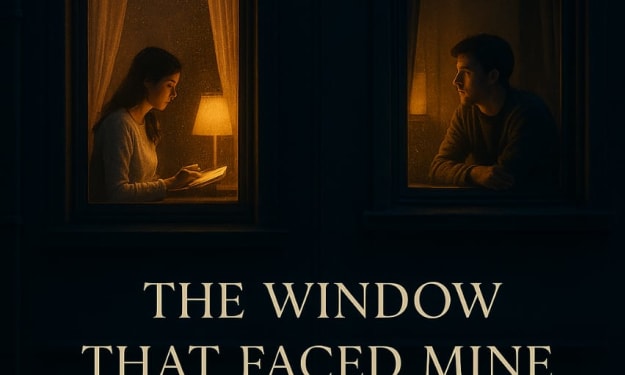
The Window That Faced Mine
The window that faced mine belonged to Apartment 4B. It was directly across the alley, about 15 feet from my own. We were close enough to see each other clearly, but too far to speak without shouting. And we never shouted. In fact, we never spoke—not once.
By Khuzaifa ali5 months ago in Humans
My First Time Skiing and I Got Lost, Alone, in the French Alps
Looking back, I can trace some of my life’s biggest adventures to a simple action from my sister. She’d introduced me to Tommy (a very long time ago), a colleague of hers, who had overshared his penchant for Italian-looking women, and I ticked that box.
By Chantal Christie Weiss2 days ago in Humans
10 Brutal Truths About the Twin Flame Journey No One Talks About.
The twin flame concept has exploded in popularity, promising an epic, soul-shattering love that transcends ordinary relationships. It's sold as the ultimate spiritual partnership—one soul split into two, destined to reunite in profound harmony. Yet beneath the glossy narratives of destiny, unconditional love, and "sacred union" lies a far harsher reality. The twin flame journey is often excruciating, disorienting, and far from the fairy-tale romance many expect. Here are 10 brutal truths rarely discussed openly in spiritual communities, drawn from countless personal accounts, expert critiques, and lived experiences.
By Wilson Igbasi7 days ago in Humans


Comments
There are no comments for this story
Be the first to respond and start the conversation.