
Learning to Leave Quietly
I packed my silence in a suitcase and walked away

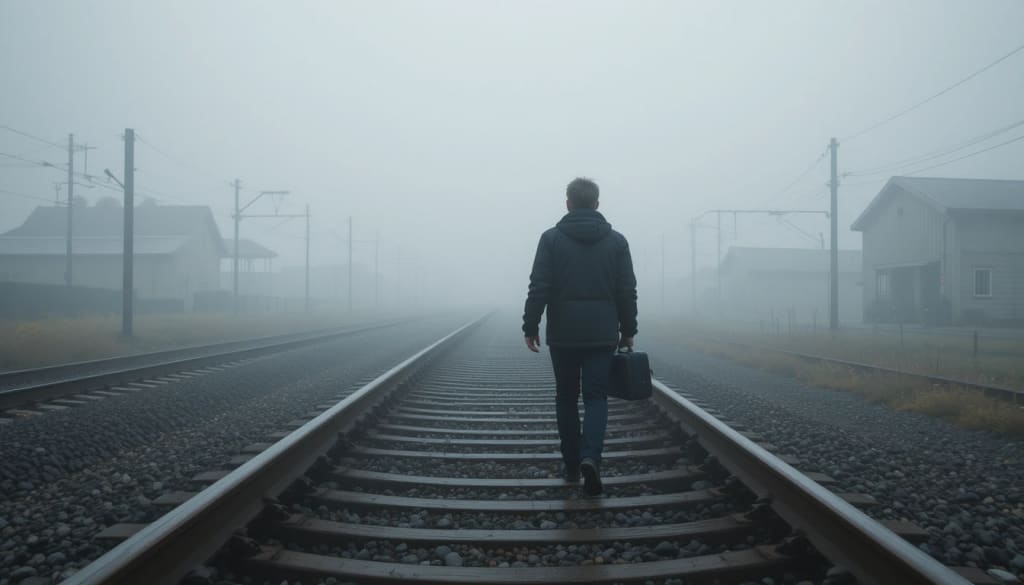
There is no thunderclap when a heart decides to leave.
Sometimes, the loudest decision is made in silence, folded neatly like worn clothes into a small suitcase. That’s how I left—not with slamming doors or broken dishes, but with a soft zipper sliding shut and the quiet padding of footsteps at dawn.
It took me years to understand that leaving doesn’t always mean failure. That you can love someone and still choose peace over proximity. I loved him. I really did. But love, I’ve learned, is not always a reason to stay. Especially when that love starts to hollow you out from the inside, like a tree that still looks strong from the outside, but is all rot and silence within.
We had stopped speaking months before I left. Not in the way where there’s yelling and accusations—no, that would have meant there was still energy, still care. Our silence was colder, quieter, like snow piling slowly over a home until you can’t see the door. We passed each other like ghosts, living in the same space but inhabiting entirely different realities. There was a time when he would kiss my forehead before heading out, when we’d laugh about the neighbor’s barking dog, or share midnight noodles in the kitchen. That time faded so gradually I didn’t even notice it vanishing—until it was gone.
The day I left, the city was covered in fog. I remember thinking it felt poetic. The streets were blurred, distant, as if even the world around me understood the in-betweenness I carried. I walked slowly to the train station, suitcase rolling behind me, each click of the wheels a punctuation mark in a sentence I hadn’t yet written.
People think silence is passive. But they’re wrong.
Silence can be a battle cry, a revolution, a quiet reclaiming of self. For me, it was the only language I had left. I had said everything I could say. I had tried soft voices, firm boundaries, tearful questions. I had tried staying late after arguments, cooking favorite meals, leaving notes in his lunch. I had tried therapy brochures and movie dates and “remember when” games.
But none of it reached him.
And so I chose the silence of departure.
As the train pulled away, I watched the station disappear into the fog, feeling a strange sense of relief and guilt rolled into one. I didn’t cry. I thought I would. But maybe I had cried too many times already, or maybe I had cried everything into that suitcase.
I moved into a small apartment across town. Nothing fancy—just enough space for my thoughts to stretch out again. I began to make noise again, but not the kind that needed to be heard by anyone else. I sang to myself while doing dishes. I played music while folding laundry. I read poetry aloud to the plants on my windowsill.
I didn’t reach out to him. He didn’t reach out to me.
Maybe that’s the final truth—we were two people too tired to keep trying, too afraid to admit we no longer fit. There is a particular kind of grief in letting go without a villain. I can’t call him cruel. He wasn’t. He was just… elsewhere. Maybe I was too. And by the time we looked up, we were already too far apart to shout across the distance.
There’s no award for leaving quietly. No applause. No one tells you that you were brave. In fact, many don’t understand at all. “Why didn’t you try harder?” “You seemed fine.” “You never said anything.” But that’s the thing—sometimes, saying everything still isn’t enough.
Today, I still walk alone sometimes, suitcase long unpacked but the silence still with me, like a companion who reminds me that I chose something for myself when I could have chosen to keep disappearing. I chose air over ache, stillness over static.
And you know what?
Sometimes, that’s the loudest love letter you’ll ever write to yourself.
About the Creator
Shohel Rana
As a professional article writer for Vocal Media, I craft engaging, high-quality content tailored to diverse audiences. My expertise ensures well-researched, compelling articles that inform, inspire, and captivate readers effectively.
Keep reading
More stories from Shohel Rana and writers in Humans and other communities.
How to Succeed at the Benson Directory®
Congratulations and welcome to the Benson Directory® employee #22391! As our newest call handler, you will have the privilege of speaking with dozens of unique and interesting people on a daily basis as well as the opportunity to earn bonuses for high performance. Contained within this handbook you will find a set of ease to follow instructions designed to help you settle in to your new role and begin paving the way to success.
By S. A. Crawford2 days ago in Fiction



Comments (1)
This description of leaving is really powerful. It makes you realize how complex and quiet the end of a relationship can be. I've seen similar situations where people just fade away without much fanfare. It's like you said, sometimes silence speaks volumes. Do you think it's harder to move on when the end is so quiet, or does it make it easier in a way? And how do you think one can find the strength to embrace that silence as a form of self - reclamation?